Blog and Podcast

Leadership learnings: Chris Thompson

14372295_1156079074452390_4544350398344696298_o-2

Chris Thompson is Ministry Support and Development Co-Ordinator with Youth For Christ, Northern Ireland. Previously he has worked for Waringstown Presbyterian Church and Prison Fellowship.

He told me about his most significant leadership lesson:

My most significant leadership lesson is that people matter and that leadership is about people.

He saw this modelled by his boss at Prison Fellowship.

He said … to me when I first arrived that this is a people ministry. And so how it was structured was that there was an office and there was a drop-in facility, at least people would have dropped in who would have been in urgent need in some ways. And so he would have said, you stop what you’re doing if there’s a people need – you stop what you’re doing and respond to it, no matter how important your tasks are. And he modelled it in the sense that he would have stopped what he was doing and have stopped stuff for days if needs be to respond to a need. So I learned then that the priority of leadership is people and to invest in people.

Leadership learnings: Lee Russell

Lee Russell Exec Director

Lee Russell is the Executive Director of the Christian Police Association,  a Charity that encourages and supports Christians in the Police Service.  Prior to taking up this role  he served in the Police for 30 years.  Lee holds a Masters Degree from Canterbury Christ Church University.

Here is how he describes his most significant leadership lesson:

The most significant leadership lesson I have learned is not to underestimate someone.  This cuts both ways,  either their ability to do harm or their ability to enhance/develop and support your work/project/plans.  For the purpose of this short viewpoint from me I will concentrate on the positive aspects you can gain if you remember not to underestimate someone. 

I spent my formative working years in a very hierarchical organisation.  However,  what I learned at an early stage is that the level you are in any organisation does not necessarily mean you have the best ideas/abilities/knowledge to progress a given task.  I discovered that you could find people at all levels in your organisation who just “knew” what the answer was and knew the route that needed to be taken to be successful in a given situation.  A good leader will remember this,  will look for those people, and will take risks in pushing a person beyond their colleagues/line managers and their own personal perceptions of their ability.

There are many examples throughout the Bible where our Lord took people who were underestimated by others and by themselves.  Perhaps, Moses is the most obvious example.  However,  I also like the story of the feeding the 5,000 (John 6 1-14). Who would have thought that a small boy bringing his packed lunch of five small loaves and two small fish could have helped Jesus perform a miracle?  Jesus didn’t underestimate anyone!

Leadership Learnings: Sam Balmer

11146445_961396513890587_4683835604993623207_o.jpg

Sam Balmer, from Enniskillen, is one of three elders in Fermanagh Christian Fellowship. Along with his wife, Louise, he is involved additionally in the work of Bible Educational Services and Sow2Reap Trust.

He shares what he has been learning about leadership: it’s very honest and very personal.

As a direct result of burnout, following a very busy and prolonged period of leadership ministry both in church life and in the charitable sector I learned a number of hard lessons. On occasions these still raise their ugly heads!

I discovered that the success of church and ministries do not depend on me – I realised my acceptance by God was not dependent on my work for God – I learned that identity should be grounded in Christ not in my ministry for Christ – I had to learn to say NO, to rest, to simplify life and not feel guilty about this.

My pride and ego took a hit! Gods work continued and expanded while I was off thus confirming all of the above lessons. Reminding myself of these is necessary from time to time.  Through all this experience God remained faithful and His steadfast love ever bountiful.
He also describes the value and significance of  the ‘amazing’ support of a good wife, family and faithful friends.
Music (via a couple of apps) helped during what he describes as long nights and troublesome days. The Holy Spirit spoke to him as he read the book of Jude, both encouraging him and showing him that God will be victorious.
  • In my need for mercy, peace and love my God is sufficient is supplying these in abundance (v2).
  • In my battle contending for the faith not just publicly but privately as the enemy battles with my mind my God is victorious (vv3,4)
  • v20,21 In my worship as I build myself up, pray, bask in Gods love and wait for His mercy my God is glorified (vv20,21)
  • in my inability to keep myself from stumbling and ultimately present myself before His presence my God is able (v24)
And as a concluding word:
Now to him who is able to do far more abundantly than all that we ask or think, according to the power at work within us, to him be glory in the church and in Christ Jesus throughout all generations, forever and ever (Ephesians 3:20-21).
Amen!

How to make sure your church is unlikely to grow!

25fgrwlpeld5j3ya6dfx1

I just came across a helpful guide to preventing the growth of your church – or at least making it hard to draw in any new people. Here is the summary:

  1. Don’t have a website.
  2. If you have a website make sure it looks like a 1970s video game. Better still – don’t update it.
  3. On church answerphone messages do not put service times.
  4. Do not have a notice board by your church building.
  5. If you have a notice board make it unreadable from the road.
  6. Meet in a place different to where you normally meet without putting this on your website or church notice board.
  7. Do not have anyone greeting or welcoming at the church door before the service.
  8. In major holiday and tourism destinations, do not put information in camp grounds, motels, hotels, or tourist offices.
  9. Do not have a New Year celebration.
  10. Do not have an advertisement or presence in local newspapers or radio.
  11. A bonus to make visitors feel extra unwelcome in your club, do not explain unusual practices your church has.

You can read the whole thing here.

Leadership Learnings: Tim Magowan

CEDFE648-757D-4504-840F-CA417A4DD98F

Tim Magowan is the Northern Ireland director at Tearfund. He also has a coaching business (check out the link to his Facebook page). Tim shared the following leadership learning which also gives an insight into some of the work in which Tearfund is involved.

Last August, I met Yvette who had lost 8 of her family in the horrors of the conflict in DR Congo.  For the next 8 years, a traumatised Yvette lived on one meal a day…on good days. On the other days, they starved.

Yet, every single day of those 8 years, Yvette had God-given potential within her to bring change. Yvette had the skills of a tailor and the brains to establish a little cooking business, but she didn’t have anyone to unlock that potential within her.

As I spent time with Yvette,  I was reminded that Jesus fed the 5,000 by using what was in the hands of a little boy – 5 loaves and 2 fish (Matthew 14). Following Jesus’ example, local Christians were able to help Yvette use what was in her hands. They gave Yvette $30, alongside some personal and professional support, to set up businesses making doughnuts and women’s clothes. Her eyes lit up with dignity as she described how she now could feed her children better, send them to school and live in a better house.

As a leader, I’ve learnt over the years that each staff member, volunteer and supporter comes with unique gifts and abilities to unlock. It’s led me to listen more and talk less, which has opened up some incredible possibilities: helping to launch Tearfund Ireland and Thrive Ireland to unlock God-given potential in churches in Ireland, mobilising 15 cyclists taking part in our Cycle of Hope raising over £40,000, releasing potential in our incredible team of speakers who help us raise over £150,000 each year. It’s even inspired me to launch my own coaching business so I can help individuals and leaders to unlock their own God given potential.

Leadership Learnings: Alan Wilson

Alan Wilson* worked as a pastor for just over 20 years: first with Westlake Church in Switzerland, where he spent 17 years, and then with Portstewart Baptist Church on the north coast of Northern Ireland. More recently he has been working on his doctorate, exploring ‘crucible’ experiences in the development of Christian leaders.

14355771_10153668703471504_3820222161335646391_n

Here are two things he has learned about leadership over the years:

1 – This goes for leadership in any sphere. When you are making decisions as a leader, or a leadership team, be sure to consult with the people who are going to be most affected by the decision. Not to do this is poor leadership and easily leads to hurt, resentment and anger. I have observed it (and been guilty!).

2 – More specifically for Christian leaders, remember that it is not ‘by might, or by power, but by God’s Spirit’ that the work gets done. The lesson is dependence. It hit me several years ago when I was a young leader and our church was struggling. I discovered Paul’s reflection that his (far more intense and serious) experience of difficulty was designed so that he would learn not to rely on himself but on God (see 2 Corinthians 1:9). The verse became part of a season for me – and the other leaders of our church – of intentionally stilling ourselves to listen to God (and finding his blessing on our church).

*Apologies for writing about myself in the 3rd person!

← Back

Thank you for your response. ✨

Warning
Warning
Warning
Warning

Warning.

Leadership Learnings: Philip Emerson

Philip Emerson is one of the lead pastors at Emmanuel Church in Lurgan, a church that was birthed in his living room, just over 20 years ago.

bt1_9492

I asked him about his most significant leadership lesson and how he had learned it.

I’ve always loved team. You only have to go 3 or 4 words into the Bible and you find team (Father, Son and Holy Spirit). So I think my most significant lesson has been that if you have to not give glory to God for anything – and I don’t think that should happen – it should always go to a team. And I think I’ve always got cautious when I’ve heard people say ‘I’ or ‘my’ idea. And on the back of that, I think, raising another generation of leaders. I think we need to always be looking, fathering. That’s my biggest leadership lesson.

How he learned this?

I think by realising that all of us are smarter than one of us and all of us are smarter than some of us, and the more people I can get round the table talking about an idea, the better the idea becomes. So my ideas actually pale into insignificance and I think that’s been the big learning curve for me in leadership is actually the more people involved in the conversation the better it usually becomes.

Leadership Learnings: Martin McNeely

Dr Martin McNeely is the minister of Ballykeel Presbyterian Church in Ballymena. He has recently successfully completed his doctorate with Reformed Theological Seminary. I dare say his love of surfing means he’s glad to be in Ballymena which is not too far from the north coast!

marty-mcneely-ballykeel-presbyterian-628x420

I asked Marty for the most important thing he has learned in leadership and how he has learned it. I don’t know if it has to do with Presbyterian sabbatarianism, but he came up with seven!

Been thinking about this a lot. I would say

1. The most important thing I have learned (via Jack Miller) is to repent. I severely underestimated the ability of my pride and sin at the start of ministry. I also severely underestimated the patience of Jesus in ministry. So repenting of that, and continuing to repent and be aware of sin has been the single biggest thing I have learned in leadership. Allied to that has been the importance of:

2. Praying my way through change, especially loving ‘difficult’ people and seeing the best in them.

3. Building an encouraging team through prayer and having a vision for that.

4. Ongoing learning and reading and regular sabbatical.

5. Lots of leisure time: surfing, rugby coaching.

6. Early morning, regular devotionals.

7. Regular pastoral contact with the flock and the fringe.


← Back

Thank you for your response. ✨

Warning
Warning
Warning
Warning

Warning.

Leadership learnings: Eddie Arthur

Eddie Arthur describes himself as an agitator and mission thinker, He has been involved with mission for several decades, notably with Wycliffe Bible Translators.

eddie_arthur_2aI asked Eddie to tell me the most important thing he had learned about leadership and how he learned it.
Here is his answer:

Just talking about things doesn’t mean they will happen. You have to take action and, above all, empower your team to move forward and take the flak for them when they do.

I learned this the hard way; by seeing that my good ideas didn’t get put into practice just because I told people about them and we passed motions in meetings. I had to do some work; not just think great thoughts.

Eddie went on to add this second lesson:

Leadership reveals the strengths and weaknesses of your character – but people will take more notice of the weaknesses! You have to learn to use your strengths and develop your areas of weakness. I learned this by seeing my own character flaws exposed to others and to myself. Thankfully God is merciful and so are most of my colleagues!

If you are a leader, how would you answer the question? What has been your most significant leadership learning?

← Back

Thank you for your response. ✨

Warning
Warning
Warning
Warning

Warning.

Leadership learning: making the most of ‘small’ moments

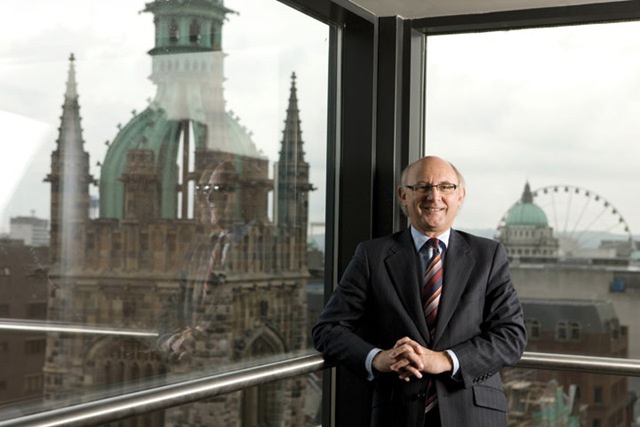
nigelhamilton11Sir Nigel Hamilton was head of the NI Civil Service for 6 years until his retirement in 2008. He is the Vice Lord Lieutenant of Belfast and has been chair of Ulster Rugby. He and his wife, Lorna, are members of Saintfield Road Presbyterian Church in Belfast.

Recently he attended our ‘Crucible’ leadership morning at Edenmore Golf Club and later he shared with me some of what he has learned through his own leadership experience.

Interestingly, he was keen to mention examples of leadership behaviours which appear small, but he’d want to argue that they are powerful in terms of relationships.

1 – The importance of shaking hands with everyone, not least reaching out to people who are not from our camp. They may even be people who oppose us. Do it, with grace and humility.

2 – The importance of paying attention to some of the people in an organisation who might be viewed as being at a more junior level. Make a point of taking time to talk with the security man or the doorman. Not only are these folk are a point of knowledge in relation to what is going on in the organisation, but they also have a vital part to play in that they often serve as the first point of contact between the organisation and the outside world.

3 – The value of saying thank-you, especially to those who have done something for us. It can be a spoken word or a scribbled note in a card. Not only is it a gracious act, but it can be very affirming to the person we thank.

As you can see, these are often relatively simple gestures. However Sir Nigel suggests that in fact ‘they are more important, initially, than visions, strategies or plans’. Leaders who don’t demonstrate these kinds of characteristics have lost their followers.

Contours of a Leadership Journey

Having spent time interviewing a number of seasoned leaders about their stories, while researching the theme of leadership crucibles (more of this another time), I noticed these elements that mark a leadership journey

  • Conversion. While all of the leaders I spoke to have had some kind of conversion experience, some of them talk about how radically life changing that experience was.
  • Call. Not everyone has an Isaiah-type experience of call: but some of the leaders I spoke to talked about a dramatic call experience as they listened to a speaker at a conference; another spoke more of a gradual awakening and eventually coming to the realisation: ‘This is what I was born for.’ Others spoke of significant happenings that preceded invitations into particular leadership situations.
  • Not unrelated to the first two themes is the theme of the sovereign providence of God. Sometimes leaders find that their steps are directed by an unseen hand, closing one door to open another.
  • Character and personality. Obviously these terms are not exactly synonymous, but leaders need to be aware of issues around each of them. Some leaders display very clear leadership traits in the way that they are drawn to problems. Character development is important and the leadership journey may also be a journey of character transformation.
  • Paradigm shifts. The average age of the leaders I spoke to was around 61. These leaders have lived and led long enough to experience a changing world and to undergo changes in how they view certain things, like, for example, the work of the Holy Spirit.
  • Crises and challenges. Sometimes these are personal or family related, sometimes they are spiritual and sometimes they have to do with leadership and ministry. Of course a leadership crisis can become a personal crisis as the leader begins to question himself/herself. One church leader spoke of how he discovered that the answer to his leadership crisis was not better leadership technique, but greater dependence on Jesus.
  • The leaders discussed a number of things related to their spirituality. For example, some talked about the love of God, some talked about their experience of the Holy Spirit.
  • The influence of others. Reggie McNeal has written about the significance of Jethro-like characters that cross the path of a leader and the leaders in this research spoke of fathers, of youth leader, and of others who have had significant roles to play along the way. Interestingly two of the leaders (one 60 and the other in his 70s) said that they wished they had had a mentor. (Note that the photo at the top of this may be misleading in this respect: the guy is on his own!)
  • Travel was not a frequent theme, but it was there. It could be negative, with the struggles that go with isolation and culture issues in a different setting; but it could also be positive – some of the leaders spoke of positive experiences as they spent time in other countries.
  • Transitions and progressions. Some leaders spoke of how God uses one situation to prepare you for another. A couple of leaders sensed a widening sphere of influence as they progressed along their leadership path.
  • Retirement is a ‘crucible’; while a retired leader can look back and see how God has been at work, the loss of structure can bring challenges and at the same time opportunities to experience new forms of spirituality.

Do any or many of these resonate with you?

Exploring your leadership journey

It’s almost a week since our leaders’ event at Edenmore Golf and Country Club. Anyone expecting to hear five tips for guaranteed leadership success from perfect and saintly leaders was in for a surprise!

What they got was searing honesty and pertinent challenge from three seasoned leaders; there was also a bit of humour – hardly surprising to those who know the members of the panel! It was a privilege for all who were there to listen to these leaders (I reckon a good century of experience between them) as they made themselves vulnerable in reflecting on their leadership journeys.

…incredibly moving, humbling and thought-provoking … a significant marker in my own journey.

Trevor Morrow, minister emeritus at Lucan Presbyterian Church, a congregation he served for over 30 years talked about the dangerous idolatries of ministry that can lead to the damaging neglect of family. He talked about the ‘wilderness’ of Lucan – a tiny church of 12 members when he went there, having left a congregation of a thousand in Northern Ireland. He talked about people God put in his path as he began to carve out a unique (and controversial) ministry as a Presbyterian in a Catholic context.

Ken (Fanta) Clarke reflected on some of the powerful experiences that have shaped him along the way. The realisation that he had been living as a bachelor in the early years of his marriage; a deeply powerful, cleansing encounter with God just weeks before his election as a bishop; a memorable, if frightening, time with God on a prayer mountain in Uganda. The latter two of these experiences reinforced Bible verses which he has had inscribed on his bishop’s ring.

Ros Stirling talked honestly about the crucible of singleness, challenging both single people and everyone in the room to be accountable. She talked about the encounter with a school pupil who was disillusioned by the Church – an encounter that would later be significant as she worked for 21 years for the Presbyterian Church, leading their youth department. She spoke passionately about her conviction that ministry needs to flow from a leader’s relationship with God – God aches for us to have such a relationship with him, but our culture tends to be so much more driven. Her conviction around this has been expressed in the establishment of Cleopas – a ministry that aims to provide space for the cultivation of this relationship.

All three spoke of people who had been influential along thew way. Trevor and Roz each spoke of the powerful impact of their father and other people, such as ministers, youth leaders and other mentor figures. Ken spoke about youth leaders and a school teacher, now quite elderly, who has continued to encourage him through the years.

We had a full room, with an audience that spanned generations and church backgrounds. People spoke about how they had been refreshed by the morning. One leader wrote that he had found the morning ‘incredibly moving, humbling and thought-provoking … a significant marker in my own journey.’ Another said that it had been ‘good for my soul’ and valued the insight of the speakers: as a young leader he is eager to glean from the wisdom and guidance of more mature leaders. Others found it timely and helpful.

If you’d like to know more about any similar future events or workshops (there might even be a related podcast in the future), get in touch using the contact form.