The Leadership Journey Podcast 14: Jonathan Rea (1)

about_15

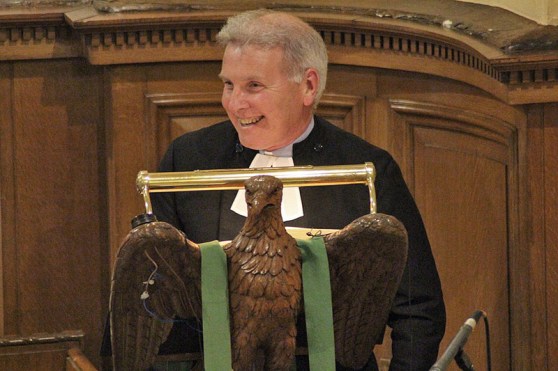
This week’s guest on the Leadership Journey podcast is Jonathan Rea, the Creative Director of New Irish Arts, a charity working to be a Christian presence in the arts and an artistic presence within the Church.

In this first part of the interview, Jonathan discusses his journey, both as a Christian and as a musician – two paths that have obviously converged in his life and work, not least as he has taken on leadership of New Irish Arts.

  • Jonathan mentions the potential of peer influence, specifically in his friendship with Keith Getty: how would you assess your peer relationships in this regard?
  • As a leader, are you more of an entrepreneur or someone who picks up an initial idea and runs with it?


The Leadership Journey Podcast 12: Harold Miller

shop

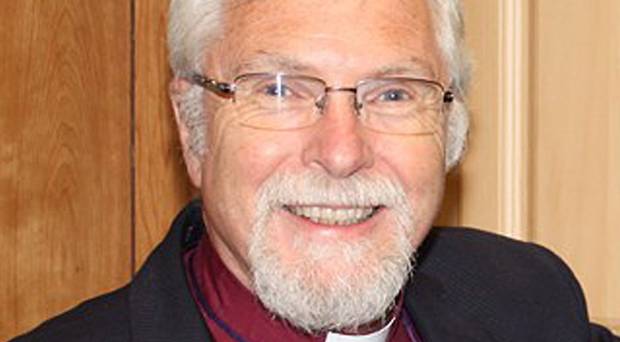
The guest this week is Harold Miller, Bishop of Down and Dromore in the Church of Ireland.

In this first part of his interview Harold talks about his conversion experience and the early stages of his growth as a leader while involved in the Christian Union at Trinity College, Dublin (his years there coincided with a remarkable batch of future leaders and missionaries).

He also talks about the role of an Anglican Bishop and the importance of leaders having other people around them.

Here are some questions for you to reflect on as you listen to Harold’s interview:

  • Harold mentions a number of key mentors: what mentors are helping to shape you, and are you building into the lives of other, younger leaders?
  • Harold talks about ‘holes in the cheese’: as you think about your own church tradition, where are some of the gaps?

THE LEADERSHIP JOURNEY PODCAST 11: Alistair Bill (part 2)

revd-alistair-bill-saintfield-road-presbyterian

This week’s episode of the podcast features part two of an interview with Alistair Bill, minister of Saintfield Road Presbyterian Church in Belfast (you can listen to last week’s episode here).

Alistair talks about his ministry which has spanned over three decades and has taken him to both sides of the Irish border and he discusses some of the important things leaders need to be aware of.

Leaders need to pay attention to context (‘the leader’s first task is to define reality’ – Max Dupree), to God’s call, the ‘big picture’, and the importance of leading as a team.

THE LEADERSHIP JOURNEY PODCAST 10: Alistair Bill (part 1)


revd-alistair-bill-saintfield-road-presbyterianAlistair Bill has been minister of Saintfield Road Presbyterian Church in Belfast for almost 24 years. In this week’s podcast – the first part of a two-part interview – Alistair talks about his early years, including how he came to faith through the ministry of Arthur Blessitt (remember him carrying his cross around Northern Ireland in 1972, and the smiley face stickers? – he is now into his 50th year of carrying the cross!) and how he began to sense God’s call into vocational ministry.

In part 2 of the interview (next week) Alistair talks about his years of ministry in Greystones, Monaghan, and his current church – Saintfield Road: he also shares some of the important leadership lessons he has picked up along the way.

Remember that you can subscribe to the podcast via iTunes, where you can also catch up with previous episodes, including interviews with Derek Tidball and David McClay.

Here is this week’s interview:

The Leadership Journey Podcast Episode 6: Derek Tidball (part 1)

49
The guest on the next two episodes of the podcast is Dr Derek Tidball. Derek’s leadership roles have included ministry in a couple of Baptist churches as well as being Principal of London School of Theology: he is also the author of many books, including his most recent book, Lead Like Joshua.

Leadership 101: Call, Character, and Competence (2)

building-character

This is a follow on from the post that began discussing the call, character and competence of a leader. There is one more part to come in this triad.


That there should be a discussion of the character of a Christian leader should hardly be surprising, given the significance of the theme of character in Scripture and the Christian tradition.

James Lawrence offers a simple definition of character (‘who you are when no one’s looking’) and suggests that it is most clearly seen in small, day-to-day things, when the leader is under pressure, and when the leader is in private. Among the reasons why character matters is that ‘without credibility … a leader will have no one to lead’ and that it is character issues that most often lead to derailment.

Then there is this – from Os Guinness:

As traditionally understood, from the Hebrews and Greeks onward, character is the inner form that makes anyone or anything what it is – whether a person, a wine, or a historical period. Thus character is clearly distinct from such concepts as personality, image, reputation or celebrity. It is the essential “stuff” a person is made of, the inner reality and quality in which thoughts, speech, decision, behavior, and relations are rooted. As such, character determines behavior just as behavior demonstrates character.


It has been suggested that much of the Old Testament account of the ancient Hebrews could be viewed as ‘a story of character and character formation’. Both Old and New Testaments exhort the people of God to be obedient and holy. Special application was made to the OT kings who were to be on their guard against the temptations of wealth, horses and the accumulation of wives. In the New Testament, alongside Jesus’ general teaching in places such as the Sermon on the Mount, specific qualities are highlighted in relation to spiritual leaders.


Yet both biblical and empirical evidence remind us that while we might be disappointed at contradictions in leaders’ character, we should not be surprised. While many of the OT kings are condemned for their character failure, there is also a recognition that essentially good leaders can also be flawed.


The biblical record has a lot to tell us about the tests of character: whether it’s Joseph and David, two leaders who meet sexual temptation with contrasting responses, or Jesus himself, whose faithfulness in the face of desert temptation contrasts with the failure of his ancestors at the time of Moses.

Both adversity and prosperity reveal a leader’s character and draw attention either to strengths or to weaknesses that will have to be addressed.

Bill George noted that some of the leaders who get derailed during the course of their leadership journey are not necessarily bad leaders: they get caught up in their own success. I spoke to a leader who shared (with searing honesty) about a phase in the early days of his ministry when his public stock was soaring, but his home life was threatening to derail him.

It seems that success can be more dangerous than failure!


There are several ways in which character has a shadow side. For one thing, as Parker Palmer puts it, a leader can project either light or shadow and leaders need to pay attention to their shadow side, something that calls for a degree introspection that is not always present in leaders. Failing to understand our own failings, according to Palmer, leads us to find ways in which we can make someone ‘out there’ the enemy and so we become leaders who oppress rather than liberate.

Another, perhaps more subtle problem is that our strengths sometimes have shadow sides. For example, resilience can easily become stubbornness; discernment can become judgmentalism. Yesterday’s reflection on calling noted that a strong sense of call can have a shadow side when it means that a leader is so committed to the task of leadership that spouse and family are neglected.

Samuel Rima observed that,

The personal characteristics that drive individuals to succeed and lead often have a shadow side that can cripple them once they become leaders and very often causes significant failure.

In talking with several leaders in the course of my research I noticed some specific examples.

  1. The self-reliance that can lead to the vital quality of resilience can also make it challenging for a leader to relinquish control. The leader may become stubborn or controlling.
  2. The ability to confront (not always a comfortable task) allows a leader to deal decisively with issues, but its shadow side can become harshness.
  3. Similarly, passion gets things done. It is those leaders with passion and drive who are likely to break new ground or thrive in challenging situations, but the shadow side is the risk of burnout or the risk of collateral damage caused to others on the team.

There is this, from Leighton Ford:

Every leader has a ‘shadow’ side, like the dark side of the moon – areas that are disguised, or perhaps explored but unrecognized. I am convinced that our leadership will be stronger and the dangers of collapse lesser if we become aware of these dark areas and bring them into the light early.’


I think the best leadership is that which flows from who the leader is: in that sense it is authentic leadership. I use the term with a degree of caution. There is no doubt that people (perhaps especially younger people) are drawn to authenticity. But its shortcoming is that its reference point appears to be internal while the reference point to character is external.

So perhaps I should say that the best Christian leadership is that which flows from the authentically God-shaped character of a leader.

Which means that all of us ought to be on a constant growth trajectory.

A young church leader asked me once if I thought a lot of Christian leaders have a gap between their public persona and their private life. It was a great question and while I can’t quantify the answer, it has to be some kind of a yes!

Those of us who have some kind of public persona, whether as leaders or preachers, often come across as those who have it all together. According to our persona, we never worry (because we roll our burdens onto Jesus), we are patient and kind, our wives worship the ground we walk on and are so grateful to be married to such wonderful people, we never get angry, all the prayers we pray in our rich prayer lives are answered, we never have any doubts, questions or fears. The calm conviction that we express so eloquently from the pulpits we grace characterises every waking moment.

Whereas if only people knew that our wives sometimes despair of us (I’m reminded of the incident which Paul Tripp recounts – against himself – where he told his wife that 95% of the women in his church would love to be married to a man like him: she declared herself in the 5%!); or that some of us struggle to pray, that we don’t always find our souls nourished by our Bible readings, that our private spiritual lives may not have the vitality everyone assumes, that we get anxious, that we feel guilty, that we may lie awake at night fretting over one thing or another, that we get more angry over some things than we should, that the fruit of the Spirit is not always evident in our lives, that we have questions about unanswered prayer, that we have regrets, that we sometimes get more wrong in our leadership than we get right, we experience moments of self-doubt and self-loathing, that when we cut we bleed, that we sometimes struggle to forgive, or that we have times when we even wonder if we should really be doing this stuff.

In short – we are not perfect, nor will we be until we see Jesus and we are made like him.

None of this should be an excuse for hypocrisy, or for inattention to the cultivation of spiritual character. It should be an incentive for growth.

Ministry and leadership are a gift and a privilege but should not be understood as a ‘get off the hook’ pass in terms of the need to grow in character.


We’ll get to the third ‘c’ (competence) in next week’s post.

But don’t rush to get there just yet – not least if you are a younger leader. Character matters. Failure to pay attention can result in leader derailment with all that entails.
Leadership 101: Call, Character, and Competence (1)

gods-call-to-leadership

In his book on staying fresh in Christian leadership, Paul Mallard starts by reflecting on how Psalm 78 refers to David:

[God] chose David his servant
and took him from the sheepfolds;
from following the nursing ewes he brought him
to shepherd Jacob his people,
Israel his inheritance.
With upright heart he shepherded them
and guided them with his skilful hand.

He notes these three things:

  • Conviction – the awareness that David had of being called and chosen by God;
  • Competence – David led with ‘skilful hand’;
  • Character – he shepherded the people with ‘upright heart’.

For the purposes of this post, I’d adjust Paul Mallard’s terms slightly, preferring ‘call’ to ‘conviction’.

James Lawrence, in Growing Leaders, also highlights the importance of discerning God’s call, developing Christ-like character, and cultivating competence.


All of the leaders I interviewed in my recent research referred in some way to calling. Ruth Haley Barton highlights the profound significance of being called by God: ‘it is a place where God’s presence intersects with a human life.’

Of course the most fundamental call is the call to believe in Christ and follow him. But within that call, one can find the seeds of a subsequent vocational calling. Some people have such dramatic conversion experiences that all of life is reoriented, a new direction and new priorities are set, and it can lead to a path of vocational leadership. The seeds of a call to leadership can be found in their conversion.

Often the call to leadership comes later. Sometimes it can be in the form of a ‘gradual awakening’ to one’s life purpose, though it can also happen in a moment of crisis, say in response to a stirring appeal.

Os Guinness has helpfully distinguished between two kinds of calling: what he calls an original, ‘ordinary’ calling, and a later, ‘special’ calling. The first is a sense of life purpose that comes in response to God’s call to follow him and its implications are lived out even if there is no direct, even supernatural, communication from God about a special calling.

He suggests that this latter ‘special’ calling has to do with tasks and missions given to individuals through some specific communication from God. Reggie McNeal says that ‘the call is the leader’s personal conviction of having received some life assignment or mission that must be completed’.


Much of the biblical narrative reflects the theme of God’s call. From the voice of God addressing the fugitive Adam and Eve in Eden, through the call of Abram to leave the familiar for the unknown, to the invitation of the Spirit and the Bride in Revelation, Scripture is the call of God to his people.

There are remarkable stories of individuals being summoned to a specific role in serving God. Think of Moses and his dramatic exchange with God at the edge of the Midianite desert. Or Isaiah and his life-changing vision of God’s holiness in the Temple. Or Saul who became Paul: the persecutor turned pioneer preacher.

But are these stories meant to be paradigms for today’s leaders? Can a Christian leader lead without having experienced the drama of a Moses- or Isaiah-like call? How might a leader sense the ‘call’?

Traditionally, within the evangelical world at least, there has been what you might term a tri-partite view of the will of God. Which means that God has a sovereign will – his plan for the universe, a moral will – how wants his people to live, and a specific will – his plan for an individual’s life. According to this understanding it is important to discover this specific aspect of God’s will: what is God’s plan for my life? The answer, it is suggested, lies in being able to line up several signposts so they are pointing in the same direction – the bullseye of God’s will. Typically these signposts will include elements such as Scripture, an inner sense of guidance, the advice of others, and, perhaps, circumstances. Mind you circumstances can be tricky things. For every divinely orchestrated open (or closed) door, one needs to remember that the circumstances were pretty conducive for Jonah in his escape from God’s call!

A few decades ago Gary Friesen suggested that some of the traditional evangelical understanding rests on shaky foundations and that an overly subjective sense of calling is hardly enough when it comes to surviving the heavy seas of ministry.

However it remains true that many leaders do experience a subjective sense of call, and find this sense of call a source of stability and confidence when they experience the turbulence of leadership. For example, a high profile leader told me that ‘there’s a real sense in which when I ever go through difficult times, the Lord has nearly always provided me with such a dramatic call to a particular role that I think, you can’t gainsay that, that actually happened.’

McNeal again: ‘Christian leaders certain of their call allow it to become the center of gravity for their life experiences.’


Perhaps the subjective sense of calling, for example as it’s expressed in Frederick Buechner’s famous comment about vocation being at the point where the world’s deep hunger and your deep gladness meet, needs to be balanced by a proactive involvement on the part of the Church and its recognised leaders. Have we grasped the implications of the Holy Spirit’s voice in community in Acts 13?


What is your view of calling? Have you a clear sense of conviction that you are doing what God has called you to do?


Leadership 101: What, exactly is leadership?

leadership-bannerIt was none other than Machiavelli who suggested that ‘there is nothing more difficult to take in hand, more perilous to conduct, or more uncertain in its success, than to take the lead in a new order of things.’

But what, exactly is leadership? One count I saw had the number of definitions running act around 1500. It’s been suggested that, like the ancient proverb of the blind men attempting to describe an elephant, leadership has many aspects and none of them by itself appears to be an adequate definition. Warren Bennis suggested that it’s like beauty: hard to define, but you know it when you see it!


The understanding of leadership has developed across the centuries. In the middle of the 19th century, the focus was on leaders themselves, with Thomas Carlyle’s claim that the history of what has been accomplished in the world has essentially been the history of ‘the Great Men who have worked here’. It’s possible to trace the roots of the Great Man theory all the way back to Aristotle and his belief that social rank was determined through one’s superior virtues which, in turn, were the result of one’s birth.

Not unnaturally Great Man theory evolved into the Trait era (although the idea of traits is an ancient idea). The basic quest of students of leadership at this time was the attempt to identify which specific traits separated leaders from non-leaders. If people who became leaders were different from everyone else, what made them different?

The theory ran aground somewhat (at least for a while) when it was suggested that there was no consistent set of traits that distinguished leaders from non-leaders and, significantly, that just because someone is a leader in one situation does not make them a leader in another.

Trait theory never quite went away with some scholars suggesting that attempts to discard it have been too sweeping. Even if it is not possible to establish a definitive list of distinguishing marks, there appears to be evidence that there are some traits that make a significant contribution to a leader’s success.

Nonetheless, the focus of study shifted next to leaders’ behaviour. From one study emerged the idea that there were two dimensions to leadership: some leadership had a strong focus on the people it was leading while other leadership focussed more on the task at hand.

However this was not enough as people came to appreciate that no single style of leadership was universally the best style, regardless of the specific situation or environment. An understanding of leadership needed to take account of the situation in which leadership was being exercised.

Studies and theories continued to develop: from transactional leadership to transforming (and transformational) leadership, and from servant leadership authentic leadership.


Even if we’re unlikely to come up with a single, ‘correct’ definition of leadership that excludes all others, it’s worth making some kind of attempt!

For writers like John Maxwell, it appears to be the irreducible minimum:

Leadership is influence. That’s it. Nothing more, nothing less.

It’s simple and quite memorable, but probably leaves too many issues unresolved. Is all influence leadership? Does the influence of a TV advertising campaign qualify as leadership? Is there a difference between intentional and unintentional influence? To be fair, Maxwell has also been somewhat more nuanced in his subsequent claim that ‘the true measure of leadership is influence’.

Maxwell is not alone in highlighting influence as a key component of leadership. For example, Peter Northouse defines leadership as ‘a process whereby an individual influences a group of individuals to achieve a common goal’, while Howard Gardner describes leaders as ‘individuals who significantly influence the thoughts, behaviors and/or feelings of others.’ What’s interesting about this definition is that it allows Gardner to distinguish between direct leaders (think Churchill) and indirect leaders (think Einstein, whose influence was exercised through his ideas): leadership may be exercised by word and/or personal example.

I think these are all helpful, as long as we recognise the caution that has been noted by some scholars who have suggested that since few social interactions don’t involve influence, we’re not saying much when we say that leadership is influence!

David Starling suggests that ‘leadership is the act or task of making an intentional contribution toward the direction and motivation of a group in the framing and pursuit of a common purpose.’ He argues that good leadership is not an end in itself, but points beyond itself and promotes interests that go beyond its own.

It’s worth noting how his definition highlights both the element of intentionality and the idea of a commonly share goal towards which a group is moving.


Some of the writers I have mentioned are Christians, but it’s worth taking time to reflect on what makes Christian leadership Christian?

Carl Trueman suggests that trends in the culture have affected how the evangelical church has understood leadership. While accepting that Christian leaders can learn from wider aspects of leadership practice, he cautions that Scripture must determine Christian notions of leadership.

Albert Mohler, a fairly powerful leader himself, suggests that while an obsession with leadership in the contemporary church may be both necessary and understandable, this obsessive interest has nonetheless ‘served to distract the church from the nature of leadership as revealed in Scripture’, with Christians tending to draw lessons from various spheres of secular leadership rather than looking to the Bible.

James Lawrence calls for Christian leadership with these distinctives:

  1. It is founded in relationship with God as Trinity;
  2. It is rooted in the Bible and directed by the Spirit;
  3. It is marked by servanthood;
  4. It is shaped by the cross and resurrection;
  5. It is sustained by prayer;
  6. It is lived out personally as part of the community of the church.

‘Leadership,’ he says, ‘is a key factor in the spread of the gospel.’


There have been voices of caution both within the Church and more widely. Barbara Kellerman, a leadership insider who might be running the risk of biting the hand that feed her, critiques the leadership industry’s ‘leader-centrism’ with its implication that those who don’t lead don’t amount to much. It is not enough to focus only on the leader at a time when other factors, such as the rise of the follower, have gained significance, and leaders have less power than previously. In fact, she goes as far as to accuse the leadership industry of being ‘self-satisfied, self-perpertuting and poorly policed’!

David Starling, like Trueman and Mohler, warns about the tendency to swallow the secular concepts of leadership. He notes that for all the talk of ‘leadership’ in Christian circles, there are surprisingly few explicit mentions of the terms leader and leadership in the biblical text. However it is not that there are no leaders or that there are no other images associated with leadership tasks.


After all that, how should we define it?

I think that reaching a definition requires us to consider the relationship between the leader and the followers, the nature and means of the leader’s influence, and the establishment of the goal for which leadership is exercised.

Walter Wright (Relational Leadership) describes it as ‘a relationship in which one person seeks to influence the thought, behaviours, beliefs or values of another person’.

And here is my more clumsy attempt at describing a Christian leader:

A leader is someone who is intentionally influencing a group of people towards an agreed and beneficial goal: Christian leadership means doing that ‘Christianly’!


So what do you think? Here are a few questions to reflect on:

  • How important is leadership? Is it possible to either overstate or understate its importance?
  • What factors need to be considered in understanding what leadership is and how it is defined?
  • How might you define leadership?

← Back

Thank you for your response. ✨

Leadership 101: Of writings on leadership, there is no end!

Quotefancy-1244279-3840x2160To borrow from an ancient preacher, ‘Of the making of [leadership] books, there is no end.’ Not exactly what Quoheleth had in mind, but doubtless he would have agreed.
Statistics from the publishing industry point to a relatively recent surge in interest in the subject. According to Barbara Kellerman, on average three books on leadership were published annually in the early 1980s; by 2012 the numbers were ‘somewhere in the stratosphere’.

No doubt the surge in interest reflects a more conscious awareness of the importance of leaders and leadership, concern, and a degree of handwringing at the apparent lack of good leaders, and all of it spiced up by the emergence of celebrity leaders across several domains.

Including the church.

Perhaps it’s unsurprising that the general interest in the subject is reflected in the culture. Of course, the relationship between ‘biblical’ leadership and more generally applicable principles of leadership can be complex. To what extent are Christians right to mine general leadership material for pearls of wisdom and to what extent is Christian leadership meant to be counter-cultural?

I’m planning to post a series of pieces on leadership over the next few months or so. Actually, I’ve got an idea (two, actually) for a book on leadership and I’d love it if some of you felt free to chip in on the various ‘Leadership 101’ posts as they appear.

Among the subjects I hope to feature are:

  • What, exactly, is leadership?
  • The making of a leader
  • Characteristics of effective leaders
  • Temptations of Christian leadership
  • The leader’s vision
  • The leader and the team

There will be other material on the leadership journey blog, but watch for the ‘Leadership 101’ posts on Thursday evenings – starting this evening.

The Bible and Leadership: a review

41romj0zspl-_sy346_

Of the writing of books on leadership, to paraphrase Ecclesiastes, it seems there is no end. That goes for Christian books as well as anything else.

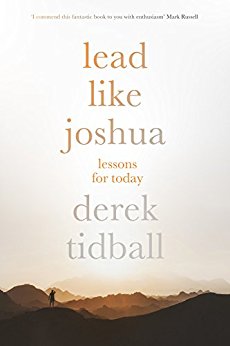
A recent addition to the genre is Derek Tidball’s Lead like Joshua. In the course of 23 chapters, the book moves systematically through the story of Joshua and does a great job of combining careful attention to the biblical text with the author’s ability to draw on his wide experience of leadership as well as various contemporary authors. It’s not as though the world needs another leadership book, but the author believes that too few of them ‘hit the spot’ from a Christian perspective. Too many of them draw freely on secular ideas but fail to deal seriously with the Bible. Too many of them are too complex for the average church leader to gain from them.

Contra those who might wish to argue against the concept of leadership (at least business-style leadership) in the church, Derek Tidball affirms the significance of leadership in Scripture, though he is keen to point out that Joshua ‘was not written as a textbook on leadership for later generations’!

Be careful not to go away from studying Joshua having learned leadership lessons, but having learned nothing about the sovereign Lord who keeps his word and saves his people.

I’d like to say that that is one of the most important sentences in the book, and one which ought to sound a note of caution for anyone who wants to write a book or teach a seminar on leadership from a particular biblical text. I fear it is too easy to fall into the trap of losing sight of the reason particular texts have been given to us!

Lead like Joshua begins with a reflection on what it means for a leader to ‘assume responsibility’ and thereafter the chapters have similar, pithy titles: ‘build foundations’; ‘make decisions’; ‘recall history’; ‘trust God’; ‘demonstrate perseverance’.

By the end of the book, a careful reader could have assembled a 23-point checklist of good leadership practice: a checklist against which to assess his or her leadership.

But the book is more than a checklist! There is careful engagement with the biblical text, along with reflections of Derek Tidball’s considerable experience as an evangelical leader in the UK, and an ability to draw on various key voices on leadership themes. You’ll find author and speaker Gordon MacDonald, leadership writers James Kouzes and Barry Posner and you will even find Sir Alex Ferguson!

Personally I was particularly chuffed to see a chapter devoted to leadership ‘crucibles’ the theme of my recent doctoral research.

Although I was sent a complimentary copy of the book, I am not on commission to suggest that as a new term gets underway, church leadership teams could do worse than set aside time in their regular meetings to work through this book (there are questions at the end of each chapter) in their own context.

Here is the list of chapters:

  1. Assume responsibility
  2. Build foundations
  3. Make decisions
  4. Gather intelligence
  5. Prepare thoroughly
  6. Take risks
  7. Recall history
  8. Gain respect
  9. Surrender status
  10. Trust God
  11. Face failure
  12. Confront sin
  13. Re-energize people
  14. Renew vision
  15. Correct mistakes
  16. Fight battles
  17. Demonstrate perseverance
  18. Manage administration
  19. Honour others
  20. Display compassion
  21. Guard unity
  22. Mentor others
  23. Keep focus

Leadership learnings: Chris Thompson

14372295_1156079074452390_4544350398344696298_o-2

Chris Thompson is Ministry Support and Development Co-Ordinator with Youth For Christ, Northern Ireland. Previously he has worked for Waringstown Presbyterian Church and Prison Fellowship.

He told me about his most significant leadership lesson:

My most significant leadership lesson is that people matter and that leadership is about people.

He saw this modelled by his boss at Prison Fellowship.

He said … to me when I first arrived that this is a people ministry. And so how it was structured was that there was an office and there was a drop-in facility, at least people would have dropped in who would have been in urgent need in some ways. And so he would have said, you stop what you’re doing if there’s a people need – you stop what you’re doing and respond to it, no matter how important your tasks are. And he modelled it in the sense that he would have stopped what he was doing and have stopped stuff for days if needs be to respond to a need. So I learned then that the priority of leadership is people and to invest in people.

Leadership learnings: Lee Russell

Lee Russell Exec Director

Lee Russell is the Executive Director of the Christian Police Association,  a Charity that encourages and supports Christians in the Police Service.  Prior to taking up this role  he served in the Police for 30 years.  Lee holds a Masters Degree from Canterbury Christ Church University.

Here is how he describes his most significant leadership lesson:

The most significant leadership lesson I have learned is not to underestimate someone.  This cuts both ways,  either their ability to do harm or their ability to enhance/develop and support your work/project/plans.  For the purpose of this short viewpoint from me I will concentrate on the positive aspects you can gain if you remember not to underestimate someone. 

I spent my formative working years in a very hierarchical organisation.  However,  what I learned at an early stage is that the level you are in any organisation does not necessarily mean you have the best ideas/abilities/knowledge to progress a given task.  I discovered that you could find people at all levels in your organisation who just “knew” what the answer was and knew the route that needed to be taken to be successful in a given situation.  A good leader will remember this,  will look for those people, and will take risks in pushing a person beyond their colleagues/line managers and their own personal perceptions of their ability.

There are many examples throughout the Bible where our Lord took people who were underestimated by others and by themselves.  Perhaps, Moses is the most obvious example.  However,  I also like the story of the feeding the 5,000 (John 6 1-14). Who would have thought that a small boy bringing his packed lunch of five small loaves and two small fish could have helped Jesus perform a miracle?  Jesus didn’t underestimate anyone!

Leadership Learnings: Sam Balmer

11146445_961396513890587_4683835604993623207_o.jpg

Sam Balmer, from Enniskillen, is one of three elders in Fermanagh Christian Fellowship. Along with his wife, Louise, he is involved additionally in the work of Bible Educational Services and Sow2Reap Trust.

He shares what he has been learning about leadership: it’s very honest and very personal.

As a direct result of burnout, following a very busy and prolonged period of leadership ministry both in church life and in the charitable sector I learned a number of hard lessons. On occasions these still raise their ugly heads!

I discovered that the success of church and ministries do not depend on me – I realised my acceptance by God was not dependent on my work for God – I learned that identity should be grounded in Christ not in my ministry for Christ – I had to learn to say NO, to rest, to simplify life and not feel guilty about this.

My pride and ego took a hit! Gods work continued and expanded while I was off thus confirming all of the above lessons. Reminding myself of these is necessary from time to time.  Through all this experience God remained faithful and His steadfast love ever bountiful.
He also describes the value and significance of  the ‘amazing’ support of a good wife, family and faithful friends.
Music (via a couple of apps) helped during what he describes as long nights and troublesome days. The Holy Spirit spoke to him as he read the book of Jude, both encouraging him and showing him that God will be victorious.
  • In my need for mercy, peace and love my God is sufficient is supplying these in abundance (v2).
  • In my battle contending for the faith not just publicly but privately as the enemy battles with my mind my God is victorious (vv3,4)
  • v20,21 In my worship as I build myself up, pray, bask in Gods love and wait for His mercy my God is glorified (vv20,21)
  • in my inability to keep myself from stumbling and ultimately present myself before His presence my God is able (v24)
And as a concluding word:
Now to him who is able to do far more abundantly than all that we ask or think, according to the power at work within us, to him be glory in the church and in Christ Jesus throughout all generations, forever and ever (Ephesians 3:20-21).
Amen!

Leadership Learnings: Alan Wilson

Alan Wilson* worked as a pastor for just over 20 years: first with Westlake Church in Switzerland, where he spent 17 years, and then with Portstewart Baptist Church on the north coast of Northern Ireland. More recently he has been working on his doctorate, exploring ‘crucible’ experiences in the development of Christian leaders.

14355771_10153668703471504_3820222161335646391_n

Here are two things he has learned about leadership over the years:

1 – This goes for leadership in any sphere. When you are making decisions as a leader, or a leadership team, be sure to consult with the people who are going to be most affected by the decision. Not to do this is poor leadership and easily leads to hurt, resentment and anger. I have observed it (and been guilty!).

2 – More specifically for Christian leaders, remember that it is not ‘by might, or by power, but by God’s Spirit’ that the work gets done. The lesson is dependence. It hit me several years ago when I was a young leader and our church was struggling. I discovered Paul’s reflection that his (far more intense and serious) experience of difficulty was designed so that he would learn not to rely on himself but on God (see 2 Corinthians 1:9). The verse became part of a season for me – and the other leaders of our church – of intentionally stilling ourselves to listen to God (and finding his blessing on our church).

*Apologies for writing about myself in the 3rd person!

← Back

Thank you for your response. ✨

Leadership Learnings: Philip Emerson

Philip Emerson is one of the lead pastors at Emmanuel Church in Lurgan, a church that was birthed in his living room, just over 20 years ago.

bt1_9492

I asked him about his most significant leadership lesson and how he had learned it.

I’ve always loved team. You only have to go 3 or 4 words into the Bible and you find team (Father, Son and Holy Spirit). So I think my most significant lesson has been that if you have to not give glory to God for anything – and I don’t think that should happen – it should always go to a team. And I think I’ve always got cautious when I’ve heard people say ‘I’ or ‘my’ idea. And on the back of that, I think, raising another generation of leaders. I think we need to always be looking, fathering. That’s my biggest leadership lesson.

How he learned this?

I think by realising that all of us are smarter than one of us and all of us are smarter than some of us, and the more people I can get round the table talking about an idea, the better the idea becomes. So my ideas actually pale into insignificance and I think that’s been the big learning curve for me in leadership is actually the more people involved in the conversation the better it usually becomes.

Leadership learnings: Eddie Arthur

Eddie Arthur describes himself as an agitator and mission thinker, He has been involved with mission for several decades, notably with Wycliffe Bible Translators.

eddie_arthur_2aI asked Eddie to tell me the most important thing he had learned about leadership and how he learned it.

Here is his answer:

Just talking about things doesn’t mean they will happen. You have to take action and, above all, empower your team to move forward and take the flak for them when they do.

I learned this the hard way; by seeing that my good ideas didn’t get put into practice just because I told people about them and we passed motions in meetings. I had to do some work; not just think great thoughts.

Eddie went on to add this second lesson:

Leadership reveals the strengths and weaknesses of your character – but people will take more notice of the weaknesses! You have to learn to use your strengths and develop your areas of weakness. I learned this by seeing my own character flaws exposed to others and to myself. Thankfully God is merciful and so are most of my colleagues!

If you are a leader, how would you answer the question? What has been your most significant leadership learning?

← Back

Thank you for your response. ✨

Leadership learning: making the most of ‘small’ moments

nigelhamilton11Sir Nigel Hamilton was head of the NI Civil Service for 6 years until his retirement in 2008. He is the Vice Lord Lieutenant of Belfast and has been chair of Ulster Rugby. He and his wife, Lorna, are members of Saintfield Road Presbyterian Church in Belfast.

Recently he attended our ‘Crucible’ leadership morning at Edenmore Golf Club and later he shared with me some of what he has learned through his own leadership experience.

Interestingly, he was keen to mention examples of leadership behaviours which appear small, but he’d want to argue that they are powerful in terms of relationships.

1 – The importance of shaking hands with everyone, not least reaching out to people who are not from our camp. They may even be people who oppose us. Do it, with grace and humility.

2 – The importance of paying attention to some of the people in an organisation who might be viewed as being at a more junior level. Make a point of taking time to talk with the security man or the doorman. Not only are these folk are a point of knowledge in relation to what is going on in the organisation, but they also have a vital part to play in that they often serve as the first point of contact between the organisation and the outside world.

3 – The value of saying thank-you, especially to those who have done something for us. It can be a spoken word or a scribbled note in a card. Not only is it a gracious act, but it can be very affirming to the person we thank.

As you can see, these are often relatively simple gestures. However Sir Nigel suggests that in fact ‘they are more important, initially, than visions, strategies or plans’. Leaders who don’t demonstrate these kinds of characteristics have lost their followers.