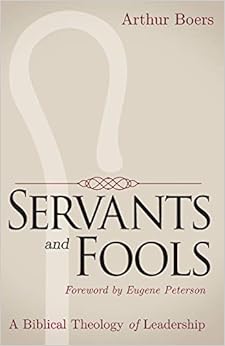
I first came across the book a few years ago (it was published in 2015) on the recommendation of Ian Coffey and more recently I asked some of my students to write an essay based on the following quotation from one of its early chapters: it may give you a little bit of a pointer as to how Arthur views the Bible’s teaching on leadership. In fact, he believes that much of the Church’s interest in leadership is ‘faddish’ and argues that the Scriptures are suspicious of human leaders.
While history focuses on victors and the powerful, at the top and in charge, the Bible pays an astonishing amount of attention to regular, normal folks who are nevertheless the unexpected means of God’s dramatic work.
Arthur Boers, Servants and Fools.
*I had planned to have John Dickinson on the podcast this week, but we’ve had to push that episode back: you should be able to listen to John’s story in a couple of weeks.
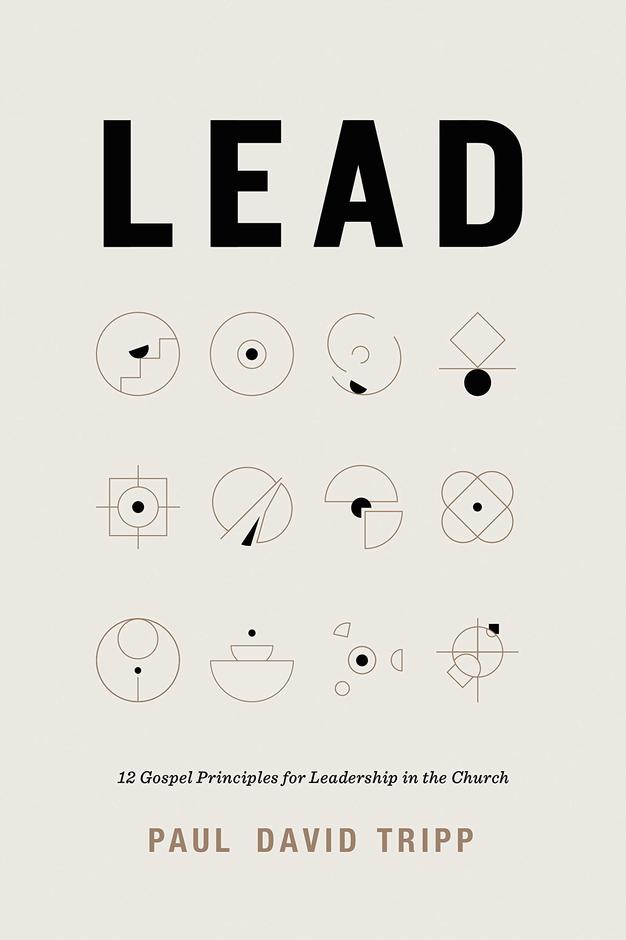
My guest this week is author and conference speaker, Paul Tripp. Paul has written many books, and his most recent book is Lead: 12 Gospel Principles for Leadership in the Church – that’s what we focus on in our conversation, though Paul also talks about some of his own leadership journey.
The book outlines 12 principles that Paul would like to see worked out in every leadership community. In our conversation he gives an overview of the 12 before focussing on 3 of them for further discussion.
Paul writes with the conviction that the gospel his not simply a set of historical facts, but that ‘it is also a collection of present redemptive realities.’ Here is what he says about the book, and why he wrote it:
I wrote this book because I love the church of Jesus Christ and have a deep affection for all who have surrendered their lives and gifts to ministry leadership … And because my heart is in the church, I am concerned about the spiritual health of the community of leaders that pastor its people and direct its ministries. This book is not about the strategic work of the ministry leadership community but about protecting and preserving its spiritual depth so it may do its work with long-term fruitfulness. Really, this book is about the Lord of the church, about his love for the ambassadors he has called to represent him, and how he meets their every need with glorious and faithful grace.
You can read more about Paul and his ministry at his website, where you can also download the Paul Tripp app, with its access to many free resources.
You can order his new book here (10 Of Those will give you a free ebook when you buy a hardback copy of the book).
This week I will be chatting with Paul Tripp about his most recent book – for church leaders.
Here is what he says about the book – Lead: 12 Gospel Principles for Leadership in the Church – and why he wrote it:
I wrote this book because I love the church of Jesus Christ and have a deep affection for all who have surrendered their lives and gifts to ministry leadership … And because my heart is in the church, I am concerned about the spiritual health of the community of leaders that pastor its people and direct its ministries. This book is not about the strategic work of the ministry leadership community but about protecting and preserving its spiritual depth so it may do its work with long-term fruitfulness. Really, this book is about the Lord of the church, about his love for the ambassadors he has called to represent him, and how he meets their every need with glorious and faithful grace.
I’ve been wrapping up a chapter on leaders and their character as part of my book project: I’ve wanted to stress that leaders are not the finished article. Here are four reflections.
Unresolved patterns
For Moses it was anger – as it may be for you. As a leader you are used to getting your own way on all the big issues (and even on the small ones): no one stops you because they have learned to fear your anger.
Anger is a tricky emotion to handle, not least because there are times when we are guilty of not being angry enough or of not being angry at things which ought to provoke our anger. Paul urges us not to sin in our anger and not to let the sun go down while our anger is unresolved. James adds James that we are to be slow to get angry: our anger will not accomplish the righteousness that God desires.
In a short series of articles for the Australian version of the Gospel Coaltion, church leader Ray Galea wrote about his own journey with anger. Among his reflections was his observation that while it is sometimes an experience of being hurt that lies behind out anger, pride is the vice that lurks deeper still: ‘pride which demands that we be treated properly and woe be tide anyone who crosses our path.’
Even if we’re not guilty of the Meribah-style rock-splitting fits of rage, some of us may be far too tolerant of a simmering self-centred impatience or a constant spirit of complaint. For other leaders it may be pride, not necessarily expressed in outbursts of anger, but evident in an arrogance, or a spirit of superiority.
For still others the unresolved pattern may involve lust. It may be greed, self-indulgence, a hankering after comfort and luxury.
What a tragedy if these patterns are unnoticed or perhaps worse, if they are noticed but tolerated and left unresolved until they take deeper root in our lives until we have our own Meribah moment and sabotage our leadership.
Unguarded devotion
This is Solomon. The man whose writing urges us to guard our hearts left his own unguarded. Not only did he give his heart to the many foreign women who came to share his life, but he allowed the lure of those women’s foreign gods to draw his devotion away from the Lord.
Recently James K.A. Smith has argued that we are what we love, or, ‘you are what you worship … what we worship is what we love.’
Our idolatries … are more liturgical than theological. Our most alluring idols are less intellectual inventions and more affective projections – they are the fruit of disordered wants, not just misunderstanding or ignorance.
Leaders are worshipers – we all are. The question is what has our hearts and what are we doing to guard them from the allurements of disordered affections and illegitimate gods.
Unfinished growth
The development of our character is a work in progress. But what are the character qualities into which we should be growing?
There are so many ways we could answer that question. We could talk about what it means to be holy, as the God who called us is holy. We could talk about the imitation of Christ; or we could reflect on the fruit of the Spirit.
Dan Allender answers the question like this:
Character is grown to the degree that we love God and others.
In saying that, he takes us back to the two great commandments: first, the command to love God with our whole being, and second, to love our neighbour as we love ourselves. As Jesus put it, it’s on these two commandments that everything else hangs. Or, in Paul’s formulation, love – which does no harm to a neighbour – is the fulfilment of the law.
Here is the measure of our growth in character. Do I love God more now than I did a year ago? More than ten years ago? How would I answer the question that Jesus asked Peter: do you love me more than these? That seemed to be Jesus’ requirement for leadership.
And am I growing in my love for other people? Are my relationships marked by a greater degree of patience? Am I doing better at rejoicing at the triumphs of others? Of course leaders ought to be growing in knowledge, honing their gifts, and developing their talents, and by all means set yourself goals and targets for personal development. But would people who know you describe you as kind? For all your firmness and decisiveness as a leader, are you known as gentle? Do your people know that you have their best interest at heart?
Unsurpassable grace
Your worst days are never so bad that you are beyond the reach of God’s grace. And your best days are never so good that you are beyond the need of God’s grace.
Jerry Bridges: The Discipline of Grace
If the second part of that is a reminder that we are not the finished article (as we keep saying), the first part is an encouragement not to give up. Just as it is grace that has brought me ‘safe thus far’, so there is grace for the gap between where we are and where we need to reach, and there is grace for the gap between what we wish we were and what we know we still are.
When Dallas Seminary professor Howard Hendricks died in 2013, among the tributes that were paid was this one, from one of his students:
I asked him, if we forgot everything else he had ever taught us (which was unlikely), what one thing would he want us to remember? He thought a moment and replied, “Finish well.” He said plenty of people in the Bible did well for a time, but very few of them finished their lives faithfully.
Wise leaders know they are not the finished article; but the humility that comes from that realisation will help them to finish well.
One of the traps for insecure leaders is to make everything about them. It is all personal. It is not always easy to separate who we are from what we do, but if I make every issue about me, and interpret every criticism as personal rejection, I simply feed my insecurity and dismantle the possibility for constructive debate.
While that much is true, perhaps there is some apostolic precedent for self-defence in part of what Paul writes in 2 Corinthians where he mounts a fairly robust defence of his ministry, seemingly in the face of rivals who would have loved to discredit him. Discrediting Paul would have made it easier to discredit his message, so enticing the Corinthians to drift from their devotion to Christ.
Rather than list his triumphs, however, Paul lists the severe challenges he has had to face; he emphasises his weakness, recounting the time when he became a ‘basket case’ in Damascus, and the famous thorn in the flesh episode. Paul knew that ultimately he was accountable to God (12:19) and the motivation for his defending himself was for the strengthening of the Corinthians. As Don Carson points out, Paul is not writing to vindicate himself, as the Corinthians suspected, but to build them up.
Carson goes on to comment trenchantly:
Sadly too many leaders consciously or unconsciously link their own careers and reputations with the gospel they proclaim and the people they serve. Slowly, unnoticed by all but the most discerning, defense of the truth slips into self-defence, and the best interest of the congregation becomes identified with the best interest of the leaders. Personal triumphalism strikes again, sometimes with vicious intensity. It is found in the evangelical academic who invests all his opinions with the authority of Scripture, in the pastor whose every word is above contradiction, in the leader transparently more interested in self-promotion and the esteem of the crowd that in the benefit and progress of the Christians allegedly being served. It issues in political maneuvring, temper tantrums, a secular set of values (though never acknowledged as such), a smug and self-serving shepherd and hungry sheep.
I’m working on a book on leadership, framed around the story of Moses, and I am currently writing a chapter on leaders’ need to face criticism. As I have been working through some of the challenges Moses faced in leadership, I have highlighted the following challenging questions that leaders (not least church leaders) may have to deal with from time to time.
How would you answer them?
How do you lead when people reject your leadership? This is what Moses was faced with (briefly) when he tried to intervene in a dispute between two Hebrews. It’s a complex question as people’s rejection of your leadership may be for any number of reasons, and not all the reasons may originate with the people. What steps can you take to build (or rebuild) trust? How do you know when it’s time to ask some people to ‘get off the bus’, or even for you, as the leader, to let someone else drive?
How do you lead when things are going to get worse before they get better? Again Moses had to face this, this time when his initial intervention, having been commissioned by the Lord, led to the famous ‘bricks without straw’ situation. How do you hold your course when the initial pain of change seems to far outweigh the potential gain?
How do you lead when people don’t merely reject you as leader, but it turns out that they have little appetite for trusting God? For Moses it was not long before he and Aaron became the focus of the people’s frustration when they lacked water or food. Moses and Aaron pointed out that the people’s grumbling was not really at them, but at God. While anxiety about food and water was understandable for people trekking the desert, they were quickly failing the test of trust that their wilderness experience constituted.
Andy Peck is the host of Premier Christian Radio’s weekly show, The Leadership File: since he took on the programme, he has conducted some 700 interviews with Christian leaders from various walks of life. He is also the author of a number of books, including ‘The Leadership Road less Travelled’. I was recently a guest on his show so this week’s podcast really sets us on the opposite side of the microphone.
Interestingly for someone who has written a book on leadership, and has interviewed hundreds of leaders, Andy confesses that leadership leaves him cold! You will find out what he means during the podcast. You can get a copy of the book here.
Andy grew up on the Isle of Wight, and he talks about his Christian upbringing in church there. He talks about how his leadership journey has not always followed the expected course, about some of the people who have influenced him, and some of the key things he has learned about leadership along the way.
*Note that Dallas Willard went to be with the Lord in 2013, and not in 2003 or 2006.
The guest on the next episode of the podcast is Dr David Hilborn, Principal of Moorlands College.
Our calling, however, is often shaped as much by our weaknesses as by our strength. We tend to run with our strengths and avoid those people and tasks that expose our weaknesses. But the story of God is not a saga of human potential; it is the revelation of the kindness and passion of the Father who seeks and redeems sinners. Therefore, our strengths may help us with certain opportunities, but it is our frailty and sin that make known the glory of God’s story.
My guest on this week’s podcast is Simon Barrington. Simon is the founder of Forge Leadership Consultancy, having previously served in leadership roles with BT and Samaritan’s Purse. He is the author (with Rachel Luetchford) of Leading the Millennial Way. The book reports on a significant research project that surveyed some 500 millennial (born between 1984 and 2000) leaders and aims to help millennial leaders strengthen their own leadership and also to benefit older leaders whose work involves leading millennials.
In our conversation Simon talks first about his own leadership journey and reflects on a lightbulb moment where he began to realise that leadership has to deal with character and not simply capacity. We talk about the genesis of the millennial research and chat about some aspects of millennials and some of the things they (and any leader, really) need to cultivate as they grow in their leadership.
Simon talks about this book that was very significant in his own development and in understanding what it means to lead well. You can pick up a copy here.
Simon also shares a couple of key things he would want to share with his 20 year old self:
Develop your intimacy with Jesus – learn to walk with God every day;
Make the investment to deal with ways you have been wounded.
To read more about the research behind Simon’s book, visit the website.
‘For reasons both ancient and new, the church today has an insatiable appetite for the study of church leadership. A vast avalanche of books, seminars, videos, and web sites has swept over the landscape in response to that appetite. Some of it is good and helpful, but overall much of it is very weak or even misleading in ways that should trouble the church leaders consuming it.’
Lew Parks
I read this statement some time back and I am pleased to say that the contribution of today’s guest to this vast array of resources is excellent.
Ian Parkinson works with CPAS and helps train leaders in a number of Anglican training institutions. He has previously been a guest on the podcast, and you can listen to his story here and here.
Earlier this year he published a new book, Understanding Christian Leadership and he joins me on this episode of the podcast for a conversation around the book. I have reviewed the book in a previous post.
Our conversation covers a number of themes related to the book, including Ian’s definition of Christian leadership, his understanding of leaders as ‘catalysts’, and the balance that leaders need to strike between tradition and the future.
Here is how he defines Christian leadership:
A relational process of social influence through which people are inspired, enabled and mobilized to act in positive, new ways, towards the achievement of God’s purposes.
He also talks about what it means to lead as a Christian outside of the sphere of the Church.
If we want to be effective leaders we need to be effective disciples.
Here is a link to where you can buy your copy of the book, and here is the podcast.
It seems almost to have become a commonplace that anyone writing a new book on Christian Leadership should begin with some form of justification for their work. Since it seems as though ‘of the making of leadership books there is no end’ (to borrow from Ecclesiastes) writers seem to think they need to defend the fact that they have chosen to add to the pile! So it is that Ian Parkinson begins by acknowledging the rich array of available resources and asking why add ‘yet another one’.
The excellence of his book answers the question!
If you are a student of Christian leadership I’d advise you to clear some apace on your shelves for what is a masterful piece of work that combines a breadth of academic knowledge with a genuine spirituality, seasoned with the lessons of practical experience. If you are a teacher of the subject (as I am) this needs to be on your reading list before classes resume in the autumn!
The book falls into two main sections (each consisting of five chapters): one is more theoretical and the other more practical. Homileticians will appreciate the alliteration of three of the five chapters in part one in which explore the themes of desiring, defining, and distrusting leadership. The other two chapters in the section provide theological meat, as they examine the theme of leadership in the Old and New Testaments.
Chapter one (‘Desiring Leadership: why leadership matters) sets out the case for leadership by discussing what happens when it is missing, and setting out what the author describes as ‘the goods of leadership’. These he defines as sense-making, animation, alignment, problem-solving, and hope. There is also a brief – but important – excursus on leadership and ministry, terms the author believes need to be distinguished.
Chapter two (‘Defining Leadership’) acknowledges the complexity of leadership (‘a multifaceted phenomenon’), given the differences in context and perspective, along with a temptation towards oversimplification. The author then proceeds to survey a range of theories, breaking them into three broad classifications: leader-centred theories, relationship-centred theories, and an approach that sees leadership as a social process.
Chapters three and four then move to a biblical discussion of the theme, first exploring how leadership is presented in the Old Testament and then how it is presented in the New. The chapters are not always watertight as some of the themes that are discussed under the rubric of the Old Testament (such as shepherd, or servant) are not exclusive to the OT, but are also found in the NT, not least in the ministry of Jesus. The NT chapter includes a series of studies on various words that are used to describe early Christian leaders (and, interestingly, some that are not), and these are grouped under three functions: exercising oversight, which includes the work of the elder and of the bishop (there is an interesting discussion on the nature of the overlap between these terms), representing Christ, and animating the body. Chapter four also includes a valuable reflection on a series of core theological themes (creation, incarnation, trinity, pneumatology, and eschatology) suggesting how each of these ought to inform Christian leadership.
By the end of chapter four, the author is ready to present his definition of Christian Leadership:
A relational process of social influence through which people are inspired, enabled and mobilized to act in positive, new ways, towards the achievement of God’s purposes.
Chapter five, the final chapter in the book’s first section acknowledges that for all that might be said about the desirability of good leadership, it is, as Justin Lewis-Anthony has claimed, ‘at best, a contested concept and at worst a dangerous, violent and totalitarian heresy’! The chapter discusses a couple of philosophical and moral reservations before setting out three theological reservations, including the claim that secular theory emerges from a context whose purposes are at odds with the purposes of the Christian Church.
It’s a minor point, but it would have been interesting to see some interaction with the work of Arthur Boers in this chapter: Boers has recently wondered whether Christians are guilty of a ‘faddish fascination’ with leadership.
In part two, the author turns to focus on more practical matters (not that there is no practical outworking of what he has presented in part one, or that part two is suddenly light on theory or in its interaction with academic sources). Five topics are grouped under the heading ‘the work of leadership’.
The first of these discusses leadership and organisational culture. Be ready for a discussion that goes a bit beyond the homely definition of culture as ‘the way we do things around here’. The author points us to the work of Schein who identified three levels of culture: what we see in an organisation’s artefacts, the level of espoused beliefs, and the group’s underlying assumptions. While leaders do not necessarily stand outside of culture in order to change it, they have the possibility of shaping their organisation’s culture through modelling, explaining, exposing dysfunction, inviting participation, and reinforcing.
The next aspect of the leader’s work is the task of ‘animating the body’ (a concept already introduced in chapter four). I had been struck quite early on in the book how fond the author is on the idea of the leader as a catalyst, and that idea is developed in chapter seven, with both theological and practical considerations presented, as well as an honest acknowledgment of reasons why the empowering of leaders does not happen. Three priorities are suggested for leaders: they need to establish a ‘development culture’, cultivate a vision for ‘whole-life discipleship’, and devise a strategy for leader development.
Chapter eight deals with the task of ‘fostering collaboration‘ and includes detailed discussion of the concept of teams, and thoughts on the place of conflict, noting the differences between affective, procedural, and substantive conflict (the third is valuable, the first is not!).
The final task is that of discerning direction in which the author discusses vision and direction. I posted on Twitter (probably only slightly tongue in cheek) that a mark of a good book on Christian Leadership is that it manages to discuss the concept of vision without misapplying Proverbs 29:18! It’s something that irks me, possibly more than it should, but thankfully this book manages to avoid the trap (the author is careful in his use of Scripture throughout). There is a useful discussion of the life-cycles of organisation and the steps that need to be taken to avoid terminal decline – something that easily follows on from a period of stability, and the section on identity, purpose, and vision is concise and very helpfully presented. Borrowing from Kotter, the author suggests that a church’s vision needs to be imaginable, desirable, feasible, focused, flexible, and communicable. Another helpful aspect of this chapter is the discussion of the correlation between levels of involvement in shaping vision and levels of commitment to the organisation.
The final chapter is a short discussion of ‘the spirituality of Christian leadership‘: what is it that makes leadership Christian? For while much of the application in the book relates primarily to leaders in a church context, the book recognises that Christian leadership is not limited to such. In fact several of the case studies that come at the end of each chapter are drawn from the world of secular and organisational leadership. The reflections in the chapter are based around the message of Paul to the Ephesian elders in Acts 6.
Perhaps what most distinguishes Christian leadership from any other form of leadership is the understanding that it is received from God as a gift.
One of the great strengths of the book is its thoroughness. The author demonstrates a considerable grasp of a wide range of relevant contemporary scholarship on the subject of leadership. Clearly he has thought long and often about the range of questions that the discipline throws up.
Not that the book is a simple regurgitation of secular theory seasoned with an isolated text from Scripture here and there in order to justify the title! There is frequent engagement with Scripture in both Old and New Testaments, ranging from theological reflection to the use of biblical narratives to illustrate a point begin made.
While the book is far from being a collection of thoughts on ‘what I have learned about Christian Leadership by being a Christian leader for 30-odd years’, the author makes careful use of his own experience in a way that demonstrates that leadership has been far from a merely theoretical subject for him. The practical side of the book is also served by the list of case studies that are included in each of the main chapters: these range from a vicar revitalising an inner city church in the Everton district of Liverpool (no mention of the football team), to a consultant psychiatrist developing the work of a Mental Health Trust.
It’s hard to quibble with much in the book, but if I was pushed I’d perhaps mention that much of the application is worked out in an Anglican context. This is quite understandable, given the author’s primary sphere of work with CPAS and the Church of England training colleges. This is a small point, but I wonder if the book’s appeal might be extended in a future edition that aims to draw on some more non-Anglican examples. My free-church friends need not be put off – they may even enjoy the discussion of elders and bishops!
I think the best compliment I could pay this book is to say I wish I had the capacity to write it! I’d have to agree with the Archbishop of Canterbury whose foreward describes it as a ‘tour de force’.
Ian Parkinson is a leadership specialist with CPAS and a visiting lecturer at several Anglican training institutions. He has previously appeared on the podcast and you can catch up with his story here and here. You can order your copy of the book here.
During our conversation they talk about the experiences of burnout that led to them writing the books. They emphasise the importance of living with a greater understanding of grace, and a sense of our own limitations as we live for God. We discuss the relationship between the physical and spiritual sides of our lives and the concept of self care. We also talk about the difference between the well planned life and the summoned life and the relevance of life stages.
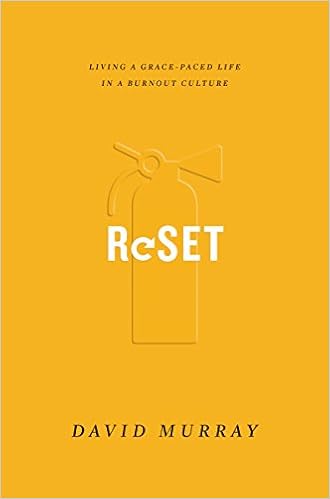
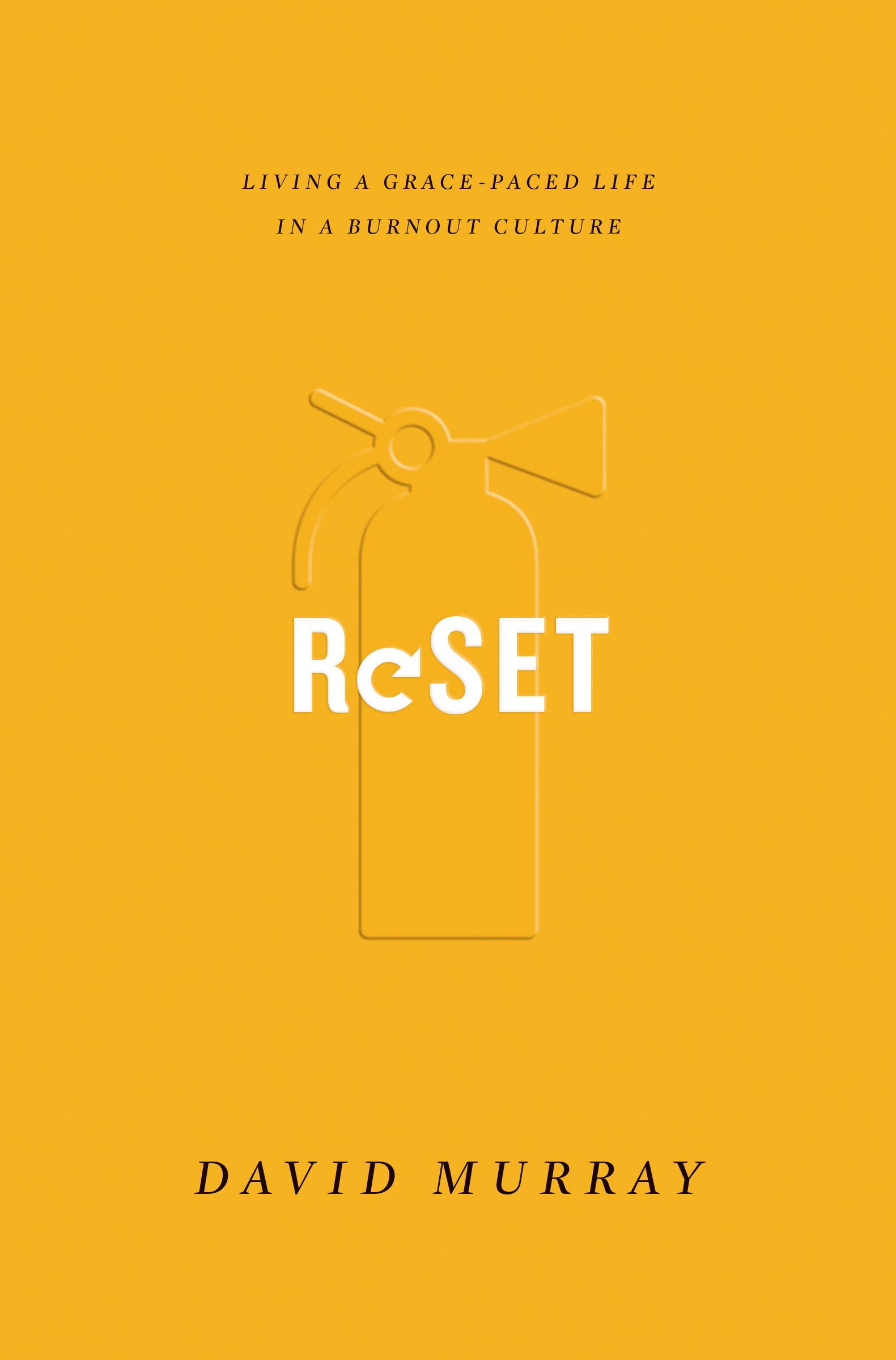
As some of you know, I had a heart attack in October. During my recovery period my wife flagged a book that she thought I might find valuable to read. She was right – she usually is! The book was David Murray’s ‘Reset’. I think I’d been aware of it, but I’d not paid adequate attention to it.
Interestingly, ‘reset’ was a word that had occurred to us as a theme in my recovery. Another point of resonance was the fact that David Murray had written the book in the aftermath of some severe health crises of his own. Health crises have a way of binging us to a standstill – like an unforced sabbatical – and give us an opportunity to evaluate – and reset.
In ‘Reset’ David Murray uses the image of a car that’s gone into the garage for what we call an MOT in our part of the world (currently in Northern Ireland, it just happens that the MOTs really need an MOT!). The book is an opportunity to review how we are doing – physically, mentally, spiritually, emotionally and relationally – and we are taken systematically through a series of ‘bays’ in which various aspects of our lives can be challenged with a view to reset.
David writes in a way that is theologically solid, soundly practical, and pastorally insightful.
There are ten chapters (all conveniently fitted with words beginning with R!).
1- Reality Check 2- Review 3- Rest (on sleep) 4- Re-Create (on the body) 5- Relax (on the mind) 6- Rethink (on identity) 7- Reduce (on purpose) 8- Refuel (on health + energy) 9- Relate (to God and others) 10- Resurrection (on newness)
If you are a Christian in any kind of leadership, or simply trying to keep up with the fast pace of 21st century life, you need to read this book! While your circumstances may not allow you to implement everything the book might suggest (it’s all very well for Roger Federer to sleep 11/12 hours per day), at the very least the book encourages you to review how you are living.
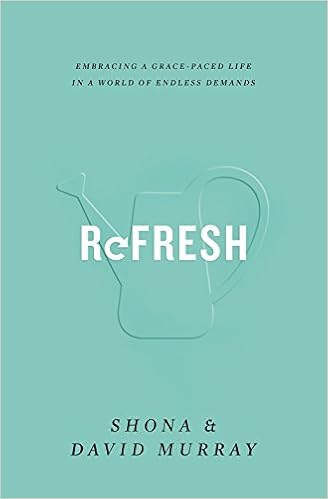
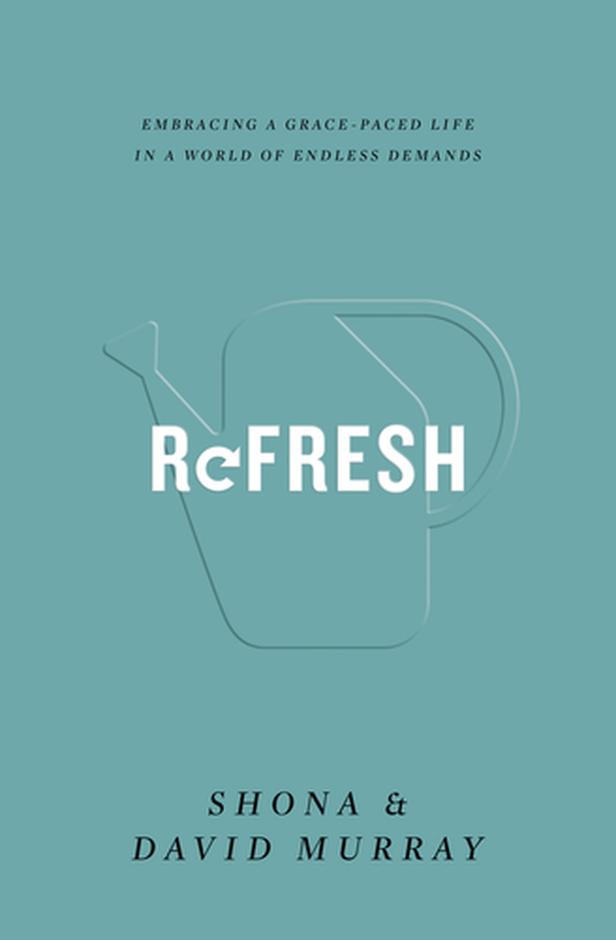
I should add that David has written the book mainly with men in mind. His wife, Shona, has written a very similar book where the applications relate more to women: it is Called ‘Refresh.’
I should also add that Pauline and I will be chatting to David and Shona about their books for an episode of the podcast: watch out for it in early March.
This week’s podcast is a bit different for a couple of reasons. For one thing, it’s international; and in terms of its content, it’s a discussion of a recent new book on leadership, rather than the exploration of one leader’s journey.
The guest is Mark Strauss from San Diego, California. Mark is Professor of New Testament at Bethel Seminary. Along with his colleague, Justin Irving (Professor of Ministry Leadership in Bethel Seminary), Mark has written Leadership in Christian Perspective, a book which outlines a model of ’empowering leadership.’ The book is based around research carried out by Justin, and Mark’s contribution is to bring a biblical perspective to each of the nine leadership practices that Justin has highlighted in his work.
I’ve previously reviewed the book here. I have added it to reading lists for classes I am teaching over the next few months at Belfast Bible College, and you can get your own copy here (UK).
As well as this most recent book, Mark is the author of a considerable number of books and articles. He also serves on the translation committee for the NIV. You can find out more about Mark from his website.












 The Crucible of Leadership