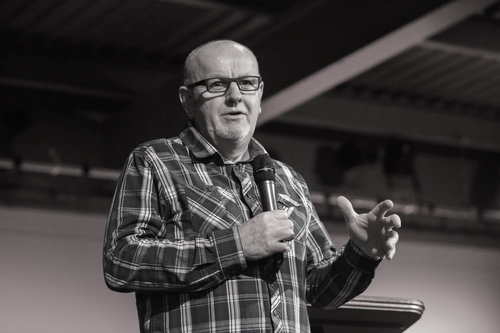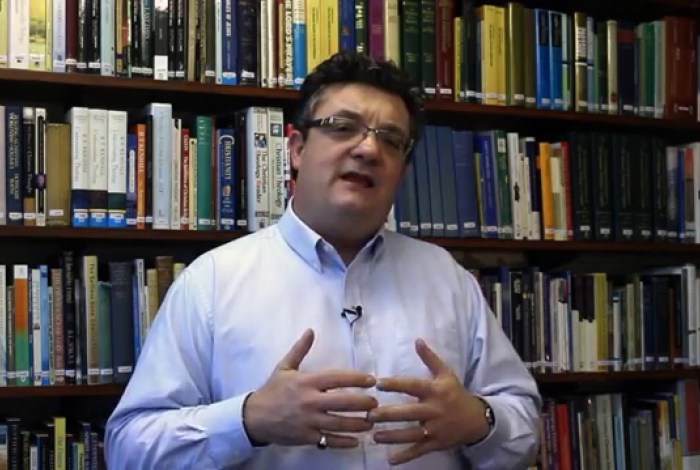
The Leadership Journey Podcast – Season Two, Episode five: Trevor Ramsey (part 2)

IMG_0355

Trevor Ramsey is back this week continuing his story.

In this podcast episode he talks about his involvement in the foundational years of Greenisland Baptist – a season that brought with it some life-shaping personal moments, including his journey through grief after the painful loss of his first wife, Sheila. He goes on to talk about a new phase in his life, both personally (in marrying Maggie) and in terms of his leadership, as he responds to the invitation of the elders of Newtownbreda Baptist Church to become their Senior Pastor.

In the final part of the podcast Trevor describes some of the most important lessons leaders need to be aware of, including the need to lead from a full heart and the significance of humility.

If you would like to find out more about the church where Trevor pastors, you could visit their website – and you can even catch some of the preaching that’s been part of the current themed series Trevor talks about in the podcast.

For your reflection:

  • Which of the lessons Trevor highlights strikes you most? Is there something you think you could do in response?


THE LEADERSHIP JOURNEY PODCAST – Season Two, episode four: Trevor Ramsey

IMG_0355

Trevor Ramsey is Senior Pastor of Newtownbreda Baptist Church in South Belfast, one of the largest Baptist churches in Ireland.

In this week’s episode of the podcast Trevor talks about coming to faith in Christ as a teenager and some of the early influences on him as a young Christian. He talks about his decision to pursue his sense of call by resigning from his job to study at Belfast Bible College, and about his subsequent time as pastor of Limerick Baptist Church in the Irish Republic, including what God taught him the evening no one turned up for the evening service!

For your own reflection:

  • Think about what Trevor says about discerning the call of God: have you experienced the elements he talks about?
  • Trevor talks about realising that what God wanted to do in him mattered more than what God wanted to do through him: have you seen this to be true in your own leadership?


A biblical picture of leadership

Leadership word cloud

The past few decades have seen a significant increase in interest in the subject of leadership, both generally and within the Church. So much so that it’s tempting to paraphrase Ecclesiastes: ‘Of the making of books (and articles) on leadership, there is no end!’

The range of resources available means that Christians face a challenge in knowing how to navigate the subject. On the one hand, we can become so infatuated with the most recent trend in management or entrepreneurship that we end up unwittingly relegating the Bible to the sidelines, while on the other hand, we might bury our heads in the sand with regard to the challenges of 21st century leadership or the wisdom that might be gleaned from some of the best leadership thinkers. In fact, we might prefer to ignore the subject altogether, perhaps even dismiss it as unspiritual!

It’s the first of those temptations – ignoring the voice of Scripture – that I hope to address in this article, suggesting three biblical themes that might provide a framework for fruitful reflection on leadership.

1 – The Bible and leaders

The importance of human leaders is implied by the array of leaders that God uses across the pages of both Old and New Testaments. Considerable space is given to many of their stories: from Joseph, in ‘secular’ leadership in Egypt, through Moses and the Exodus, Joshua in the Promised Land, judges, like Deborah or Gideon, kings like David or Solomon, governors like Nehemiah, all the way through to the Lord Jesus himself and those who followed him.

Despite the shortcomings of many of these leaders, many of them were agents of significant work among God’s people. How would the Hebrews have left Egypt and negotiated the wilderness without the leadership of Moses? How would post-exile Jerusalem have been rebuilt without the leadership of Nehemiah (even though he could not have achieved it by himself)?

While we need to be careful not to treat some parts of Scripture as little more than leadership handbooks from which we can glean ‘leadership principles’, many of the stories have a great deal to teach us about the challenges and responsibilities of spiritual leadership. We also need to recognise that few of the biblical leaders left legacies of unmitigated success. Moses failed to make it to the Promised Land. Samson’s story was a confusing mix of faith and recklessness. Many of the kings ‘did not do what was right in the eyes of the Lord’.

Scripture’s portrayal of these leaders is so honest about their flaws that, even if it’s too much to say that human leadership is a necessary evil, we might be tempted to think of it as a dangerous necessity!

2 – The call to character

Scripture cautions about the traps of leadership. In the Old Testament Deuteronomy 17 warns the king against accumulating horses (a sign of military power), accumulating wives (perhaps as a way of cementing political alliances, but a potential gateway to idolatry), and accumulating silver and gold (material wealth). By any other reckoning, these three things would probably have been markers of success in the ancient world: who wouldn’t admire a leader with great military power, international influence, and personal wealth?

In fact, Israel had one such leader: Solomon. Solomon’s wealth set him at the top of the ‘Rich List’; he had 12000 horsemen (along with horses from Egypt); in his household were 700 wives and 300 concubines. But the trappings of apparent success carried the seeds of the destruction of Solomon’s leadership. He ended his life an idolater and the kingdom was subsequently torn from his family. How many Christian leaders have crashed their leadership on the rocks of money, sex, and power?

It’s no surprise that the New Testament sets so much store on the kind of people who were to lead local congregations. The instructions for appointing elders/overseers in the Pastoral Epistles prioritise personal character over spectacular gifting (though gifting is part of the picture). Similarly Peter (1 Peter 5) challenges the heart motivations of elders, warning them that spiritual leadership is not intended as a path to wealth or personal power.

3 – Biblical pictures

Derek Tidball, in his book Builders and Fools, encourages Christian leaders to think about their role less in terms of the latest leadership trend and more in terms of some of the pictures the Bible itself gives to describe ministerial leadership. When we do this, there is plenty of material!

Among the pictures from which we might draw, there are kings and warriors, prophets and sages, builders and pilots, and there are shepherds and servants.

‘Shepherd’ is perhaps the dominant metaphor for leadership in both Old and New Testaments. In the OT, God (already the Shepherd of his people) delegates the task of shepherding to kings and other leaders. Sadly, they often prove to be unfaithful and are denounced by the prophets who promise that God himself will step in. Messianic prophecy looks ahead to a coming King who will emerge from Bethlehem and shepherd his people. Jesus is the Good Shepherd who lays down his life for the welfare of his sheep, and in turn he delegates the task of shepherding his flock to his followers. Elders are told to ‘shepherd’ the flock.

If 21st century Church leadership is to be biblical, it needs to take proper account of the implications of the shepherding motif, with its call for leaders who are marked by both compassion and courage.

Finally, leaders are servants. The term ‘servant leadership’ has become familiar in general discussions of leadership, but it was Jesus who challenged his disciples to look less at the powerful models of contemporary leadership on display in the Roman Empire, and learn the lessons of servanthood. In contrast to the domineering styles of the culture around them, Jesus’ disciples had to understand that the radically different values of the kingdom of God included a radically different vision of what it meant to be number one: whoever would be first would have to be the slave of all.

Christian leadership follows in the footsteps of Jesus. In fact, we do well to remember that the call to follow precedes the call to lead: our leadership is validated when it flows from our followership. Following in the footsteps of Jesus, biblical leadership exists, not for its own advancement, but for the good of those in its care, for the glory of God, and the advancement of his kingdom.

(This is a slightly edited version of an article written for Insight – the magazine of the Association of Baptist Churches in Ireland – part of a special section the magazine is running on leadership.)


The Leadership Journey Podcast – Season Two, Episode Three: Philip Emerson (part 3)

bt1_9492

This week Phil Emerson, from Emmanuel Church in Lurgan is the guest on the podcast one more time.

If you’ve missed the first two episodes, you can get them here (part one) and here (part two).

In this week’s episode, Phil talks about the devastating loss of his first wife – one of a series of losses experienced in his church family around the same time, and the questions about healing that are raised when people are not healed.

He also talks about his wider ministry and some of the challenges and opportunities that come at this season in life and leadership.

And he shares these three pieces of advice for younger leaders:

  1. Give God everything
  2. Don’t go alone
  3. Get around godly mentors


For your own reflection:

  • What have been some of the things that have most struck you from Phil’s story of his leadership journey?
  • What’s your reaction to the three pieces of advice Phil shares in this episode?

Christian leaders and their devotional life

prayerleaders-1

I was recently asked to speak to a church staff on the importance of a leader’s devotional life. With Bono’s disclaimer that ‘you preach what you need to hear’, here is the drift of what I said.

A key verse (albeit with a spiritualised interpretation) is Song of Solomon 1:6 –

My mother’s sons were angry with me; they made me keeper of the vineyards, but my own vineyard I have not kept!

So here are four reasons why leaders might find it challenging to maintain their devotional life and four reasons why it matters:

  • There is a lot to do! Which means that various things jostle for attention and priority. It can be tempting to be drawn to what can be measured (how many hours we worked, how many people we counselled); but what if the things that matter cannot actually be measured? The story of Mary and Martha is a reminder that there are times when we can get so weighed down by the list of what needs done (or what we think needs done) that we serve from resentment rather than from the overflow of devoted hearts.
  • We get distracted! Richard Foster said that ‘distraction is the primary spiritual problem in our day’. Aside from our preoccupation with the mountain of tasks that are calling for our attention, there are our own inner thoughts – our preoccupations, fears, confusion and questions. And there can be the ubiquitous distractions of our social media feeds on-demand news cycles.
  • Ministry becomes a substitute for devotion and we become professional Christians. At times it takes the form of thinking that once we’re ‘in ministry’, we have somehow graduated beyond the need for the normal routines of the Christian life. Or the fact that we read the Bible for our sermons and talks somehow exempts us from reading it for ourselves.
  • The problem of routine. ‘Discipline’ sounds harsh and some of us see routine as the enemy of spontaneity, or even a pathway to ‘legalism’. It’s true that routines can become ruts, but without structure we’re at the mercy of our moods and circumstances, and routines help us not to forget.

The trouble is, as soon as you sit and become quiet, you think, Oh, I forgot this. I should call my friend. Later on I’m going to see him. Your inner life is like a banana tree filled with monkeys jumping up and down (Henri Nouwen).

And why is any of this important?

  • We are followers before we are leaders. Or, as a good friend of mine puts it, God has called us to be shepherds, but some of us have forgotten we are still sheep.

Jesus had different priorities than teaching us to lead. ‘Follow’, however, comes up explicitly over thirty times in the Gospels. Whether or not all of us or anyone are called to leadership is not at stake; we are all called to be followers. Discipleship is first and foremost about following. Disciple indicates one who follows Jesus, ‘a relationship that involves both commitment and cost (Arthur Boers).

  • Our best leadership flows from who we are. Leadership is not merely a set of functions carried out by a leader: the next leadership is the leader expressing who they are. The best Christian leadership is an overflow of who the leader is being shaped to be in God.
  • We need to find strength in God. Leadership is challenging and there are times when leaders are overwhelmed and their own resources are insufficient. A seasoned leader once told me that ‘probably one of the greatest things you need to learn on leadership … is the ability to strengthen yourself in God’.
  • Leaders need to know that God loves them. This has been a theme in some of the leaders’ stories that have been shared with me, both in my research and in my Leadership Journey podcasts. In the middle of all the remarkable events and challenges of his leadership, what must it have meant to Moses to hear God say, ‘You have found favour in my sight, and I know you by name’?

Pastors often slip into the trap of building their identities around their roles and performance rather than being beloved children of God and co-heirs with Christ. Pastors need to pursue growth in their understanding of and feelings concerning God’s acceptance (from Resilient Ministry).


Drop Thy still dews of quietness,
Till all our strivings cease;
Take from our souls the strain and stress,
And let our ordered lives confess
The beauty of Thy peace.
Breathe through the heats of our desire
Thy coolness and Thy balm;
Let sense be dumb, let flesh retire;
Speak through the earthquake, wind, and fire,
O still, small voice of calm!

(From the hymn Dear Lord and Father of Mankind)

The Leadership Journey Podcast – Season Two, episode Two: Philip Emerson (part 2)

bt1_9492

Phil Emerson is the guest once again on this week’s episode of the podcast (you can listen to part one of his story here).

This week Phil talks about some of the challenging personal circumstances he has had to navigate and how, through some of these, God has given him a heart for the people of his town.

He also recounts the story of a dramatic experience of God’s love, and talks about some of the remarkable growth experienced by his church as well as sharing some of the story of how God provided for them.


For your own reflection:

  • How has God used difficult circumstances in your life to prepare you for leadership?
  • Why is it important that leaders (and others) have an assurance of God’s love?

The Leadership Journey Podcast – Season Two, episode One: Philip Emerson

bt1_9492

After a break over the summer, the Leadership Journey Podcast is back this week. The guest on the first three episodes of this new season is Philip Emerson. Philip is one of the lead pastors at Emmanuel Church in Lurgan, a church that was birthed in his living room over 20 years ago.

In this first episode Phil talks about growing up around the shore of Lough Neagh where he came to faith as a child and quickly developed a love for God and a zeal to serve him and tell other people about him. He discusses some of the people who most influenced him and some of the factors in the development of his leadership.

On a practical note, he shares how he has learned leadership through the years by intentionally seeking out the counsel and wisdom of more experienced leaders.

AND… have you ever heard anyone say that their duck’s a swan? Listen carefully!


For your own reflection:

  • Do you think leaders are born or made?
  • How intentional are you about learning from leaders who are farther along the path of leadership (and may be much stronger leaders) than you?

Leadership refreshment: a course for leaders

News on a 6 part course for Christian leaders: get in touch if you’d like to know more.


cropped-new-territory3.jpg

‘Refreshing your Leadership’ is a six-part course intended for groups of Christian leaders. It is designed primarily with church or mission/ministry leaders in mind (though it can be adapted to Christians leading in other fields). Ideally there should be at least 5 people in the group. The group could consist of a church leadership team, the staff or leadership team of a mission, a local group of pastors and ministers, or a gathering of missionaries.

Who leads the course?

The course is led by Dr Alan Wilson. Alan is a visiting lecturer at the Irish Baptist College in Moira, an associate tutor at Belfast Bible College, and part of the adjunct faculty of the Irish Bible Institute in Dublin. He has over 20 years of pastoral experience in Northern Ireland and Switzerland. His doctoral workexplored the theme of ‘crucible’ experiences in shaping Christian leaders.

How will the course run?

The material is organised in 6 sessions (ideally of two hours each, though they can be condensed) and there is flexibility in how these might be arranged. For example it would be possible to run the course over a series of weekday evenings, as an intensive weekend event or as a series of day retreats for a team.

As well as the teaching content, the course allows time and space for personal reflection, not least the opportunity for leaders to reflect on their own leadership journeys.

How much will the course cost?

The cost will depend on the size of the group and the group’s ability to pay: suggested donation is between £450-800, plus travel costs.

What does the course cover?

Part One: The Leader’s Journey (Moses)

The first two sessions will explore the concept of a leadership journey and we will be making use of the story of Moses as a template to help us explore our own stories.

  • Introducing the story of Moses. Moses is one of the most significant figures in Scripture’s story line, and his own story is one of the most dramatic in the Bible: it is rich in insights into how God works with a leader.
  • Introducing the concept of the leadership journey timeline. The narrative of Moses’ life falls neatly into three distinct: formative years, exile years, and leadership years. The course encourages leaders to reflect on their own leadership timeline, highlighting ways in which they have been shaped and lessons they have learned along the way.
  • The leader’s formative years. The first stage of Moses’ life helps us to reflect on the people who have influenced our development, and to think about key decisions that have shaped the direction of our lives.
  • The leader in exile. While the biblical text gives us few details about the middle stage of Moses’ life, it is a stage that opens up the theme of exile or wilderness when the leader’s aspirations and the reality of their actual circumstances are quite different.

Part two: The Leader’s Journey, continued

  • The leader’s calling. This session looks at the debate between Moses and the Lord: when Moses is finally called to lead the Hebrews (what he wanted to do 40 years previously), he has decided he’d rather stay in obscurity and leave the work to someone else: what excuses do leaders offer to avoid God’s call?
  • Leadership challenges. Moses’ experience reminds us that strategic spiritual leadership is no easy task. In this session we explore some of the tough challenges that confront Moses and other leaders.
  • Leadership opportunities. While the leader has to face challenges, spiritual leadership also brings great privileges: we will think about the importance of a leader being secure in the love of God.

Part Three: The Leader’s Task (Nehemiah)

In sessions three and four, the focus is on the leader’s task and we will be using the story of Nehemiah and the rebuilding of Jerusalem to structure our thinking as well as referring to more general leadership ideas.

  • Introducing Nehemiah and his times. This session sets the scene and reflects on the important theme of living in exile. As Nehemiah prays for Jerusalem, we ask what it means for a leader to pray ‘Your kingdom come’.
  • The leader’s vision. What was happening in Jerusalem was so wrong that Nehemiah knew it had to be put right. As he prayed, God put a plan in his heart. What does it mean for a leader to have a God-given vision?

Part Four: The Leader’s Task, continued

  • The leader’s team. While the role of the leader is important, leaders’ effectiveness is limited if they are not surrounded by a team who will join them in the vision and plan. Nehemiah’s story is the story of a host of otherwise largely unknown people who rolled up they sleeves to rebuild Jerusalem.
  • The leader’s resilience. Nehemiah’s leadership takes place against the backdrop of opponents who attempt to hinder the rebuilding task. What are some of the issues leaders face – both in terms of their work and personally – where perseverance and resilience are called for?

Part Three: The Leader’s Model (Jesus)

In sessions five and six we reflect on the life and teaching of Jesus as they relate to our thinking on leadership. It’s been pointed out that there is a lot more in the gospels about a call to follow than about a call to lead!

  • Jesus, the Leader. Biblically, leadership starts with God and in this session we will explore how Jesus led, focussing on the concept (which has become popular in general leadership thinking) of servant leadership.
  • The leader’s testing. Again we turn to some of the challenges that leaders face. This time we reflect on what we might learn from Jesus’ testing in the desert: what happens when leaders are tempted to go it alone relying on their abilities more than on God, or when they are tempted to take short cuts?

Part Six: The Leader’s Model, continued

  • The leader’s life. In this session we will focus on Jesus’ teaching in John 15 where he talks about the disciples’ relationship to him (‘abide in me’), their relationship with each other (‘love one another’), and to to the world (as witnesses).
  • The leader’s call to follow. For all the talk in this course about leadership, leaders need to remember that their primary calling is not to lead but to follow. We’ll explore Jesus’ conversation with Peter in John 21 and think about what it means for leaders to be faithful followers.

← Back

Thank you for your response. ✨

Warning
Warning
Warning
Warning

Warning.

THE LEADERSHIP JOURNEY PODCAST (30): Helen Warnock (part two)

helen_3

This week Helen Warnock is back on the podcast. Helen is Principal of Belfast Bible College in Dunmurry.

In this week’s episode she talks about some of the people who have influenced her along the course of her leadership journey, highlighting a boss who knew how to give people opportunity where he saw potential; again she talks about the importance of friends.

She talks about some of the challenges she has faced (some of them are just life and work issues – not particular to leadership) – including the challenge of knowing yourself – and shares her list of key areas of learning:

  1. You are not invincible
  2. Team is fantastic
  3. Take responsibility for your own life
  4. Ask yourself good questions
  5. We need champions
  6. Don’t be lonely
  7. Heart matters.

For your own reflection:

  • What do you make of the special staff meeting that Helen describes? As a leader, have you ever considered publicly and personally thanking those who work with you (including volunteers)?
  • If you work with a talented team, do you genuinely want them to be better than you?

This episode brings season one of the Leadership Journey Podcast to a close. We plan to be back with season two after the summer.

For more on Belfast Bible College’s 75th anniversary, visit their website.

THE LEADERSHIP JOURNEY PODCAST (29): Helen Warnock (part one)

helen_3

This week’s guest is Helen Warnock. Helen has worked in Northern Ireland with Youth for Christ and with Scripture Union. Since December 2016 she has been Principal of Belfast Bible College in Dunmurry.

In this first part of her interview Helen talks about the kind of work she has been doing in her first 18 months at BBC – a college that is celebrating its 75th anniversary this year. She talks about some of the early indicators of leadership (organising street concerts as a child in her local housing estate!) and the family heritage of Christian faith.

She describes her years with YFC, when for part of the time she was responsible for a major monthly youth event in Belfast, how she decided to move to Scripture Union (where she became the first director who was not a Presbyterian minister, and where the first three years represented a steep learning curve), and her more recent move to BBC.

Along the way there is an opportunity to reflect on discerning God’s leading, both personally and for organisations, some thoughts on how a 150 year old organisation can remain as relevant today as it was in the past, and discussion of the role of friends in helping to keep her on course.


For your own reflection:

  • Helen talks about ways in which experiences on mission teams helped to form some of her priorities: reflect on ways some of your own early experiences of mission or ministry have contributed to where you are today.
  • In the interview we discuss seasons of events and how to know when it is time to stop and event (even when it has previously been successful): have you any experience of events that may have run longer than they should, or others that have been stopped prematurely?
  • Do you have space in your leadership to be a ‘thinking practitioner’?
  • Do you have friends who can speak to you in the way Helen describes her conversations with her friends?

For more on Belfast Bible College, visit their website – in particular you might like to find out more about the new MA that is being launched this year.

In fairness to other Bible colleges where I am also involved, I should mention Irish Bible Institute, and its MA, as well as the Irish Baptist College and its MA: I find myself in the odd, but privileged place of having input into all three MA programmes!

THE LEADERSHIP JOURNEY PODCAST (28): MALCOLM DUNCAN, PART Three

maxresdefault

Malcolm Duncan, Senior Pastor of Dundonald Elim Church, is back for a third week.

He talks about some of the impressions of the Northern Ireland he has returned to. He suggests that there is a lot of hope (‘if you see cranes in a city, it’s a sign of hope’), while there is also a degree of uncertainty.

We discuss the theme of exile: how do we sing the Lord’s song in a strange land? Malcolm suggests that here is a difference between a church that sings and a church that shouts and he argues that we need to spend more energy telling the Church to get its house in order than telling the world to get its house in order.

He offers some ideas on how the Church needs to respond to the secularisation of society: the Church in Northern Ireland needs to be a hopeful community and a source of hope that could flow beyond these shores.

He reflects on some of the early Irish missionaries and how they went about their work and wonders where the big story tellers are at a time when we may have been guilty of overly dissecting the gospel. Cultivate a bigger vision of the gospel by cultivating a smaller vision of its reality – which means looking for ‘the green seeds of hope’ in your community.

He talks about how he feeds his mind and soul and shares at some length about how he approaches Scripture.

He also talks about the ‘niteblessings’ which you can follow on his social media platforms: @MalcomJDuncan on Twitter and InstagramRevMalcolmDuncan on Facebook – and watch out for the upcoming book!

Towards the end of the podcast, he shares some of the most important things he has learned in leadership:

  1. You cannot be a good leader unless you are a good follower.
  2. There is always more to learn (‘I understand God less than I have ever understood him, but I love him more than I have ever loved him’).
  3. Leadership is as much about learning to trust God as it is about leading other people (‘I do not need to understand God in order to trust him’).
  4. God is good and his love endures forever (‘I have learned the gift of suffering’).
  5. ‘I have nothing to prove!’

Listeners of a certain age will catch the reference to Larry Norman!


Here is the podcast:


For your reflection:

  • How can the Church learn to sing more than it shouts?
  • What does it mean for the Church to be an alternative community on the edges of society?
  • Have you a big vision of the gospel?
  • What might it mean to find God at work in your community, as Malcolm describes it?
  • How do you feed your mind and soul?
  • Have you developed a pattern of engaging with Scripture?

8 things Christian leaders can learn about ministry from Moses

Yesterday I had been invited to a gathering of a dozen or so Baptist pastors: I shared some things I’ve learned about leadership, framing them with the story of Moses.

Here is a little summary of my thinking:

1 – We don’t get there by ourselves.

Moses’ survival, his eventual faith in God, and his leadership of God’s people would not have been possible had not been for the faith of his parents, the compassion of Pharaoh’s daughter, and the ingenuity of his sister.

Nor do we get there by ourselves. Whether it is the faith, example and witness of our family, the faithfulness of teachers, or the investment of mentors, we don’t get far on our own.

2 – God can meet us in deserts.

For Moses, the middle years of his life represented the loss of his vision and passion. Exile in Midian was not what he was expecting when he attempted to rescue the Hebrew slaves at 40.

Many leaders find themselves in wilderness experiences at various points in their ministry. Whether it is a wilderness of stress and burnout, a wilderness of failure, or a wilderness of illness or spiritual crisis, wilderness by definition is a hard place. But God can meet us there, as he did Moses.

3 – We need to know that God loves us.

At a time of great crisis (see Exodus 32,33), Moses hears from God. The text says that ‘the Lord used to speak to Moses face to face, as a man speaks to his friend’. Not only did God promise that his presence would be with Moses, but he told him that he had found favour in his sight and that he knew him by name.

Believing that God loves us might seem like spiritual ABCs, but from time to time we need to be reminded: as Henri Nouwen would say, to hear the voice that calls us the beloved.

4 – Ministry is meant to be shared.

Two incidents in Moses’ life are pertinent. The first is when his father in law sees how much Moses’ style of leadership had become a bottleneck and was threatening to wear out both Moses and the people. The second comes later when Moses is complaining about the heavy load of responsibility and God responds by pouring his Spirit on seventy elders. Two people were not part of the main group and Joshua, perhaps anxious to protect the leadership of his mentor, urges Moses to stop them from prophesying. Moses’ responds that he wishes all the Lord’s people were prophets.

Control-freakery is not a sign of healthy leadership. Leaders need to learn the paradox of power: the leader’s power is not diminished when it is given away to others! Ministry is meant to be shared.

5 – We need to learn to handle criticism.

Criticism was a frequent theme of Moses’ life, whether it was about what the people were eating and drinking, or whether it was their complaint (in fact his siblings’) that Moses had got ahead of himself in terms of self-importance.

At times leaders are lightening rods and find themselves attracting any negativity in the air. At times it feels personal (perhaps at times it is!) and can be hard to take. But making it about ourselves and our honour is likely to make it worse.

While criticism may be painful and while a pervading negativity can be toxic in a church or organisation (and may need to be dealt with), we do well to remember the thoughts of a leadership scholar who has suggested that the most successful leaders are liable to be those with the least compliant followers! Without critique, we remain unaware of our weaknesses and areas where growth is needed.

6 – We are never the finished article.

Moses’ character had a streak of anger: witness his reaction to injustice or his smashing of the stone tablets. Yet he is later described as ‘the meekest man on earth’! You’d think that time had sufficiently moderated his character flaw and that his anger issues had been resolved. Until the provocation of the people eventually gets to him and he disobediently strikes the rock.

Beware, lest character flaws you thought were things of the past come back to bite you: avoid the arrogance of thinking you are the finished article!

7 – We must not get in the way of Jesus.

In the mysteries of biblical typology, Paul claims that the rock that followed the Israelites in the desert was Christ. Which suggests to me a picture of Moses getting himself in the way of an encounter between Christ (the rock from which water flowed) and the people.

Leaders have personalities and these are simply part of who we are. But people need more than our personalities: they need living water, and that comes from Christ, not us. Let’s not get in the way by drawing attention to ourselves.

8 – We need to prepare the next generation.

Moses would not make it to the Promised Land, and he knew the people would need a new leader. So he prayed for one (Numbers 27). In answer, God gave him Joshua (though the ultimate answer to the problem of sheep without a shepherd was a greater Joshua!) and Moses commissioned him.

Leaders come and go but the work goes on and calls for new leaders. What are we doing to pray for them and prepare them to pick up the baton?

The Leadership Journey Podcast (27): Malcolm Duncan, part two

maxresdefaultThis week Malcolm Duncan is back on the podcast: Malcolm is Senior Pastor of Dundonald Elim Church in East Belfast.

In this week’s episode, we talk about some of the biblical concepts around the theme of leadership, including a quick overview of five powerful metaphors from the book of Jude:

  • Clouds without rain
  • Hidden reefs
  • Wandering stars
  • Waves of the sea
  • Trees without fruit

For more on the five metaphors from Jude, see Walter Wright’s excellent book,  Relational Leadership.

Malcolm also shares very personally about the experience of sensing God’s call to return to Northern Ireland.

Remember – you can follow Malcolm’s ‘niteblessing’ – a prayer for each evening – via his Twitter page – @malcolmjduncan, or on his Facebook page – RevMalcolmDuncan.

For your own reflection:

  • What leadership pictures do you tend to default to when you try to think about your leadership?
  • Have you ever experienced a powerful sense of God leading you to change direction in your life?

The Leadership Journey Podcast (26): Malcolm Duncan (part one)


9ey7xfrc_400x400The guest this week (for the next three weeks, in fact) is Malcom Duncan. After spending the past thirty years away from Northern Ireland, where he grew up, Malcolm has recently taken up the role of Senior Pastor in Dundonald Elim Church in East Belfast. Previously – most recently – he was Senior Pastor of Gold Hill Baptist Church in England. Malcolm is well known as a conference speaker at events such as Spring Harvest and New Horizon.

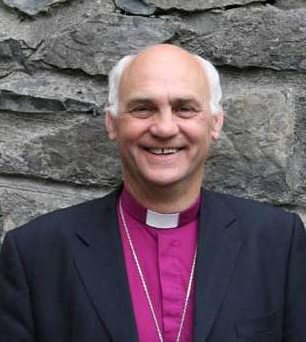
In this week’s podcast, Malcolm talks about returning to the country he left three decades ago, he talks about his dramatic conversion experience at sixteen (which he believes also constituted his call to Christian ministry), and he shares some of his thoughts on leadership and mentoring.

Questions for reflection:

  • As you listen to Malcolm describe his conversion experience, reflect on how you came to faith? Was it a dramatic experience, or was it more gradual? Someone has suggested that some conversions are more ‘Emmaus Road’ than they are ‘Damascus Road’.
  • What do you think of Malcolm’s rationale for team leadership? Do you have a theological foundation for your own leadership model?
  • Do you have a Timothy and/or a Paul figure in your life?
  • ‘You cannot lead people you don’t love’: what do you make of this comment?

You can catch also Malcolm’s ‘nite blessing’ – a prayer for each evening – via his Twitter page – @malcolmjduncan, or on his Facebook page – RevMalcolmDuncan.

The Leadership Journey Podcast (25): Ken McBride (part 2)

1779_54181336488_5967_n

This week Ken McBride is back on the podcast. In this episode he talks about his move from rural Northern Ireland to Orangefield Presbyterian Church in East Belfast, where he stayed for 32 years. Among other things, he talks about how he changed the culture in the church to enable every member ministry and discusses some of the influences on his thinking.

He also talks about the changing face of denominationalism in Northern Ireland (‘we can’t afford the luxury of inter-denominational fighting’).

He discusses the important subject of resilience, highlighting several of the lessons he has learned about this along the way – not least the realisation that he works for ‘an audience of One’, a commitment to regular Bible reading and prayer, and team ministry.

  • As a church leader, how can you help your church to retain what is good while being sensitive to new emphases that the Holy Spirit may want to bring? How easy is it to do ‘what’s right’ without worrying about the label?
  • How do you think leaders can cultivate a resilience that will enable them to serve over the long haul?
  • How do you find the balance between staying true to a course of action while remaining humble enough to admit you could be wrong?
  • Are you part of a leadership team? How are you cultivating the sense of team?

The Leadership Journey Podcast (24): Ken McBride (part 1)

1779_54181336488_5967_n

This week’s guest on the podcast is Ken McBride: Ken retired last year after over 35 years as a minister in the Presbyterian Church in Ireland. For most of that time he was minister of Orangefield Presbyterian, in East Belfast.

Ken talks about his childhood faith (‘I gave the little I knew of myself to the little I knew of God, and it’s been a constant journey ever since’) and some of the seeds of leadership that appeared through his involvement with a band who were engaged in music and apologetics. He also discusses how God used the most famous verse in the Bible to lead him out of a period of doubt in his twenties.

Perhaps surprisingly for someone who would go on to spend so much time in church leadership, Ken was initially resistant to work in the institution of the church, though he was inspired to be involved in ministry. Along the way he has learned to allow God to bring him into his plans, rather than the other way around: as a self-confessed talker, he had to learn to listen!

For your own reflection:

Do you tend to ask God to bless your plans more than you ask him to tell him his plans?

The Leadership Journey Podcast (23): Ken Clarke (part 2)

bishopkenclarkeThis week there is more from Bishop Ken (Fanta) Clarke, mission director of SAMS (UK and Ireland).


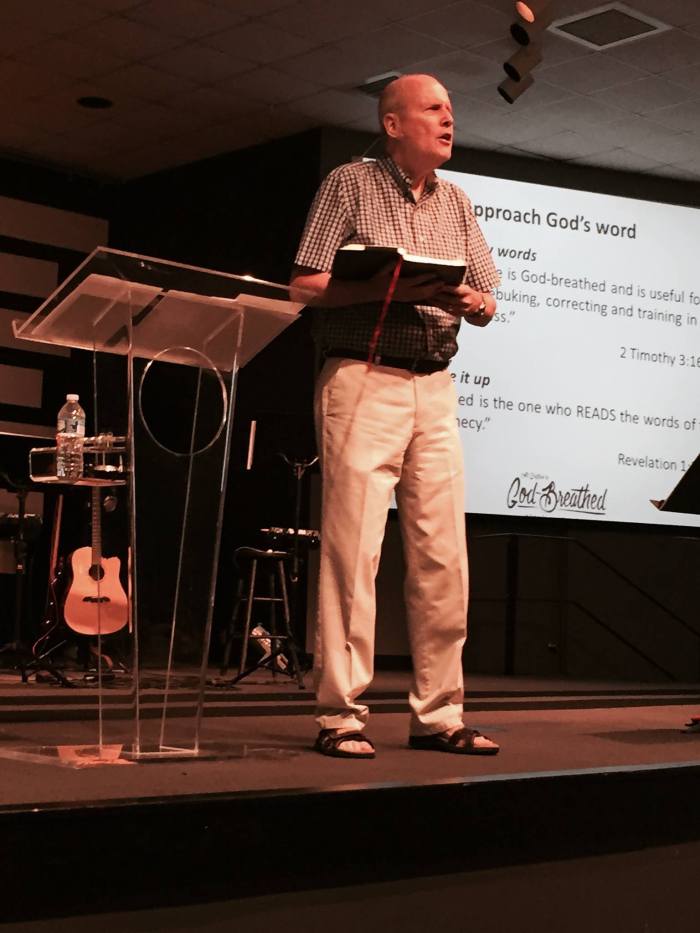
The greatest need of my people is my personal holiness (Robert Murray McCheyne).

This week Ken talks about risk taking and younger leaders, about his experience of culture shock when he went to Chile, about the need for leaders to take time to be reflective, and the challenge of trust.

He also tells the story about a somewhat nerve-wracking experience in isolation on an African mountain and what he learned at that time!

And there are these four key pieces of advice:

  1. Don’t be a maverick: think team!
  2. Remember that team members have different capacities;
  3. Have soul friends;
  4. Guard your heart (Proverbs 4:23).

For your own reflection:

  • How easy to you find it to take time to reflect on your purpose as a leader and on the purpose of your church/organisation? How much time do you spend listening to God?
  • If you lead a team, do you train them well enough that they can leave but treat them well enough that they don’t want to?

The Leadership Journey Podcast (22): Ken Clarke (part 1)


bishopkenclarkeThis week’s guest on the podcast is one of the best known and most popular leaders in the Northern Irish evangelical church: Ken (Fanta) Clarke. Ken has served (and continues to serve) in a number of roles through the years, including time spent in South America as a missionary, local church leadership on both sides of the Irish border, his role as Bishop in the Church of Ireland, and his current role as mission director for SAMS UK and Ireland (South American Mission Society).

In this episode he talks about some of the events and people who helped form him for leadership. He discusses his definition of a leader as someone with a compass in their head and a magnet in their heart and underlines his belief in the potential impact of one godly life.

As you listen:

  • Who are some of the people who have helped shape you in your leadership?
  • Are you seeking to make the most of whatever calling you have to influence others?

The Leadership Journey Podcast (21): Ian Parkinson (part 2)

ian-parkinson

Ian Parkinson from CPAS is back in this week’s episode and shares his wisdom on some important aspects of the leader’s task. He discusses the concept of culture in a church or organisation, as well as the process of leading change, drawing from some interesting concepts in the work of William Bridges. He also talks about mentoring and gives us a list of five recommended books.

The first three are written from a specifically Christian perspective:

  1. Growing Leaders (James Lawrence)
  2. The Undefended Leader (Simon Walker)
  3. Relational Leadership (Walter Wright)

There are two more general books:

  1. Leaders (Bennis and Nanus)
  2. The Leadership Challenge (Kouzes and Posner)

It’s only fair to mention Ian’s own Reignite: Seeing God Rekindle Life and Purpose in Your Church.

SaveSave

The Leadership Journey Podcast (20): Ian Parkinson (part 1)

ian-parkinson

This week’s guest is Ian Parkinson. Ian is a leadership specialist with CPAS, an Anglican evangelical mission agency that works with churches. He has also worked as a local church leader and in a leadership role with the New Wine network of churches. He is the author of Reignite: Seeing God Rekindle Life and Purpose in Your Church.

In this episode Ian talks about discovering faith and how he found God developing his leadership gift as he grew spiritually.

He spends some time discussing the theme of wilderness, describing a year long phase that followed his time at university. He has come to believe that an experience of being emptied or shaken is the only basis for effective Christian leadership: the leader needs to encounter God and learn to rely on him.

For reflection as you listen:

  • What do you think about Ian’s claim that leaders need to encounter the wilderness if they are to be truly effective for God?
  • Reflect on a time as a leader when you came to the end of your resources and had to learn to rely on God in a new way.

In next week’s episode Ian goes on to discuss the issues of culture and change in leadership.

THE LEADERSHIP JOURNEY PODCAST (19) PAUL REID (PART 3)

11233344_784489648338099_6128951621764574404_o

Paul Reid is back for another episode of the podcast. Among the things we discuss are various styles of leadership and the importance of leaders (and others) figuring out who they are. We also discuss leaders’ insecurity and Paul touches on another of the paradigm shifts in his ministry: the question of women in leadership. He also talks about retirement, and the importance of leaders having a plan in place as they approach retirement.

And he shares some of the lessons he has learned along the way, including:

  • the need to embrace weakness
  • the importance of keeping a united team
  • the value of having people around to care during times of challenge
  • the issue of ‘disintegrated anticipation’ (you will have to listen to the podcast to understand what this is, but it has to do with fads!).

Here is a link to the book Paul mentions on teams – The Five Dysfunctions of a Team.

The Leadership Journey Podcast (18) Paul Reid (part 2)

11233344_784489648338099_6128951621764574404_o

This week Paul Reid is back on the podcast. If you missed the first part of his story, you can catch up with it here. This week’s episode picks up Paul’s story from his appointment as pastor of CFC in Belfast.

Among the things Paul discusses during the podcast are issues of church autonomy and his approach to remaining open to outside voices; the influence of John Wimber and his own emphasis on a message of grace; his – and CFC’s experience of the Toronto Blessing; and how he has sought to maintain a balance of Word and Spirit in his ministry.

As you listen to the podcast, here are some things to think about:

  1. If you are a church leader – especially if you are in an autonomous church set-up, how do you and your church keep your leadership open and accountable to others?
  2. Have you thought through a theology of prayer and healing?
  3. ‘There is no small print in the message of God’s love and grace’: how do you respond to what Paul says about grace?
  4. If you are a church leader, how have you gone about ensuring that your ministry is about both Word and Spirit?

In next week’s podcast, Paul will be reflecting on some of what he has learned through the course of his leadership journey.

You can subscribe (for free) to the podcast here.

And here is this week’s episode:


SaveSave

The Leadership Journey Podcast (17): Paul Reid

11233344_784489648338099_6128951621764574404_o

This week’s guest on the podcast is Paul Reid who, along with his wife Priscilla, led Christian Fellowship Church in Belfast for over twenty years.

Paul talks about coming to faith in his teens and his early upbringing in a Brethren Assembly. He and Priscilla left this to start a house fellowship and their group eventually became CFC in East Belfast.

He talks about the influence of Spring Harvest – both in his sense of call to leadership and in his experience of the Holy Spirit, and of several notable Christian leaders, including Terry Virgo and Roger Forster.

He also discusses the controversial ‘shepherding’ movement and the reason why he and his fellow leaders felt they needed to resign from their leadership roles.

Some questions as you listen:

  • Paul talks about some key turning points in the early years of his life and ministry: what events and seasons do you look back on as being formative in your own journey?
  • What do you think about the idea of leaders admitting to their followers that they have got something wrong? Is this a sign of strength? How can leaders distinguish between a conviction that they need to persevere in a course of action and a sense that they need to retrace their steps?

Part 2 of Paul’s interview will available after Easter – this will include discussion of several other controversial issues that Paul’s journey has seen him tackle; and there will be a 3rd part, in which Paul will talk about some of what he has learned about leadership and what advice he would give young leaders.

The Leadership Journey Podcast (16): Nehemiah

This week’s podcast takes a look at the Old Testament story of Nehemiah. While we must always be careful not to reduce the Bible, or any of its stories, to the point where we miss the main point, there are some interesting leadership lessons to be gleaned in observing some of the leaders whose stories are told.

Nehemiah’s story takes us back to the post-exilic world towards the end of the Old Testament timeline: he is in Persia while many of his compatriots are struggling against the backdrop of a ruined city of Jerusalem. From Nehemiah’s deep brokenness emerges a vision of a renewed city and becomes the leader of a great movement for rebuilding and renewal.

As you listen to the podcast, there are three main leadership questions for you to reflect on in relation to your own leadership:

  1. The vision and mission question: what needs to be done?
  2. The team question: who will help you to do it?
  3. The resilience question: what obstacles will you need to overcome?

PS – Keith Lamdin, in his book Finding your Leadership Style, suggests that there are three essential ingredients to leadership: discontent, vision, and courage – interesting in the light of with the 3 Nehemiah questions.