My guest in the final part of this mini-series on the Church and Covid-19 is Gemma Brown. Gemma is Communications Officer for Tearfund Northern Ireland.
In this episode of the podcast, she talks to me about Tearfund’s global response to Covid-19.
Here are some useful links it you’d like to follow up what you hear on the podcast:
Eddie Arthur has been involved in mission for some thirty-five years. This has included time spent as a Bible translator in Ivory Coast, and several years as the UK director for Wycliffe Bible Translators. Recently he has completed his PhD, in which he explored the extent to which the practice of mission agencies corresponds to their theology, and he currently works as a researcher.
Eddie blogs at Kouyanet, and recently he made several observations about how he sees the Church, post-lockdown. You can read his article here.
In this episode of the podcast we chat about his thoughts.
Here is a link to the eBook, Global Transmission, Global Mission that is referred to in the conversation.
In today’s episode of the podcast I’m speaking with Bill Foye. Bill is pastor of Hope Church in Hillsborough. As we talk about ministry during the pandemic, Bill shares a couple of essential (in the truest sense of that word) questions for churches and leaders to ask themselves at a time when normal activities have been so disrupted.
The guest on today’s episode of this series of podcasts, discussing ministry during the pandemic, is John Ervine. John is pastor of Cornerstone Church in Rathfriland. John led a church plant there 6 years ago (this month is their 6th anniversary) and the church has grown from small beginnings to be a gathering of some 200 adults and children.
Ben Walker is minister of Saintfield Road Presbyterian Church in South Belfast. He joins me in this episode to talk about some of the ways he and the church have been adapting their ministry during the pandemic.
There are some interesting ideas on preaching, plus, this challenging statement:
My guest on today’s episode of the podcast is Simon Genoe: Simon is rector of Magheralin and Dollingstown Parish Church, between Moira and Lurgan. Like my ancestors, he’s from County Monaghan and worked in Lisburn Cathedral before taking up his current post. As well as serving in parish ministry, Simon is one of the leaders of New Wine Ireland.
Remember that you can can catch up with previous episodes on this blog or by visiting the podcast on Apple Podcasts or on Spotify, where you can subscribe for future episodes.
This week continues the series of podcasts talking about ministry in the context of the pandemic. Today’s is Stevie Walls. Stevie is deputy head in a Belfast primary school and is an elder in Castlereagh Gospel Hall, on the edge of East Belfast.
Remember that you can can catch up with previous episodes on this blog or by visiting the podcast on Apple Podcasts or on Spotify, where you can subscribe for future episodes.
My guest on this episode of the podcast is Ken Clarke. Ken is a well known and highly respected leader who has served the Church in various roles for several decades.
The focus of our conversation is a little different from other podcasts in this series that have focussed on what’s happening across a number of specific churches. Here, Ken talks about some of his reflections during this current season.
He reflects on the significance of the Easter story (‘finished work’), the opportunities for wider outreach (‘unfinished task’), and the challenge of ‘finishing well’ (a favourite theme for a man who prefers to talk about retirement than retirement.
God willing the podcast returns next week when my guests are Stevie Walls (Tuesday’s episode), and Simon Genoe (Thursday’s episode).
As well as having the same surname, we also trace our roots back to the same great-grandfather from Glaslough, County Monaghan.
In this conversation Lesley-Ann talks about the challenges of ‘technology fatigue’ and challenges leaders to leave space to discern where God is working and where they need to join his work.
It’s humbling that we have to put away our strategies and our agendas and take a clean sheet of paper and say, ‘OK, God, it’s over to you: what is it that we need to be doing in order to reach people with the good news of Jesus?’
God willing, you can look forward to two more episodes of the podcast next week. On Tuesday my guest will be Stevie Walls, an elder in Castlereagh Gospel Hall, and on Thursday it will be Simon Genoe, rector of the Church of Ireland parish of Magheralin and Dollingstown.
Remember that you can can catch up with previous episodes on this blog or by visiting the podcast on Apple Podcasts or on Spotify, where you can subscribe for future episodes.
The plan is to post a couple of these conversations each week (Tuesdays and Thursdays). You can catch up with previous episodes on this blog or by subscribing to the podcast via Apple Podcasts or on Spotify.
The guest on this week’s Thursday podcast is Andrew Roycroft. For the past 10 years Andrew has been pastor of the Baptist church in Millisle on the County Down Coast. If you would like to keep track with their regular ministry, you can follow them on Facebook. You can also follow Andrew on Twitter (@AndrewTRoycroft). You can also visit Andrew’s blog on pastoral issues.
This episode is part of a series of conversations with a selection of church leaders, exploring ways in which they have been adapting ministry in the context of the global pandemic.
In the second part of the series of conversations on church ministry in the context of the global pandemic, my guest is Phil Emerson: Phil is lead pastor of Emmanuel Church in Lurgan.
The plan is to post a couple of these conversations each week (on Tuesdays and Thursdays): the guest on Thursday will be Andrew Roycroft, pastor of Millisle Baptist.
Over the next few weeks the podcast will host several conversations with local church leaders that will explore some of the ways their ministry has had to adapt owing to the current pandemic. There will be contributions from a range of leaders from a number of different church backgrounds. As well as reflecting on some of what they are having to do differently, the leaders will also have the opportunity to talk a little about what might change in the new normal.
Getting the series underway is Jonny Pollock. Jonny – from Belfast – is a church planter working with Calvary Church in Loughrea, County Galway. Feel free to contact Jonny via Twitter (@jonnypollock) if you would be interested in exploring some resources that help in taking church online, or find out more about Calvary Church from their website (https://www.calvarychurchloughrea.com).
The plan is that the podcast episodes will go online on Tuesdays and Thursdays: future guests include Phil Emerson and Andrew Roycroft. It’s possible to subscribe to the podcasts, including via Spotify or Apple Podcasts.
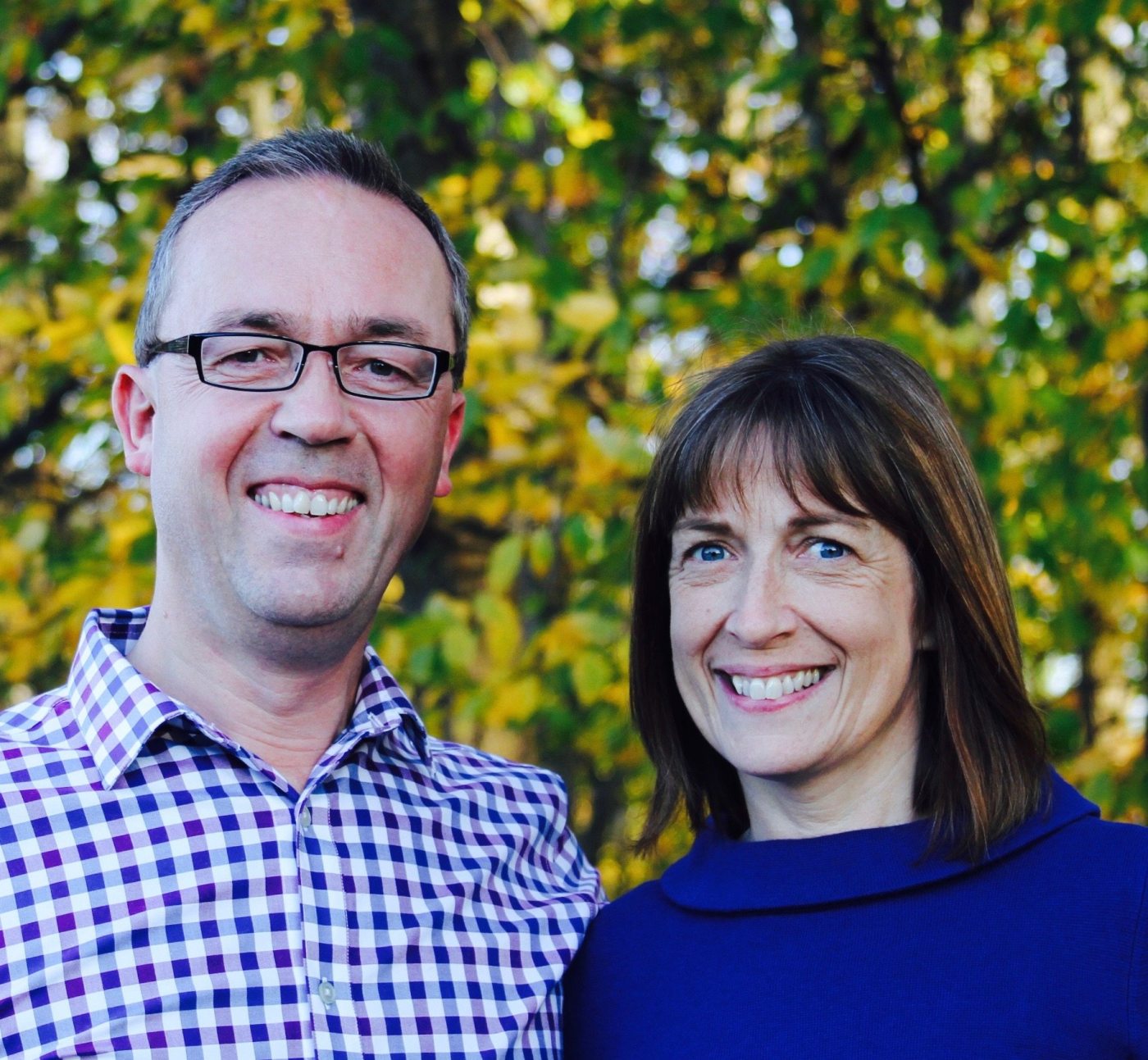
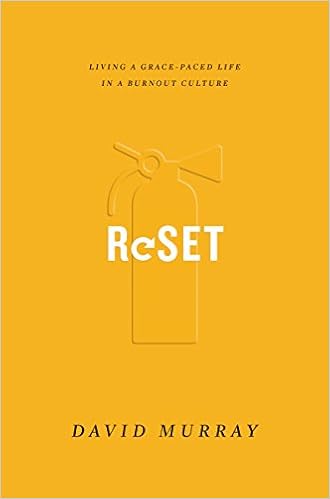
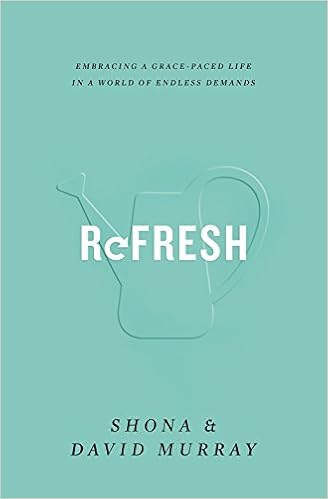
During our conversation they talk about the experiences of burnout that led to them writing the books. They emphasise the importance of living with a greater understanding of grace, and a sense of our own limitations as we live for God. We discuss the relationship between the physical and spiritual sides of our lives and the concept of self care. We also talk about the difference between the well planned life and the summoned life and the relevance of life stages.
Surviving and thriving in Christian leadership. What are the self-care practices and support strategies that leaders serving in the Presbyterian Church in Ireland have found helpful for sustaining health, wholeness and leadership in the context of the stresses of ministry?
This week’s guest on the podcast is Paul Bowman. Paul has been involved in youth ministry for over 25 years and currently works in Fitzroy Presbyterian Church in Belfast. Paul has recently completed his MA with the Irish Bible Institute and I had the privilege of supervising his work on a very important dissertation in which Paul explored some factors that contribute to thriving in Christian ministry. The podcast interview explores some of what Paul discovered and wrote about in his work.
By way of follow up, feel free to get in touch with Paul, either via Fitzroy or via my blog, if you would like to hear more or would like to invite him to speak to your group.
Meantime here is a list of the recommendations Paul makes at the conclusion of his dissertation:
Christian leaders together with their church should create clear and reasonable expectations for leadership and ministry.
Congregations should be better educated about the stresses associated with leadership and the importance of supporting the physical, emotional, and spiritual wellbeing of their leaders.
Greater emphasis, training and resourcing should be made available for team ministry as a means of combating isolation, and role overload.
Christian leaders need accountability and support to ensure they are availing of adequate rest and maintaining their spiritual self-care. The use of a maintenance contract as suggested by Brain (2001) which incorporates a plan to work, rest, study and be a spouse and parent could be a useful means of accountability that clearly communicates self-care needs.
Christian leaders should pursue their calling daily and set specific goals for their spiritual, physical, emotional, social and intellectual development.
Christian leaders should take a twenty-four hour period off each week and prioritise activities that recharge emotional energy.
Christian leaders should intentionally set aside a day each week to observe the Sabbath.
More resources should be made available to enable leaders to make use of retreats, and spiritual directors.
Sabbaticals should be financed and made available to all leaders including additional pastoral personnel every five to seven years.
Every minister and youth worker should be assigned an experienced mentor throughout the first five years of his or her ministry.
It is encouraging to note that PCI is placing greater emphasis on how it supports ministers and their families. Lockhart (2019) refers to the reimagining of presbytery as a fellowship. This is a welcome development though it needs further work in terms of the practicalities of pastoral care. It is beyond the scope of this study to explore this aspect of denominational support, but two recommendations seem appropriate: The promotion of ministerial fellowships or Pastors in covenant groups. And, further study is necessary to consider how supervision could be a means of support and development at a presbytery level.
Additional research is needed to look specifically at the role of training and how it equips leaders with the knowledge and skills of self-care.
This week the podcast returns after a gap of 4 months – largely down to the host having had a heart attack in October! The guest on this episode is Jude Cairns. Jude is the Chief executive of Love for Life, a Christian charity that aims to equip young people so they are able to make good choices about relationships and sex.
Jude has previously worked for Youth for Christ, and Habitat for Humanity. She has been in her current role for 9 years and her work involves leading a team 12 people.
In the course of our conversation she talks about her desire to ‘make things better’ – a driver of leadership, the experience of living overseas for a year and the defining moment of losing her father to illness. She also talks about the influence of the Arrow Leadership programme and shares some of the things she has learned about leadership along the way.
For your own reflection:
1 – Do you think the Church in the West needs to be more courageous in its witness?
2 – What would you say are the main things you have learned about leadership?
Sam Balmer is chairman of Bible Educational Services (BES), an organisation committed to producing Bible resources that are used in some 40 languages in some 65 countries around the world. He is also an elder in Fermanagh Christian Fellowship, a vibrant church that meets on the edge of Enniskillen.
In the course of our conversation Sam talked about his family, about some others who influenced him, about his interest in mission and his own path into the work that he heads up.
He also talks with great vulnerability and honesty about some of the challenges he has faced with stress-related illness, and some of what he has learned through that.
And, as with most of these interviews, he shares some of the key things he has learned during the course of his leadership journey.
What Sam shares about the challenge of stress-related illness is a reminder that spiritual leaders are not exempt from its reach. If you are a leader and some of what he says about it resonates with you, find someone to talk to. If there is no one in your immediate circle that you feel you can talk to, send me an email via this website and I will endeavour to get you in contact with someone who can help.
As I was editing this episode of the podcast a friend sent me an article that discusses the well-being (or lack of it) among pastors: it highlights these five issues:
Lack of rest or a day off;
Lack of support from fellow clergy and a sense of competition;
Lack of personal community;
Marital strain;
Signing up for ministry but feeling more like a CEO than a pastor.
In our conversation Peter talks about the influence of his father, Norman. At the time of posting this, Norman is in rehab following a serious stroke suffered in August. The most recent news is that he has been making a remarkable recovery. He is able to walk with assistance and able to chat with people. There is still a road to travel, but progress has been encouraging.
He talks about the concept of calling (listen out for his non-traditional take on this) and traces his story through his professional academic study and his work, which has included time with the Jubilee Centre in England.
Peter includes some of other people who have influenced him along the way and our conversation also includes issues such as sabbath and technology. He also talks about the work of the Evangelical Alliance and his passion for connecting faith with the public square.
He shares his key leadership learning:
Understand who you are
Have a rich understanding of the God story
Be in rooms with leaders who are better than you
Beware of leaving a generational gap
Recognise the loneliness of leadership
If you would like to know more about the public leadership initiative that Peter mentions, you can read about it here.
This week’s guest on the podcast is Stephen Cave. Stephen is Senior Vice President for Translation with Biblica (The International Bible Society). He has also served as a Baptist pastor in Northern Ireland and has had leadership roles with the Evangelical Alliance where he is a member of the UK board.
Perhaps unsurprisingly for someone involved in the work of Biblica, one of his strong ministry passions is his desire to help people engage with the Bible: another is his heart for the wider Church.
In our conversation we talk about his early relationship with the Bible, the role of some people who were key influencers, how his faith was affected by an experience of tragic loss, and how his leadership journey has allowed him to combine his ministry passions.
Along the way he discusses some of his convictions about leadership, including the idea that a leader is someone who is prepared to have a tough conversation.
As you listen to the conversation, you might like to reflect on some of these questions:
1 – As a leader, how easy is it for you to delegate responsibility to others? What might prevent you from doing more of this? 2 – As you listen to Stephen talking about foundational ministry passions, can you identify the things that are key in your calling? 3 – How do you experience God speaking to you? 4 – How easy it it for you to have ‘tough conversations’ with people in your church or organisation?
I’m making a couple of changes to the podcast:
Each interview will be one episode rather than two (or occasionally three), previously.
Rather than a new episode every week, I’ll be aiming for two per month.
While you can always listen to the podcast via this blog, remember that you can also subscribe via Apple Podcasts or Castbox: just search for The Leadership Journey Podcast. Subscription costs nothing and you will get each new episode arriving automatically on your phone/tablet. New episodes will appear on Friday afternoons – hopefully in time for some weekend listening.
The guest on the next episode will be Peter Lynas from the Evangelical Alliance.
This week’s podcast is a bit different for a couple of reasons. For one thing, it’s international; and in terms of its content, it’s a discussion of a recent new book on leadership, rather than the exploration of one leader’s journey.
The guest is Mark Strauss from San Diego, California. Mark is Professor of New Testament at Bethel Seminary. Along with his colleague, Justin Irving (Professor of Ministry Leadership in Bethel Seminary), Mark has written Leadership in Christian Perspective, a book which outlines a model of ’empowering leadership.’ The book is based around research carried out by Justin, and Mark’s contribution is to bring a biblical perspective to each of the nine leadership practices that Justin has highlighted in his work.
I’ve previously reviewed the book here. I have added it to reading lists for classes I am teaching over the next few months at Belfast Bible College, and you can get your own copy here (UK).
As well as this most recent book, Mark is the author of a considerable number of books and articles. He also serves on the translation committee for the NIV. You can find out more about Mark from his website.
This week’s podcast was recorded with an audience (and live-streamed) at New Horizon in Coleraine.
My guest is Gilbert Lennox, who was responsible for the Bible teaching each morning at New Horizon. Gilbert’s initial career path took him into teaching, but after a number of years left school teaching and devote himself to church leadership and Bible teaching. He was involved in founding Glenabbey Church just outside Belfast, a church that celebrated its 30th anniversary in 2018. Although he has retired from his staff position in Glenabbey, Gilbert is still involved in the teaching ministry of the church.
Once we get over Gilbert’s reticence to describe himself as a leader, we talk about some of the early influences on his life, growing up in Armagh: not only were his parents ‘profound believers’ but there were opportunities to encounter various people along the way – not least Professor David Gooding, who has been an influence for decades: starting a Bible study in an old henhouse became an impetus for regular study with David Gooding
Gilbert taught in school for 15 years before he sensed God calling him to move more fully into church work. As sometimes happens with new callings, his move from school to church was severely tested.
He talks about some of what has helped him to be resilient in ministry: specifically, the part played by his wife, and having a bedrock of Scripture.
Reflecting on leadership, he notes that Jesus talked about what it is not! ‘Leadership [is] a partnership with God and with others.’
His advice to his 20 year old self includes the need not to take himself too seriously and the realisation that you can’t fix everything (though you can help).
The time you spend in Scripture is never wasted.
For your own reflection:
Gilbert discusses a couple of significant mentor figures in his life: what people can you identify in your own life and how would you respond to the challenge of being a mentor to others?
Gilbert talks about the importance of *learning* to be content: are you learning this?
Especially if you are involved in any way in theological education (either as student or teacher) – how do you respond to what Gilbert says about the possibility of theology getting in the way of our knowledge of God through the Bible?
How do you respond to Gilbert’s challenge to the thinking where we are often keen to use labels in church leadership?
Barry Forde is back on the podcast this week. Barry is the Anglican and Methodist chaplain at Queen’s University in Belfast. If you missed the first part of the conversation with Barry, you can catch up here.
For your reflection:
1 – What do you make of the idea that a leader is ‘someone with a magnet in their heart and a compass in their head’? How important is it for a leader to be ‘personable’, as Barry describes it?
2 – ‘Hold the present responsibly and the future lightly’: how do you respond to Barry’s idea of being alive to opportunities in the present rather than attempting to anticipate 5 years hence?
The series of talks on leadership by Eugene Peterson can be purchased here, and
Here is more information about the book on Irish preaching to which Barry has contributed a chapter.
The podcast will be taking a few weeks off, but we plan to be back in August.
Prior to taking up the role as chaplain at Queen’s, Barry was a curate in St Patrick’s Church, Coleraine, and before that had a career as a barrister. For six years (three as chair) Barry served on the board of New Horizon, a large Bible conference held annually on the North Coast of Ireland.
In the first part of our conversation, Barry talks about the unique nature of chaplaincy in Belfast. As well as being one of the chaplains to the university, Barry is the minister of The Church of the Resurrection, an Anglican congregation attached to the chaplaincy, but whose membership is not limited to the student world. He also talks about the range of ecclesial influences that were part of his formation on the road to seeking ordination within the Church of Ireland.
This week Sladjan Milenkovic is back to continue his story (you can listen to part one of the interview here). Sladjan is the director of HUB, a Christian centre not far from Belgrade, in Serbia. One of the main features of HUB is its Bible school, but its work includes other ministries. Some 360 students from across the Balkans have been through the Bible school, with around 60% of former students involved in active Christian ministry.
In this part of the story Sladjan talks about becoming the director of the Bible School at 26. The school’s mission is to serve the Church. In 2004 the school was able to buy a former motel: not only does this house the school but it is also used for conferences and seminars – seminars that cover subjects like worship or church planting.
HUB also runs ‘Camp Hope’, camps for families whose children with disabilities or cancer. Most of the people who attend these camps are unbelievers and the camps give them the opportunity to be loved and to hear about God.
Sladjan talks about the way cancer affected his own family, when his oldest daughter became ill with a brain tumour. It’s been a difficult journey that has taught Sladjan about vulnerability and suffering: he comments that ‘even in the midst of suffering, God can bring something good.’
He talks about leadership challenges, not least the overwhelming nature of the need, but also the challenge of being hurt by someone you have trusted. While he has had times of questioning his call, he returns to the conviction that God does not make mistakes. He also talks about resilience and staying true to his call: it’s important for him to remember who God is. In the middle of the stress and tiredness of leadership, God he trusts God for what he needs.
Listen to Sladjan’s interview here:
For your reflection:
How have some of the challenges of leadership helped to shape your character?
Would you commit to pray for Sladjan and the work of HUB?
Remember that you can subscribe to the podcast on iTunes or Castbox (‘The Leadership Journey Podcast’): and perhaps you could leave a review.
For the next two weeks the podcast goes international as I talk with Sladjan Milenkovic. Sladjan is director of HUB (Christian Trust Belgrade), in Serbia, which includes a small Bible school that I have had the opportunity to visit on a few occasions over the past few years.
The evangelical community in Serbia is small. To be Serbian is practically the same thing as to be Serbian Orthodox. In a nation of 7 million, it’s reckoned that there are may be 10000 who are part of the evangelical mainstream: for more on the situation of evangelicals in Serbia, the European Evangelical Alliance published this interview with the director of the Serbian Evangelical Alliance about four years ago.
In this first episode, Sladjan talks about the spiritual situation of the country and goes on to tell his own remarkable story of coming to faith in Christ: at eighteen a colleague gave him a New Testament, and as he read, he realised the reality of Jesus. As he puts it, his first steps in faith were with Christ alone and the Bible. Eventually a small group came together, reading and praying together regularly – like a little pocket of revival: remarkably all this was happening at the height of NATO bombs in Serbia (not all the news makes the headlines!).
After spending a year in the army, Sladjan married and he then went to the Bible School that now leads (it had started 5 years previously and his wife had already studied there). At the end of his year of study, the founder of the school (Andy Mayo) invited him and his wife to stay and work alongside him: eventually he would take over the leadership (at twenty-six)..
For reflection:
Were you surprised to learn about the spiritual situation in Serbia?
As you listen to the story of Andy Mayo’s investment in Sladjan (his eventual successor), what stands out about his decision to invest in a young man? What do you look for in future leaders? What do you think young leaders might be looking for in you?











 The Crucible of Leadership