The guest on this first episode of 2021 is Dr Steve Brady. Steve is Senior Pastor of First Baptist Church in Grand Cayman. Previously he has served churches in the UK, including in London and Bournemouth. He is also President of Moorlands College, where he was Principal for almost twenty years. He has written or contributed to over twenty books, including study guides to Galatians and Colossians. He is a well known speaker at the Keswick Convention and served as a trustee of the convention for many years.
He is also a true blue supporter of Everton, so be warned, there will be some chat about Everton, though even if you are not a fan, it will be worth a listen!
If you would like to subscribe to the podcast, you can do so via Apple Podcasts or Spotify.
Future guests on the podcast include Rowland and Alli Clear, Ruth Valerio, and John Dickinson.
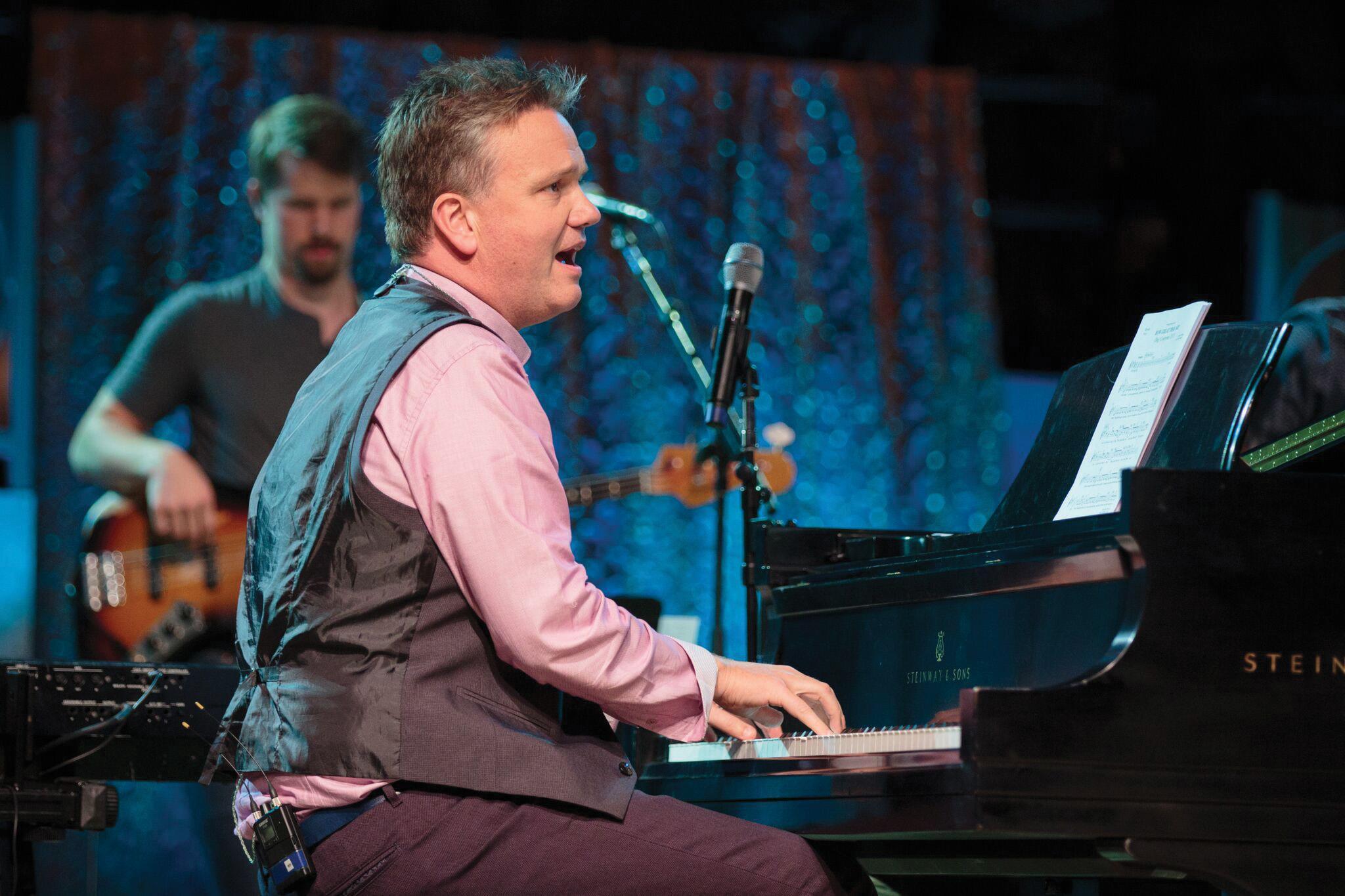
This week’s guest on the podcast is Keith Getty. Keith, along with his wife Kristyn, is one of the leaders of the modern hymn movement. He’s probably best known as co-author of the well known hymn, In Christ Alone, which he wrote 20 years ago with Stuart Townend.
In the podcast, Keith talks about the convictions that lie behind his commitment to write hymns that help build deep believers across the world. He talks about some of what has shaped him, and shares what he would say to his 20 year-old self.
My guest this week is author and conference speaker, Paul Tripp. Paul has written many books, and his most recent book is Lead: 12 Gospel Principles for Leadership in the Church – that’s what we focus on in our conversation, though Paul also talks about some of his own leadership journey.
The book outlines 12 principles that Paul would like to see worked out in every leadership community. In our conversation he gives an overview of the 12 before focussing on 3 of them for further discussion.
Paul writes with the conviction that the gospel his not simply a set of historical facts, but that ‘it is also a collection of present redemptive realities.’ Here is what he says about the book, and why he wrote it:
I wrote this book because I love the church of Jesus Christ and have a deep affection for all who have surrendered their lives and gifts to ministry leadership … And because my heart is in the church, I am concerned about the spiritual health of the community of leaders that pastor its people and direct its ministries. This book is not about the strategic work of the ministry leadership community but about protecting and preserving its spiritual depth so it may do its work with long-term fruitfulness. Really, this book is about the Lord of the church, about his love for the ambassadors he has called to represent him, and how he meets their every need with glorious and faithful grace.
You can read more about Paul and his ministry at his website, where you can also download the Paul Tripp app, with its access to many free resources.
You can order his new book here (10 Of Those will give you a free ebook when you buy a hardback copy of the book).
This week I will be chatting with Paul Tripp about his most recent book – for church leaders.
Here is what he says about the book – Lead: 12 Gospel Principles for Leadership in the Church – and why he wrote it:
I wrote this book because I love the church of Jesus Christ and have a deep affection for all who have surrendered their lives and gifts to ministry leadership … And because my heart is in the church, I am concerned about the spiritual health of the community of leaders that pastor its people and direct its ministries. This book is not about the strategic work of the ministry leadership community but about protecting and preserving its spiritual depth so it may do its work with long-term fruitfulness. Really, this book is about the Lord of the church, about his love for the ambassadors he has called to represent him, and how he meets their every need with glorious and faithful grace.
Ian Paul is a theologian, writer, blogger and self-confessed chocoholic and is this week’s guest on the podcast. Ian has recently published a commentary on the Book of Revelation.
In our conversation he talks about coming to faith as a young person, sensing a call to ordained ministry, serving in a growing church, and later becoming involved in theological training and writing. He talks about some of the disappointments and challenges he has faced and along the way he talks about some of his observations on leadership.
A military historian exploring the story of Amalek’s attack on Israel at Rephidim (Exodus 17) may be a little disappointed. The narrator omits most of the military detail. We don’t know how many soldiers were involved on either side, we don’t know how many of them were injured, and we don’t know much about the details of either side’s strategy, although there is a note in Deuteronomy that throws some light on the opportunistic nature of Amalek’s attack – attacking when Israel was weary and focusing on those who were lagging behind.
Exodus is more interested in drawing attention away from the battlefield, where Joshua is operating (and will eventually triumph) with the sword, to the top of a newly hill where an 80 year old Moses is holding out a shepherd’s staff. Remarkably the outcome of the battle is connected to the fact that he was able to hold out the staff until sunset. Not that he was able to manage on his own: it took the support of Aaron and Hur to keep his weary hands steady.
What appears to be no more than an ordinary staff is actually ‘the staff of God’. God has transformed something ordinary and made it extraordinary, the means by which his power is mediated. It’s the same staff that invoked the power of God to divide the Red Sea, and the same staff that produced water from the rock.
Because of what it represents, the staff is more significant than the sword. To translate that into our day to day, what we invite God to do is more significant than what we do.
Could it be that we spend more time than we ought on tools and tactics, and less time than we should on seeking God?
Joshua only accomplished what he did because of what Moses was doing. And Moses was only able to do what he did because of the support of Aaron and Hur, and – more importantly, because God had transformed the ordinary into something extraordinary, a vehicle for his power.
The guest on this week’s podcast episode is Marcus Honeysett, executive director of Living Leadership, an organisation that aims to encourage the development of disciple-making leaders who have learned to live in the grace of God. Living Leadership’s website will give you more information about the organisation, including links to a podcast and other resources. Marcus is the author of several books, including Fruitful Leaders.
One of Living Leadership’s recent initiatives has been the development of an online network with fortnightly gatherings via Zoom for encouragement and refreshment.
In our conversation Marcus talks about some of people who invested in him in his early years as an emerging leader, about ambition and saying no to major platforms, about the importance of a biblically-informed understanding of Christian Leadership, and about grace.
Among the advice Marcus would share with his twenty-year old self is the need to grow in deep-rooted spiritual habits, to have a biblically-shaped definition of leadership, and to avoid the temptation to establish ‘success metrics’.
I think I have discovered a new biblical hero. His name is Jethro, and he was Moses’ father in law.
Exodus 18 recounts a well known incident involving him.
The occasion was a family visit to see Moses. It was a good catchup and the text says that Jethro was pleased to hear about the good things the Lord had done for Israel by rescuing them from Egypt: how affirming must it have been for Moses to have his father-in-law listen with such genuine interest to the story of God’s work in his new leadership task. Whether or not we would classify it as a full conversion, Jethro comes to a new realisation about the Lord. ‘Now I know,’ he confesses, ‘that the Lord is greater than all other gods’.
While it may be a bit of an overstatement to describe Jethro as what happens when he sees Moses at work is worth some reflection.
For one thing, while it may be a bit of an anachronism to describe Jethro as the first management consultant, what happens demonstrates the value of an outsider view of a situation: Jethro saw something that Moses and the people had simply accepted as the way things were.
But there is more to be said about him.
In his excellent book, A Work of Heart, Reggie McNeal describes Jethro as ‘the key male figure in Moses’ midlife’. It’s an astute observation. Maybe this is overly speculative, but was Jethro in fact the father that Moses never really had? We know he was nursed by his mother, but his natural father disappears from the early narrative, and Pharaoh, his adoptive father is unlikely to have been particularly close. As McNeal reflects on the role Jethro played, he makes this wider observation:
The recounting of leaders’ life journeys usually turns up a Jethro or two. These individuals are God’s gifts to the leader to provide extraordinary affirmation, encouragement, and guidance. They frequently, but not always, arise from outside the family system. They typically surface during times of the leader’s self-doubt and at points when the leader’s life mission is crystallizing. These God-sent Jethros offer almost unconditional acceptance of the leader, yet they maintain an accountability of presence that implicates itself into the leader’s choices.
For all their obscurity and undoubted challenges, the middle years of Moses’ life – exile in Midian – throw up unexpected and unlikely allies. The question this phase of Moses’ life raises for those of us who are leaders is whether we notice, or make room for the Jethros in our own own leadership journeys.
More than that: for some of us who are older, the challenge is is to be that kind of spiritual father-figure.
As part of my preparation for a course I am running this autumn with Belfast Bible College, I have been thinking about some of the things church leaders (especially pastors and ministers) should be prioritising in the current climate. Here is my list of nine.
Engage in an honest assessment of how you are doing. Have the past 6 months depleted your energy levels or your morale? Are there traces (or more) of weariness, of cynicism, or even despair? Is your sense of call strong, or have recent months blurred it?
Take steps to ensure that you are not isolated. Remember that there is a difference between solitude (a worthwhile practice) and isolation (potentially draining). If you have a ministry team around you, that’s great, but makes sure that your times together are more than just business: seek to build each other up. If you are in a more solitary situation, do what you need to in order to connect with others.
Leave some space for reflection on the ‘why’ of what your church is doing – don’t fill all the space with questions of logistics – the ‘what’ and ‘when’ questions.
Seek to lead hopefully, but without denying the challenges of your situation.
Be on your guard, work and pray for love and unity as opinions perhaps become more strongly held. The longer the Covid situation persists, the more likely it is that people will become more polarised in their views.
Work hard to identify and reach those who have not been engaging and are in danger of dropping out (not least among young adults families) – and don’t forget vulnerable folk who are unable to gather for legitimate reasons. It may mean more work for you, but all of your people matter, and many of the more vulnerable folk are already quite cut off from much of ‘normal’ life.
Identify some of the good practices of the past 6 months (like regular pastoral phone calls) that can be retained.
Don’t assume that the bench mark for the future is being able to resume all you were doing on March 15. Just as there may be good practices that you have introduced and believe you should continue, be willing to leave behind some of the things you were doing pre-lockdown if you have realised they are not vital!
Since the situation is still transitory, hold decisions lightly. Look forward to a time of rebuilding, but be sure to stay flexible.
One of the traps for insecure leaders is to make everything about them. It is all personal. It is not always easy to separate who we are from what we do, but if I make every issue about me, and interpret every criticism as personal rejection, I simply feed my insecurity and dismantle the possibility for constructive debate.
While that much is true, perhaps there is some apostolic precedent for self-defence in part of what Paul writes in 2 Corinthians where he mounts a fairly robust defence of his ministry, seemingly in the face of rivals who would have loved to discredit him. Discrediting Paul would have made it easier to discredit his message, so enticing the Corinthians to drift from their devotion to Christ.
Rather than list his triumphs, however, Paul lists the severe challenges he has had to face; he emphasises his weakness, recounting the time when he became a ‘basket case’ in Damascus, and the famous thorn in the flesh episode. Paul knew that ultimately he was accountable to God (12:19) and the motivation for his defending himself was for the strengthening of the Corinthians. As Don Carson points out, Paul is not writing to vindicate himself, as the Corinthians suspected, but to build them up.
Carson goes on to comment trenchantly:
Sadly too many leaders consciously or unconsciously link their own careers and reputations with the gospel they proclaim and the people they serve. Slowly, unnoticed by all but the most discerning, defense of the truth slips into self-defence, and the best interest of the congregation becomes identified with the best interest of the leaders. Personal triumphalism strikes again, sometimes with vicious intensity. It is found in the evangelical academic who invests all his opinions with the authority of Scripture, in the pastor whose every word is above contradiction, in the leader transparently more interested in self-promotion and the esteem of the crowd that in the benefit and progress of the Christians allegedly being served. It issues in political maneuvring, temper tantrums, a secular set of values (though never acknowledged as such), a smug and self-serving shepherd and hungry sheep.
I’m working on a book on leadership, framed around the story of Moses, and I am currently writing a chapter on leaders’ need to face criticism. As I have been working through some of the challenges Moses faced in leadership, I have highlighted the following challenging questions that leaders (not least church leaders) may have to deal with from time to time.
How would you answer them?
How do you lead when people reject your leadership? This is what Moses was faced with (briefly) when he tried to intervene in a dispute between two Hebrews. It’s a complex question as people’s rejection of your leadership may be for any number of reasons, and not all the reasons may originate with the people. What steps can you take to build (or rebuild) trust? How do you know when it’s time to ask some people to ‘get off the bus’, or even for you, as the leader, to let someone else drive?
How do you lead when things are going to get worse before they get better? Again Moses had to face this, this time when his initial intervention, having been commissioned by the Lord, led to the famous ‘bricks without straw’ situation. How do you hold your course when the initial pain of change seems to far outweigh the potential gain?
How do you lead when people don’t merely reject you as leader, but it turns out that they have little appetite for trusting God? For Moses it was not long before he and Aaron became the focus of the people’s frustration when they lacked water or food. Moses and Aaron pointed out that the people’s grumbling was not really at them, but at God. While anxiety about food and water was understandable for people trekking the desert, they were quickly failing the test of trust that their wilderness experience constituted.
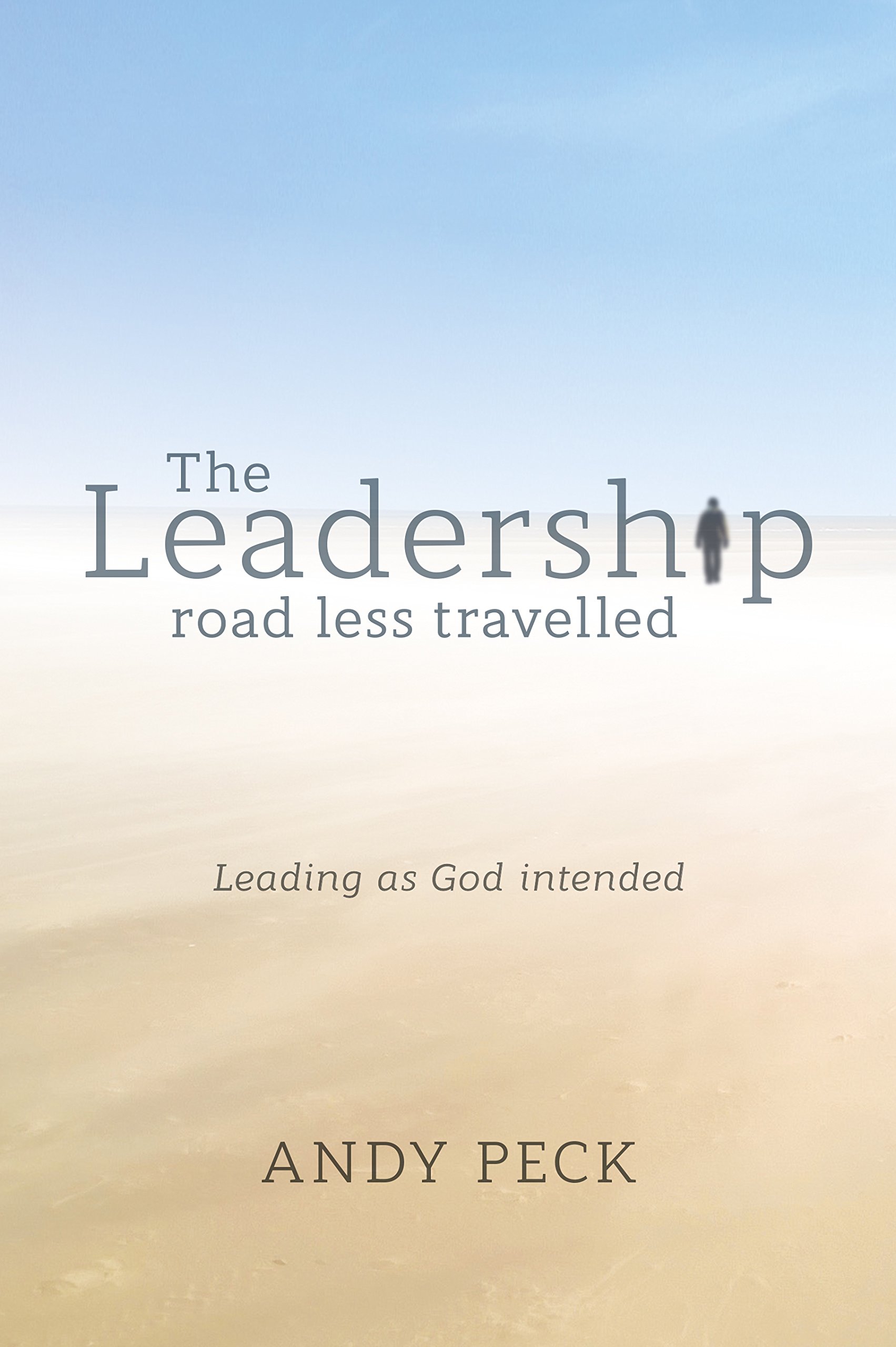
Andy Peck is the host of Premier Christian Radio’s weekly show, The Leadership File: since he took on the programme, he has conducted some 700 interviews with Christian leaders from various walks of life. He is also the author of a number of books, including ‘The Leadership Road less Travelled’. I was recently a guest on his show so this week’s podcast really sets us on the opposite side of the microphone.
Interestingly for someone who has written a book on leadership, and has interviewed hundreds of leaders, Andy confesses that leadership leaves him cold! You will find out what he means during the podcast. You can get a copy of the book here.
Andy grew up on the Isle of Wight, and he talks about his Christian upbringing in church there. He talks about how his leadership journey has not always followed the expected course, about some of the people who have influenced him, and some of the key things he has learned about leadership along the way.
*Note that Dallas Willard went to be with the Lord in 2013, and not in 2003 or 2006.
The guest on the next episode of the podcast is Dr David Hilborn, Principal of Moorlands College.
I’m currently working on a chapter on criticism and conflict for a forthcoming book on leadership. Here are a few thoughts that I hope to develop in the chapter.
Criticism and conflict are inevitable in leadership (if leadership is actually going to achieve anything). Reggie McNeal says that ‘the decision to serve as a spiritual leader signs one up for conflict’.
However not all conflict and criticism are the same: some of it is destructive and says more about the critic than the leader. Leaders need to distinguish between the various types.
Someone has said that we should weigh criticism rather than count our critics. Not everyone’s voice carries (or should carry) the same weight.
Learn to look at yourself in the mirror before attempting to deal with your critics.
Identify and deal with your own defensiveness and insecurity. If you don’t, you will not deal well with your critics.
Look for the grain of truth, no matter what is happening. What do you need to take on board?
In the event that the criticism is more about the critic than about the leader, what might the leader need to learn about what’s going on in the critic?
Have the humility to allow critics to become coaches.
Learn to see criticism as a path to growth rather than a fight to be won.
Remember (especially if you are a pastor) that the tenderness that allows you to be sensitive to others probably makes you more vulnerable to the wounds of a critic.
This week I was a guest on a webinar organised by the Presbyterian Church in Ireland. As well as the webinar including an interview with one of their ministers, and a presentation on an excellent resource that aims to help leadership teams reflect on the way forward for their congregation, I had been asked to feedback on conversations I have had with various leaders.
Over the past few months I have hosted a series of podcasts in which leaders (mainly in churches) have talked about their work during the time of Covid-19: the podcasts are available here. I also hosted a Zoom meeting with a number of leaders as churches began to envision returning their buildings: you can read some of the highlights here.
In addition, over the past week or so I have been in contact with almost a dozen leaders from a range of church backgrounds, discovering what they are doing and what are some of the challenges they are facing. Again, here are some of the highlights of these exchanges: I imagine at least some of these will resonate with what other leaders are experiencing.
There are varying degrees of enthusiasm for a return to gathering in the building: some leaders have been surprised by the amount of caution they have witnessed. At times it has been older people who are most keen to get back (presumably there are various reasons for this, including the fact that many of them may have experienced a significant degree of isolation in lockdown): ironically, some of them will be discouraged from attending, because of their health vulnerability. Some leaders have found that it is middle-aged folk who are most keen to get back: presumably they are less likely to be vulnerable, and don’t have the concerns of families with young children
Families of young children face an additional challenge in that kids’ programmes that are usually offered on Sunday morning are not able to run as yet in the building. Perhaps they find it easier to have kids running around their living room while the online service is on TV than attempt to keep kids calm for an hour in church.
Related to this, there is an awareness that for some young families, Sunday routines have changed during the past few months and while for some, online church has featured, there is a danger that church has dropped from its priority Sunday morning slot and attending church going forward may not be a priority.
There is also a fear that some younger people have dropped out of church during the online season: this may be because of Zoom fatigue with work during the week, or may be because many young people prioritise connection over content in church life, so tuning in for a sermon rather than connecting with friends on WhatsApp has less appeal.
There is a range of views and expectations around the return to gatherings in the building. Some views (around masks or singing) are strongly held by some folk and there are even hints of conspiracy theories appearing. Leaders need great wisdom in handling strong voices on either end of each spectrum and in working to maintain unity and love.
Some have been forced to ask questions around the nature of church and what activities are actually core. Examples include the place of communion or the extent to which some contemporary churches have adopted a very music-centric approach to worship.
There is a realisation that community and fellowship have suffered.
Connection with new people has both been exciting and a challenge. On the one hand, online services have the potential to reach much farther than church in the building. Allied to this is the fact that some folk who may be reluctant to enter a church building are happy to connect with a broadcast service. On the other hand, the absence of services in the building (or the restrictions which mean people need to book in ahead of time) means that people cannot really just drop in off the street.
Leaders are having to think about everything all the time. As regulations and restrictions are adjusted, guidelines for gathering are not fixed. Leaders are dealing with expectations (and likely to disappoint someone!) and patterns of work have changed.
Yet at the same time there has been an opportunity to rediscover the nature of true spiritual and pastoral leadership, and at the same time there has been a realisation that ministry may still get done, even if it is not done by the minister.
Here are some of my own hunches about how leaders might consider their priorities:
Be on your guard, work and pray for love and unity as opinions perhaps become more strongly held.
Work hard to identify and reach those who have not been engaging and are in danger of dropping out – and don’t forget those who are unable to gather for legitimate reasons.
Identify some of the good practices of the past 6 months (like regular pastoral phone calls) that can be retained.
If the situation is still transitory, hold decisions lightly.
Don’t assume that the bench mark for the future is being able to resume all you were doing on March 15.
A few weeks ago Dave Burke was the guest on my podcast. Dave agreed to write a post outlining what he would want to say to his 20 year old self. He’s been good to his word, and here is his letter!
You are going to go through life saying to yourself, “I wish I knew then what I know now”. You need to know that the needle on your wisdom meter will be stuck in the red zone for many years to come. So I am not going to tell you anything that will help you avoid embarrassment, disappointment or failure. You need to have these experiences, but you will grow through them. That’s how life works.
You should also know that you are a late developer. Remember, your baby teeth arrived eighteen months later than everyone else’s? You have recently realised that you only got your brain into gear once you arrived at university. And you have just become a follower of Jesus. In your discipleship, history will repeat itself; as a Christian, you are going to be a bit retarded, I’m afraid.
So, I’d like to share with you a few things that may speed up your development in the hope that God may get more glory, and your friends experience less pain, as you grow in grace and in the knowledge of God.
Here’s the first, listen a lot more than you speak. You are articulate and confident. You are also combative and quick to assume that you are right and everyone else is wrong. So shut up and listen. When you encounter a new idea – ask yourself, “What is right with this, what can I learn from this?” Answer those questions humbly before you open your mouth.
And second, you are going to spend a lot of time trying to get your theology right, bully for you! But you need to realise sooner than you did that the heart of discipleship is a living, breathing person you can actually love and who loves you. One amazing day in the future you will rumble the fact that a Christian is someone who has fallen in love with Jesus, and rue that it took you so long! Sort this out sooner, David.
Thirdly, remember that Christianity did not begin in the 16thcentury, but the 1st. What do you think was happening in the fifteen centuries between Jesus and the Reformation? These were not ‘the wilderness years’! People who lived and taught the gospel during that time looked and sounded very different to Marty Lloyd Jones and Billy Hendriksen, but that does not mean they were inferior. You will eventually realise this. You should try to do it sooner.
Fourth, invest in friendships. Over the years you will meet many amazing people, as they move on you will lose touch. Don’t let this happen. do whatever it takes to keep these friendships alive – those people are precious, and you need them a lot more than you think.
I could go on, but that is enough for now. You are getting a lot of things right, you know. I should tell you that your habit of daily prayer and study has fuelled a ministry for 40 years. You should also know that you will still be climbing mountains 45 years from now. And I’m still running, that’s because you will soon make a decision to run three or four times a week.
Keep those routines going and remember, “You don’t stop running because you get old, you get old because you stop running!”
I’ve talked and posted a bit over the past few days around questions relating to churches emerging from lockdown. Here in Northern Ireland, buildings can be open for public worship from this week, and several churches are already well prepared for resuming Sunday worship in their buildings from this Sunday.
Nonetheless, in a recent informal poll during an Evangelical Alliance (NI) Zoom meeting, more than half the participants indicated that they expect their church to wait until at least September before opening their doors on Sunday (numbers in England are a little different). Some churches are starting with prayer gatherings rather than the full Sunday worship service – no doubt these smaller gatherings will help test practical procedures before bigger meetings take place (aside from the benefit of praying!).
I know from a couple of recent exchanges with two pastors that those who are keen to get started are not sure why others are so reticent: there is even a degree of frustration with what can be perceived as a degree of negativity around reopening.
It might be helpful to map out some reasons why some leaders are keen to get going again and some reasons why folk are more hesitant.
Why you should open your church as soon as possible!
The Bible is clear that Christians ought not to give up on meeting together and no matter how clever your digital services have been, it’s not what Hebrews 10 had in mind.
Churches have not been able to gather for almost four months and people have missed that: now that the government has given the green light, why wait? Older people, some of whom may have experienced a high degree of isolation, may be longing to be in the same actual room (not Zoom breakout room) as their brothers and sisters.
Online services have not been everyone’s cup of tea and some people have opted out. I’ve heard of a couple of churches that feel they have lost a swathe of their people who have not gone online. Interestingly, while there are 80 year olds who have got up to speed with Zoom and the like, it is sometimes the younger generation who have opted out.
For younger people, some of whom may wish to prioritise connection over content, church in person allows them to connect with their peers and they will listen to the content while they are there. A Youtube service won’t allow them to connect, so they may prefer to spend Sunday chatting on WhatsApp rather than tune into church.
Having church online has the potential to lead to an increased consumerism. If you’re after a great set of worship songs, you might be able to do better than what’s on offer in your own church: same for the sermon – online church allows you to pick from the best!
Why you should take your time!
Some leaders are exhausted and may like to have some breathing space before leading the task of getting the building ready for the next stage or beginning to envisage the details of how they will navigate the government guidelines.
For some, restrictions around numbers permitted (social distancing), congregational singing, the ability to greet one another, or even tea and biscuits after the service will make gatherings seem less than normal, and so they might prefer to wait.
While (as a friend of mine says) there are some churches who have been practicing social distancing for a long time (dwindling congregations in large buildings), well attended churches are going to have to put restrictions on numbers, requiring the need for a booking system. Unless they increase the numbers of services (with whatever that entails with regard to cleaning), not everyone is going to get in.
This means that some kind of online service is going to have to be maintained. This will be important, not only as long as numbers are restricted, but as long as there are vulnerable people who are either advised medically not to attend, or choose not to, out of nervousness.
There is value in pausing to reflect on the lessons from lockdown. A rush to restart – certainly a rush to fill the calendar with activity – means there is little space (or energy) for such a reflection. As someone said to me this morning, leading a busy church is a bit like trying to keep a plane in the air!
Further to yesterday’s post which highlighted some points from a conversation among church leaders, here are some quick reflections on questions church leaders will have to deal with in this next season.
‘When?’ questions: with permission granted for churches to reopen their buildings to gather for worship, the ‘when’ questions will be clamouring for urgent attention. If not July 5, then when? Interestingly, in an informal survey at an online meeting run by EA on Thursday just over 50% of respondents reckoned their churches would wait until September or later before opening their doors for services.
‘What?’ questions: it’s one thing to decide when to restart, but what activities will be part of that restart? Sunday morning worship is likely to be high on the list for most churches, but what about other services and activities?
‘Why?’ questions: these are the questions that are most likely to be neglected in the next season, especially when there is a rush to get restarted as soon as possible. What if leaders took their time on the ‘when’ questions and used this next phase to revisit questions of purpose and mission? If you are a leader, how can you make time for this kind of reflection?
This morning I facilitated a Zoom conversation that drew around 20 church leaders of various stripes to talk about some of the questions around moving out of lockdown and into the ‘new normal’. Here are some of the highlights:
Some felt that it is too soon to attempt to answer some of the big questions – folk have simply been too busy. My fear is that a precipitous return to ’normal’ will simply compound this and the questions will never be answered (or even asked!).
Church leaders have been ‘catapulted’ into the situation that has pertained over the past few months and are now in danger of being catapulted into the next set of circumstances: there is a need to prepare.
Following on from that, the next transition (out of lockdown) may be harder to negotiate that what happened in March.
Zoom is a mixed blessing – there is a degree of Zoom fatigue, but at the same time there is a recognition that it has actually helped increase involvement in things like prayer meetings and small groups.
People have missed face to face contact and the physicality of things like communion and singing.
There is a need to manage folks’ expectations with regard to returning. Here in NI I think there has been surprise at how quickly churches are allowed to reopen their buildings for worship services and there is likely to be pressure on leaders to get things up and running because the government has given the green light. However, just because it is possible to restart, does not mean that it is right to restart right away.
Part of the dilemma of restarting is that it is sometimes the most vulnerable church members who are most anxious to get back. Older people who live alone, for example, may have missed gathering more intensely than others.
Pastorally, there would be value in giving church members space and time to tell their stories from the past few months.
It’s a great question, and I imagine it would be possible to make a decent case for more than one of those.
As you can see, I’ve been reading a book on leadership and the wilderness: the reference to transition comes from that book. For the ancient Israelites, the wilderness was a place of testing. Their repeated angst over food and drink served to demonstrate what was in their hearts and to teach them daily dependence on God. Moses was well aware that once they tasted the prosperity of their new surroundings they might quickly forget what God had done and attribute their prosperity to their own hand.
As the Church emerges from lockdown (church buildings can once again open for public worship in around 10 days), there are several types of questions that leaders probably need to be asking.
Some of the questions have to do with logistics – the practicalities of (at least some of the church) being able to meet again. Some have to do with resilience – how will leaders sustain this next phase with its various questions and challenges, never mind moving into September with an expectation on the part of some that as much of the old normal needs to be put back in place? And some have to do with discernment and strategy.
Here is where part of the wilderness analogy might come into play. As lessons from the wilderness experience were meant to be carried forward into the new reality of the Promised Land, what have the Church and its leaders been learning about the nature of church and the nature of ministry that needs to be carried forward into the ‘new normal’? Are there ministries or strategies that have been picked up out of necessity during lockdown that might be good to carry on in the future? Conversely, are there activities that have not been possible during lockdown that can safely been left in the past?
These kinds of questions are well summed up in the following grid (which may have originated with CPAS): I think will be helpful for church leaders in their reflections moving forward.
I realise that there will be (already is) pressure on church leaders to get things up and running as soon as possible. I wonder if there is a danger of trying to do too much too soon and thereby missing an opportunity for prayer and reflection (see Acts 13).
‘For reasons both ancient and new, the church today has an insatiable appetite for the study of church leadership. A vast avalanche of books, seminars, videos, and web sites has swept over the landscape in response to that appetite. Some of it is good and helpful, but overall much of it is very weak or even misleading in ways that should trouble the church leaders consuming it.’
Lew Parks
I read this statement some time back and I am pleased to say that the contribution of today’s guest to this vast array of resources is excellent.
Ian Parkinson works with CPAS and helps train leaders in a number of Anglican training institutions. He has previously been a guest on the podcast, and you can listen to his story here and here.
Earlier this year he published a new book, Understanding Christian Leadership and he joins me on this episode of the podcast for a conversation around the book. I have reviewed the book in a previous post.
Our conversation covers a number of themes related to the book, including Ian’s definition of Christian leadership, his understanding of leaders as ‘catalysts’, and the balance that leaders need to strike between tradition and the future.
Here is how he defines Christian leadership:
A relational process of social influence through which people are inspired, enabled and mobilized to act in positive, new ways, towards the achievement of God’s purposes.
He also talks about what it means to lead as a Christian outside of the sphere of the Church.
If we want to be effective leaders we need to be effective disciples.
Here is a link to where you can buy your copy of the book, and here is the podcast.
It seems almost to have become a commonplace that anyone writing a new book on Christian Leadership should begin with some form of justification for their work. Since it seems as though ‘of the making of leadership books there is no end’ (to borrow from Ecclesiastes) writers seem to think they need to defend the fact that they have chosen to add to the pile! So it is that Ian Parkinson begins by acknowledging the rich array of available resources and asking why add ‘yet another one’.
The excellence of his book answers the question!
If you are a student of Christian leadership I’d advise you to clear some apace on your shelves for what is a masterful piece of work that combines a breadth of academic knowledge with a genuine spirituality, seasoned with the lessons of practical experience. If you are a teacher of the subject (as I am) this needs to be on your reading list before classes resume in the autumn!
The book falls into two main sections (each consisting of five chapters): one is more theoretical and the other more practical. Homileticians will appreciate the alliteration of three of the five chapters in part one in which explore the themes of desiring, defining, and distrusting leadership. The other two chapters in the section provide theological meat, as they examine the theme of leadership in the Old and New Testaments.
Chapter one (‘Desiring Leadership: why leadership matters) sets out the case for leadership by discussing what happens when it is missing, and setting out what the author describes as ‘the goods of leadership’. These he defines as sense-making, animation, alignment, problem-solving, and hope. There is also a brief – but important – excursus on leadership and ministry, terms the author believes need to be distinguished.
Chapter two (‘Defining Leadership’) acknowledges the complexity of leadership (‘a multifaceted phenomenon’), given the differences in context and perspective, along with a temptation towards oversimplification. The author then proceeds to survey a range of theories, breaking them into three broad classifications: leader-centred theories, relationship-centred theories, and an approach that sees leadership as a social process.
Chapters three and four then move to a biblical discussion of the theme, first exploring how leadership is presented in the Old Testament and then how it is presented in the New. The chapters are not always watertight as some of the themes that are discussed under the rubric of the Old Testament (such as shepherd, or servant) are not exclusive to the OT, but are also found in the NT, not least in the ministry of Jesus. The NT chapter includes a series of studies on various words that are used to describe early Christian leaders (and, interestingly, some that are not), and these are grouped under three functions: exercising oversight, which includes the work of the elder and of the bishop (there is an interesting discussion on the nature of the overlap between these terms), representing Christ, and animating the body. Chapter four also includes a valuable reflection on a series of core theological themes (creation, incarnation, trinity, pneumatology, and eschatology) suggesting how each of these ought to inform Christian leadership.
By the end of chapter four, the author is ready to present his definition of Christian Leadership:
A relational process of social influence through which people are inspired, enabled and mobilized to act in positive, new ways, towards the achievement of God’s purposes.
Chapter five, the final chapter in the book’s first section acknowledges that for all that might be said about the desirability of good leadership, it is, as Justin Lewis-Anthony has claimed, ‘at best, a contested concept and at worst a dangerous, violent and totalitarian heresy’! The chapter discusses a couple of philosophical and moral reservations before setting out three theological reservations, including the claim that secular theory emerges from a context whose purposes are at odds with the purposes of the Christian Church.
It’s a minor point, but it would have been interesting to see some interaction with the work of Arthur Boers in this chapter: Boers has recently wondered whether Christians are guilty of a ‘faddish fascination’ with leadership.
In part two, the author turns to focus on more practical matters (not that there is no practical outworking of what he has presented in part one, or that part two is suddenly light on theory or in its interaction with academic sources). Five topics are grouped under the heading ‘the work of leadership’.
The first of these discusses leadership and organisational culture. Be ready for a discussion that goes a bit beyond the homely definition of culture as ‘the way we do things around here’. The author points us to the work of Schein who identified three levels of culture: what we see in an organisation’s artefacts, the level of espoused beliefs, and the group’s underlying assumptions. While leaders do not necessarily stand outside of culture in order to change it, they have the possibility of shaping their organisation’s culture through modelling, explaining, exposing dysfunction, inviting participation, and reinforcing.
The next aspect of the leader’s work is the task of ‘animating the body’ (a concept already introduced in chapter four). I had been struck quite early on in the book how fond the author is on the idea of the leader as a catalyst, and that idea is developed in chapter seven, with both theological and practical considerations presented, as well as an honest acknowledgment of reasons why the empowering of leaders does not happen. Three priorities are suggested for leaders: they need to establish a ‘development culture’, cultivate a vision for ‘whole-life discipleship’, and devise a strategy for leader development.
Chapter eight deals with the task of ‘fostering collaboration‘ and includes detailed discussion of the concept of teams, and thoughts on the place of conflict, noting the differences between affective, procedural, and substantive conflict (the third is valuable, the first is not!).
The final task is that of discerning direction in which the author discusses vision and direction. I posted on Twitter (probably only slightly tongue in cheek) that a mark of a good book on Christian Leadership is that it manages to discuss the concept of vision without misapplying Proverbs 29:18! It’s something that irks me, possibly more than it should, but thankfully this book manages to avoid the trap (the author is careful in his use of Scripture throughout). There is a useful discussion of the life-cycles of organisation and the steps that need to be taken to avoid terminal decline – something that easily follows on from a period of stability, and the section on identity, purpose, and vision is concise and very helpfully presented. Borrowing from Kotter, the author suggests that a church’s vision needs to be imaginable, desirable, feasible, focused, flexible, and communicable. Another helpful aspect of this chapter is the discussion of the correlation between levels of involvement in shaping vision and levels of commitment to the organisation.
The final chapter is a short discussion of ‘the spirituality of Christian leadership‘: what is it that makes leadership Christian? For while much of the application in the book relates primarily to leaders in a church context, the book recognises that Christian leadership is not limited to such. In fact several of the case studies that come at the end of each chapter are drawn from the world of secular and organisational leadership. The reflections in the chapter are based around the message of Paul to the Ephesian elders in Acts 6.
Perhaps what most distinguishes Christian leadership from any other form of leadership is the understanding that it is received from God as a gift.
One of the great strengths of the book is its thoroughness. The author demonstrates a considerable grasp of a wide range of relevant contemporary scholarship on the subject of leadership. Clearly he has thought long and often about the range of questions that the discipline throws up.
Not that the book is a simple regurgitation of secular theory seasoned with an isolated text from Scripture here and there in order to justify the title! There is frequent engagement with Scripture in both Old and New Testaments, ranging from theological reflection to the use of biblical narratives to illustrate a point begin made.
While the book is far from being a collection of thoughts on ‘what I have learned about Christian Leadership by being a Christian leader for 30-odd years’, the author makes careful use of his own experience in a way that demonstrates that leadership has been far from a merely theoretical subject for him. The practical side of the book is also served by the list of case studies that are included in each of the main chapters: these range from a vicar revitalising an inner city church in the Everton district of Liverpool (no mention of the football team), to a consultant psychiatrist developing the work of a Mental Health Trust.
It’s hard to quibble with much in the book, but if I was pushed I’d perhaps mention that much of the application is worked out in an Anglican context. This is quite understandable, given the author’s primary sphere of work with CPAS and the Church of England training colleges. This is a small point, but I wonder if the book’s appeal might be extended in a future edition that aims to draw on some more non-Anglican examples. My free-church friends need not be put off – they may even enjoy the discussion of elders and bishops!
I think the best compliment I could pay this book is to say I wish I had the capacity to write it! I’d have to agree with the Archbishop of Canterbury whose foreward describes it as a ‘tour de force’.
Ian Parkinson is a leadership specialist with CPAS and a visiting lecturer at several Anglican training institutions. He has previously appeared on the podcast and you can catch up with his story here and here. You can order your copy of the book here.
Eddie Arthur has been involved in mission for some thirty-five years. This has included time spent as a Bible translator in Ivory Coast, and several years as the UK director for Wycliffe Bible Translators. Recently he has completed his PhD, in which he explored the extent to which the practice of mission agencies corresponds to their theology, and he currently works as a researcher.
Eddie blogs at Kouyanet, and recently he made several observations about how he sees the Church, post-lockdown. You can read his article here.
In this episode of the podcast we chat about his thoughts.
Here is a link to the eBook, Global Transmission, Global Mission that is referred to in the conversation.
In today’s episode of the podcast I’m speaking with Bill Foye. Bill is pastor of Hope Church in Hillsborough. As we talk about ministry during the pandemic, Bill shares a couple of essential (in the truest sense of that word) questions for churches and leaders to ask themselves at a time when normal activities have been so disrupted.
The guest on today’s episode of this series of podcasts, discussing ministry during the pandemic, is John Ervine. John is pastor of Cornerstone Church in Rathfriland. John led a church plant there 6 years ago (this month is their 6th anniversary) and the church has grown from small beginnings to be a gathering of some 200 adults and children.


















 The Crucible of Leadership