The Leadership Journey Podcast with Israel Olofinjana

https://www.podbean.com/media/share/pb-7upik-187d7c0

This image has an empty alt attribute; its file name is Olofinjana.png


Rev Dr Israel Oluwole Olofinjana is director of the One People Commission at the Evangelical Alliance. He is the founding director of the Centre for Missionaries from the Majority World, a mission network initiative that provides cross-cultural training to reverse missionaries in Britain. He also serves several other organisations, including Tearfund and Lausanne Europe. In addition, he has authored or edited several books, including the upcoming Polyphonic God: Exploring Intercultural Theology, Churches and Justice.

In our conversation we talk about Israel’s ministry journey but also about some of the issues that come under the umbrella of the work of the OPC. We chat about ‘Visions of Justice and Hope’ – a new resource on racial reconciliation from the EA and we unpack some of the differences between cross-cultural, multi-cultural, and inter-cultural churches.

Here is the link to the podcast conversation.

You can find out more about Visions of Justice and Hope from the Evangelical Alliance website where you can download a PDF: otherwise you can email opc@eauk.org to request a copy.

Also, Israel will be taking part in the Irish Bible Institute’s Summer Institute that will be held in June in Maynooth. The theme is churches moving from being multi-ethnic to intercultural and you can find information about this – and register – on IBI’s website.

The Leadership Journey Podcast: Israel Olofinjana

Rev Dr Israel Oluwole Olofinjana is director of the One People Commission at the Evangelical Alliance. He is the founding director of the Centre for Missionaries from the Majority World, a mission network initiative that provides cross-cultural training to reverse missionaries in Britain. He also serves several other organisations, including Tearfund and Lausanne Europe. In addition, he has authored or edited several books, including the upcoming Polyphonic God: Exploring Intercultural Theology, Churches and Justice.

In our conversation we talk about Israel’s ministry journey but also about some of the issues that come under the umbrella of the work of the OPC. We chat about ‘Visions of Justice and Hope’ – a new resource on racial reconciliation from the EA and we unpack some of the differences between cross-cultural, multi-cultural, and inter-cultural churches.

Here is the link to the podcast conversation.

You can find out more about Visions of Justice and Hope from the Evangelical Alliance website where you can download a PDF: otherwise you can email opc@eauk.org to request a copy.

Also, Israel will be taking part in the Irish Bible Institute’s Summer Institute that will be held in June in Maynooth. The theme is churches moving from being multi-ethnic to intercultural and you can find information about this – and register – on IBI’s website.

The Leadership Journey Podcast: Fred Drummond

For the past 16 years Fred Drummond has been the director of the Evangelical Alliance in Scotland – a role he is leaving in a few weeks. He also has a role with the EA in encouraging and developing prayer.

In our podcast conversation he talks about his early years, including the story of coming to faith in Jesus and how he was mentored both in his first steps as a Christian, and as he developed in ministry. He also talks about his work in Scotland, with the challenge of encouraging Christians to cultivate intimacy with Jesus, hope in the gospel, and confidence to live as disciples in a rapidly secularising culture.

He shares personally about his own habits of prayer and – as with other guests on the podcast – about what pieces of advice he would share with his 20-year-old self.

You can find a selection of Fred’s writing, including his articles on woundedness in leaders, via the website of the Evangelical Alliance.

The Leadership Journey Podcast: David Smyth – Good News People

This week the Evangelical Alliance in Northern Ireland released a detailed snapshot of evangelicals in this part of the world. ‘Good News People’ brings together the results of two surveys that were carried out in 2023: one, a representative survey of the general population, and the other, an online survey of professing Christians.

David Smyth, head of the Evangelical Alliance in Northern Ireland, joins me to talk about the report.

You can download your own copy of the report, or read it online, on the EA website.

The Leadership Journey Podcast: Portstewart Keswick special edition

Last week Pauline and I had the opportunity to share some thoughts on ministry resilience in the context of a leadership seminar at the Keswick at Portstewart Convention. The overall theme of the convention week was unshakable and the week featured some outstanding Bible teaching from Gilbert Lennox on Daniel, and from Jonathan Thomas and Andrew Ollerton on Romans.

In keeping with the overall theme (and with a little nod to James Bond) we called our seminar, Shaken but still Standing. Our presentation took the form of a conversation that we built around a structure that Pauline developed. If you want a quick takeaway, we start with the reminder that we are disciples and followers before we are leaders, and this means learning to walk with Jesus, which in turn means RELATIONSHIP, REST, and ROOTEDNESS.

Here is a link to a PDF of the slides we used during the seminar:

The Leadership Journey Podcast: John Risbridger

John Risbridger served for 17 years as pastor of Above Bar Church in Southampton. For most of the past year he has been working on an MA in Global Missiology and he and his wife, Alison have been appointed as the new leaders of the Catalyst Leadership and Theology training course.

Previously John worked for several years for UCCF in both regional and national roles. He has also served as chair of the Keswick Convention and is currently chair of the Evangelical Alliance Council and a member of the board. He is a conference speaker and author, having written The Message of Worship in the IVP Bible Speaks Today series.

In our conversation John talks about growing up in a strong family of faith and about the importance of forming strong peer friendships. He talks about some of the important lessons he has learned from various ministry settings and shares some of the opportunities and challenges of ministry. He also talks about ‘missional ecclesiology’ and the need for the Church to understand and speak of mission in a better way. And of course he also talks about what he would say to his twenty-year-old self.

During the conversation we mention a talk John gave on depression at New Horizon in 2022. You can access the talk here.

The Leadership Journey Podcast: Kees Postma

The guest on this episode of the podcast is Kees Postma. Kees is a Dutchman living in the northern part of his home country (Friesland) where he is involved in a church plant. He also helps oversee the church planting work of ECM (European Christian Mission) in Holland, Belgium and Germany.

Kees is also an author. His first book, The Retreat, is an unusual combination of humour and spiritual wisdom that tells the story of a fictional group of Dutch pastors who travel to the southern coast of Ireland (Kees used to work in Ireland) for a spiritual retreat.

In our conversation we talk about the book as well as taking about Kees’ own story and we get a preview of his next book which should appear this year.

You can pick up a copy of The Retreat here.

At the end of our conversation, in answer to the question of what he would say to his 20-year-old self, Kees, refers to a song by singer-songwriter (and author) Andrew Peterson. The song includes these words:

You don’t have to work so hard
You can rest easy
You don’t have to prove yourself
You’re already mine
You don’t have to hide your heart
I already love you
I hold it in mine
So you can rest easy

You might like to take a few minutes to listen to the rest of the song.

The Leadership Journey Podcast: Andrew Roycroft

Andrew Roycroft is the pastor of Portadown Baptist Church. Previously he has served churches in Newtownards, Armagh and Millisle, as well as spending time with Baptist Missions in Peru.

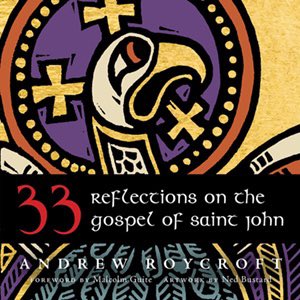
In our conversation we cover the contours of his leadership journey, reflecting on some of the sometimes painful lessons learned along the way. Andrew is also a published poet and has recently released “33: reflections on the Gospel of Saint John” a collection of short poems based on John’s Gospel: we chat about his love of poetry in the podcast.

If you would like to get a copy of the book, you can contact Andrew via his church website or by locating him on Twitter (@AndrewTRoycroft).

Here is our conversation.

The Leadership Journey Podcast: Andy Hickford

For the past four years Andy Hickford has been Senior Minister at Upton Vale Baptist Church in Torquay. He is currently on sabbatical ahead of moving into a new phase of ministry with Jubilee Leadership – a new ministry with a focus on helping leaders have the opportunity for rest, release and restoration.

Previously Andy worked in churches in Worthing and Luton.

Be sure to listen all the way through and catch the things Andy would say to his 20-year-old self. I’ve asked him to wrote a blog about them – it will be posted here: they are very rich. In anticipation, here are the bullet points:

  • You are perfectly loved: learn to rest in that and minister from it.
  • God does speak, so learn to listen.
  • Pay attention to the habits and pace of your life.
  • Don’t be deceived by the miraculous aspects of your calling.
  • Embrace pilgrimage: enjoy the journey.

The guest on the next episode will be Andrew Roycroft. Andrew is pastor of Portadown Baptist Church. We will be talking about his leadership journey, but also about his new poetry collection: 33 reflections on the Gospel of Saint John.

The Leadership Journey Podcast: Gilbert Lennox and David Scott (Keswick Portstewart)

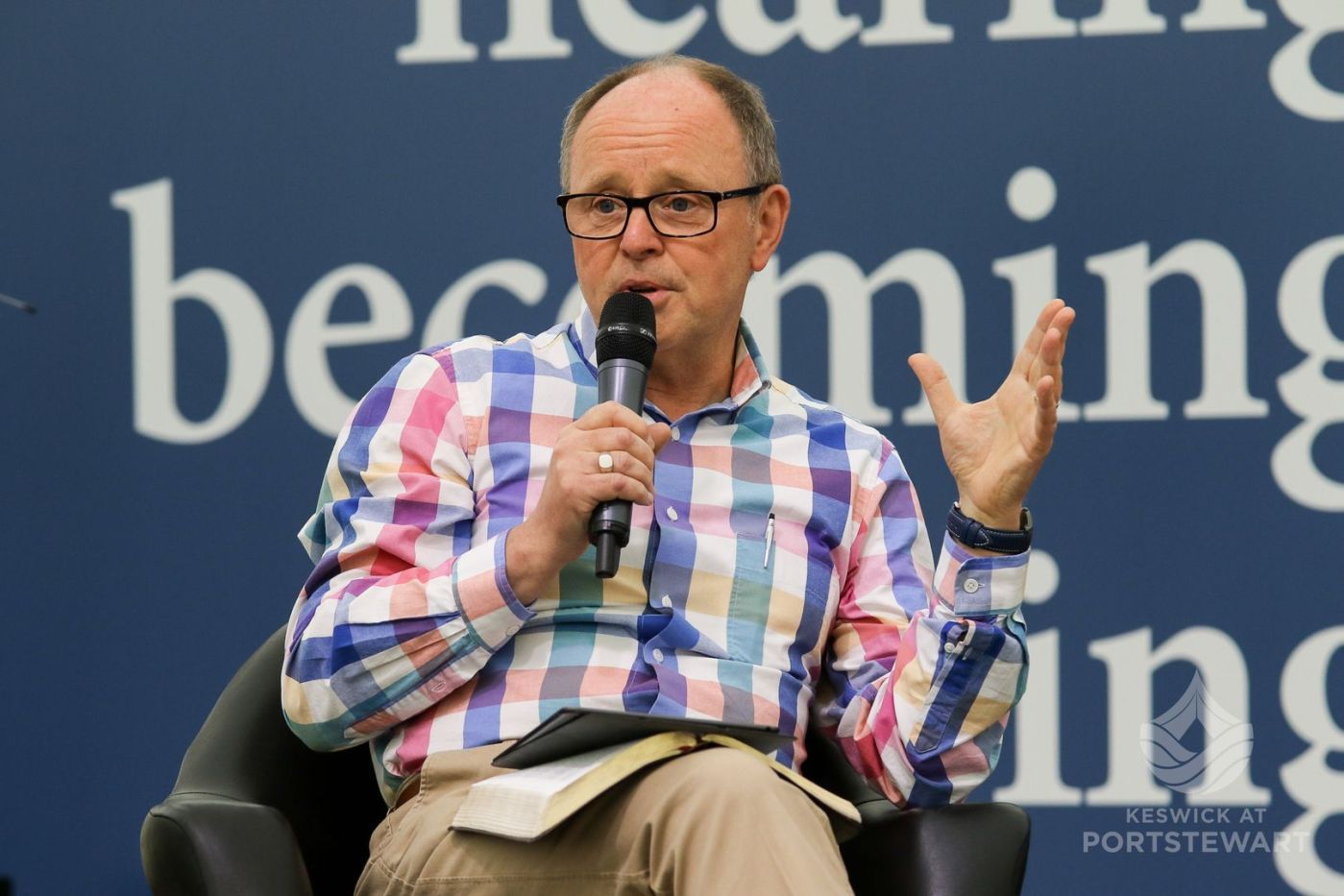
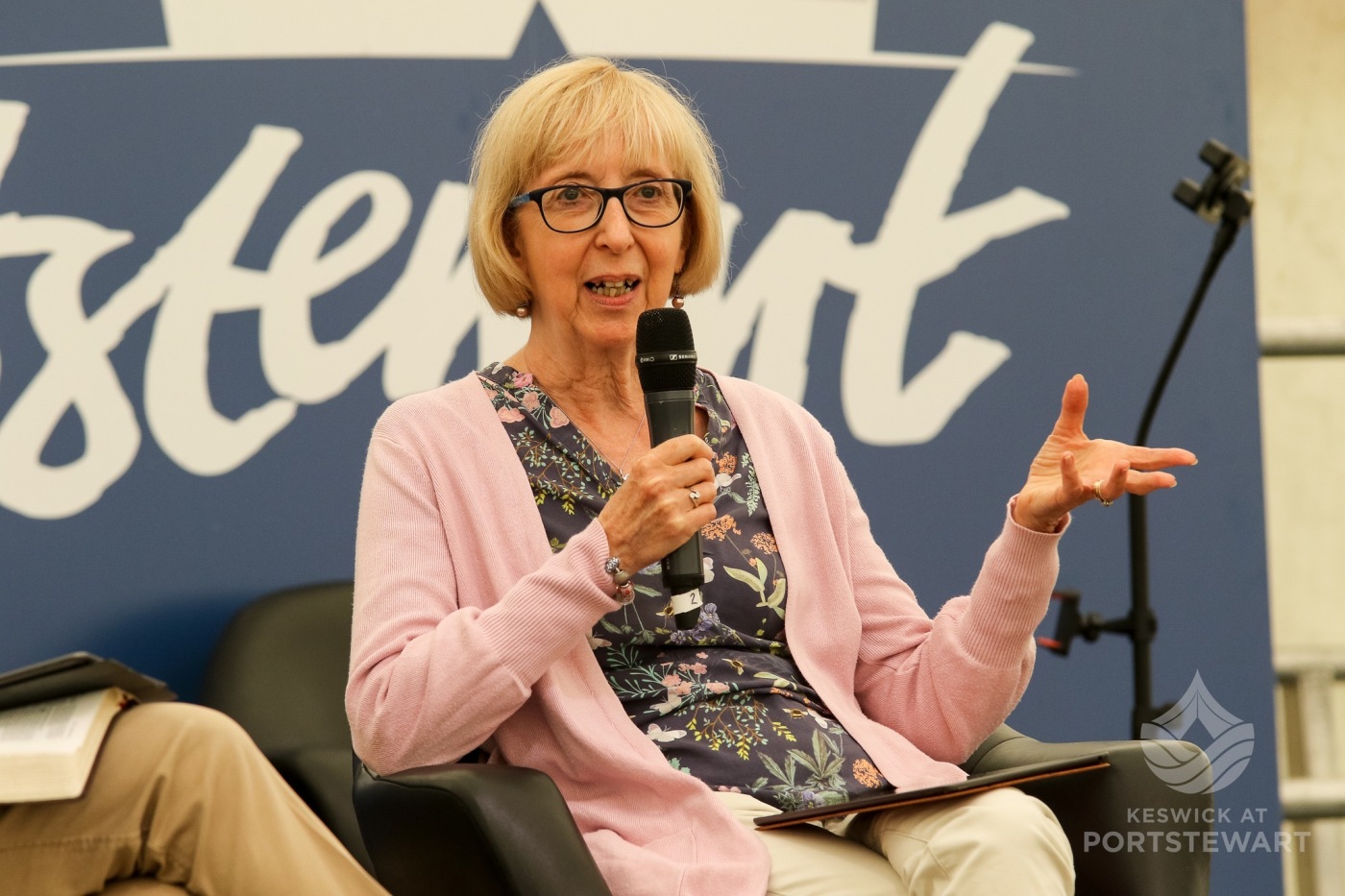
Last week, in the context of the Keswick at Portstewart Convention, I chatted with two of the speakers – David Scott and Gilbert Lennox – about their leadership journeys. David leads the ministry of Inshes Church of Scotland, while Gilbert (who has been on the podcast previously) is known for his teaching ministry in Glenabbey Church.

**There was a technical issue with David’s microphone at the beginning of the conversation: it gets sorted about 4 minutes in.

If you would like to watch the conversation rather than just listen, follow this link.

Leadership or Servanthood?

I’ve been reading this recent book from Langham and next week I hope to have the author, Malaysian church leader, Hwa Yung, as my guest on the podcast.

As the title suggests, the book sets out to question the Church’s fascination with leadership. It’s not that Hwa Yung denies the importance of leadership per se, his concern is the way the Church speaks of it ‘in terms that are not very different from the way the world around us does.’ In contrast, he argues, ‘it appears that the key emphasis in the Bible’s teaching is that we are called first and foremost to be servants and not leaders.’

The book consists of nine chapters and follows a clear path. The starting point is the focus on servanthood (‘the fundamental nature of the ministry and leadership to which [leaders] are called is defined by servanthood, and not by position, status, and power.’) From there we move to a discussion of authority: after all, if we are servants, what authority do we have? The answer is found in a spiritual authority that is founded on submission to the Father, as seen in the example of Jesus.

Just as the path of true spiritual greatness lies through humility and servanthood, so the path of genuine spiritual authority lies in submission to the Father.

Hwa Yung, Leadership or Servanthood, p50.

Next is the question of where we are to find confidence and again the answer is seen in the example of Jesus who was sure of his identity as the Son of God: he lived ‘in the security of his Father’s love and protection’. We are called then to face our own insecurities and live in the security of the Father’s love.

From this we are led to consider the importance of character and spirituality for those called to leadership – and this is illustrated from what we can learn from Paul in his farewell message to the elders at Ephesus as he reflected on how he had served with humility, compassion, faithfulness, sacrifice, and a lack of self-seeking ambition.

Chapter 8 uses the examples of Jacob, Moses, Peter, and Paul, to illustrate God’s transforming work in the lives of those whom he calls. The book concludes by revisiting the relationship between servanthood and leadership (note: ‘Servant Leadership’ won’t really cut it!). It’s well-summarised in these words:

Leadership in the cause of Christ does not come from our striving to be leaders but is the by-product of a life of humble service to him and others.

Leadership or Servanthood, p129.

There is some rich and challenging material in this. The question is a vital corrective to the lure of power and status.

The Leadership Journey Podcast: Ruth Garvey-Williams

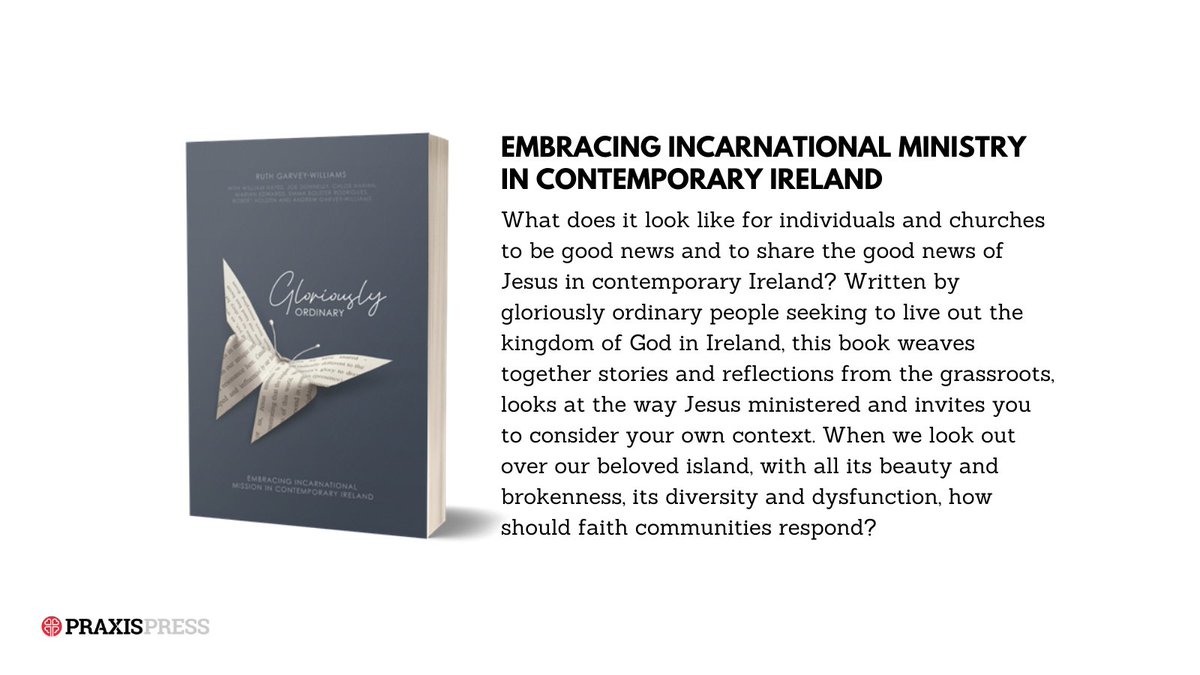
Ruth and her husband, Andrew, have been living in Buncrana, Donegal for the past 17 years where they have been involved in a range of ways with their local community and have recently facilitated the start of a new fellowship. Ruth is also the founder and editor of Vox magazine and has recently published, ‘Gloriously Ordinary’ which she has written with Andrew and several other people involved in mission.

‘Gloriously Ordinary’ sets out several principles that Ruth believes are key to incarnation mission in Ireland: you can order a copy of the book from Teach Solas, an Irish Christian bookshop in County Cork (Teach Solas is Irish for Lighthouse).

In our conversation we talk about Buncrana’s ‘Amazing Grace Festival’ (are you aware of the connection between Donegal and John Newton?), about team ministry, incarnational mission, and signs of hope for the Church in Ireland.

The Leadership Journey Podcast: ‘Canoeing the Mountains’ with Tod Bolsinger

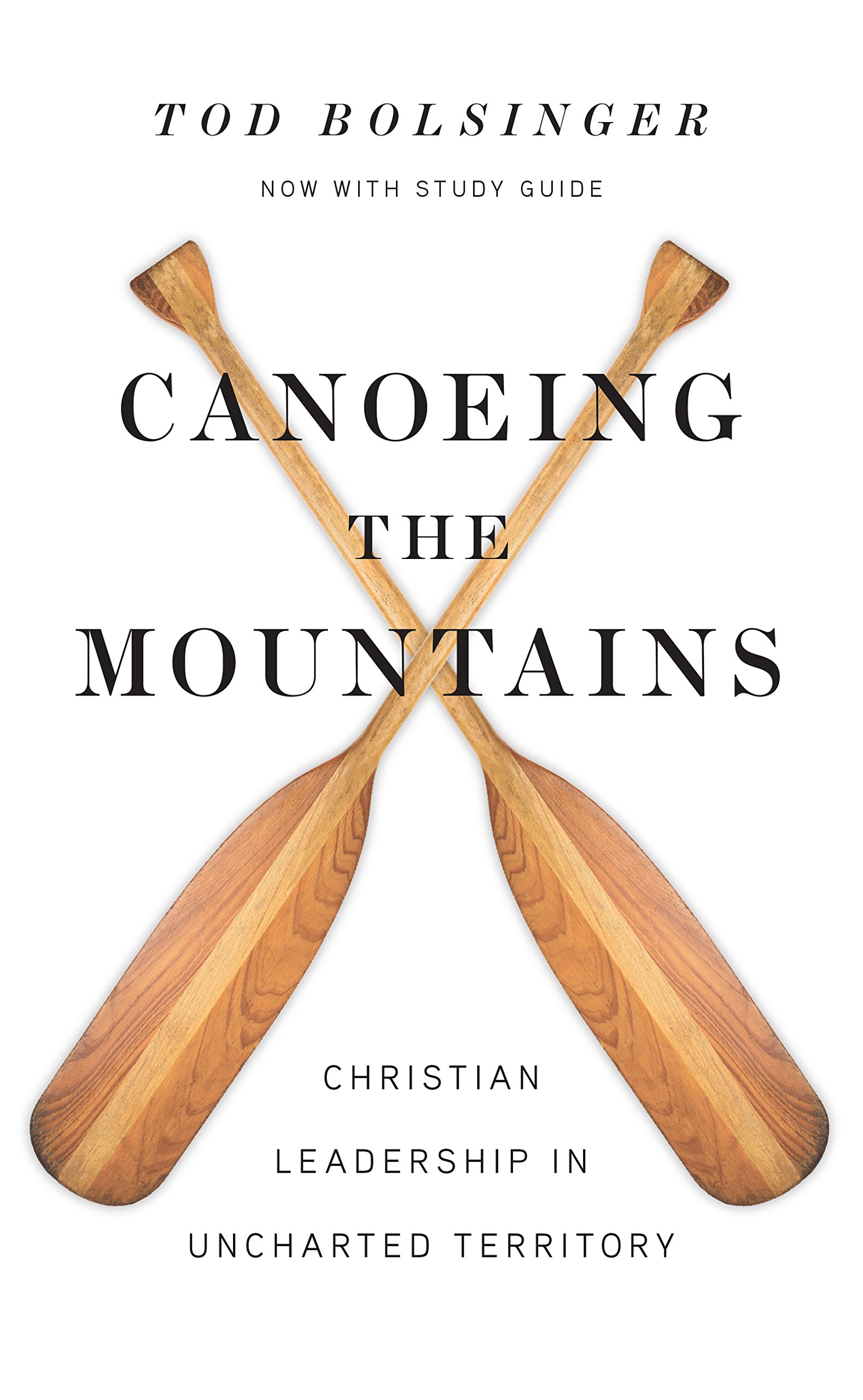
This week Tod Bolsinger returns to talk about his book ‘Canoeing the Mountains’ (he previously talked to us about his more recent book, Tempered Resilience). The title is a metaphor for the situation church leaders find themselves in when what lies ahead of them and their leadership looks very different from what they have been trained for and grown accustomed to: leaders need to be aware of the changes that have happened in the Western World and of the need for ‘technical competence, ‘adaptive change’, and ‘relational congruence.’

We also get the opportunity to hear a bit about the man behind the books, including what Tod would like to say to his 20-year-old self.

Feel free to add your own caption!

The guest on the next episode of the podcast will be Ruth Garvey-Williams, editor of VOX Magazine.

The Leadership Journey Podcast: Tod Bolsinger on ‘Tempered Resilience’

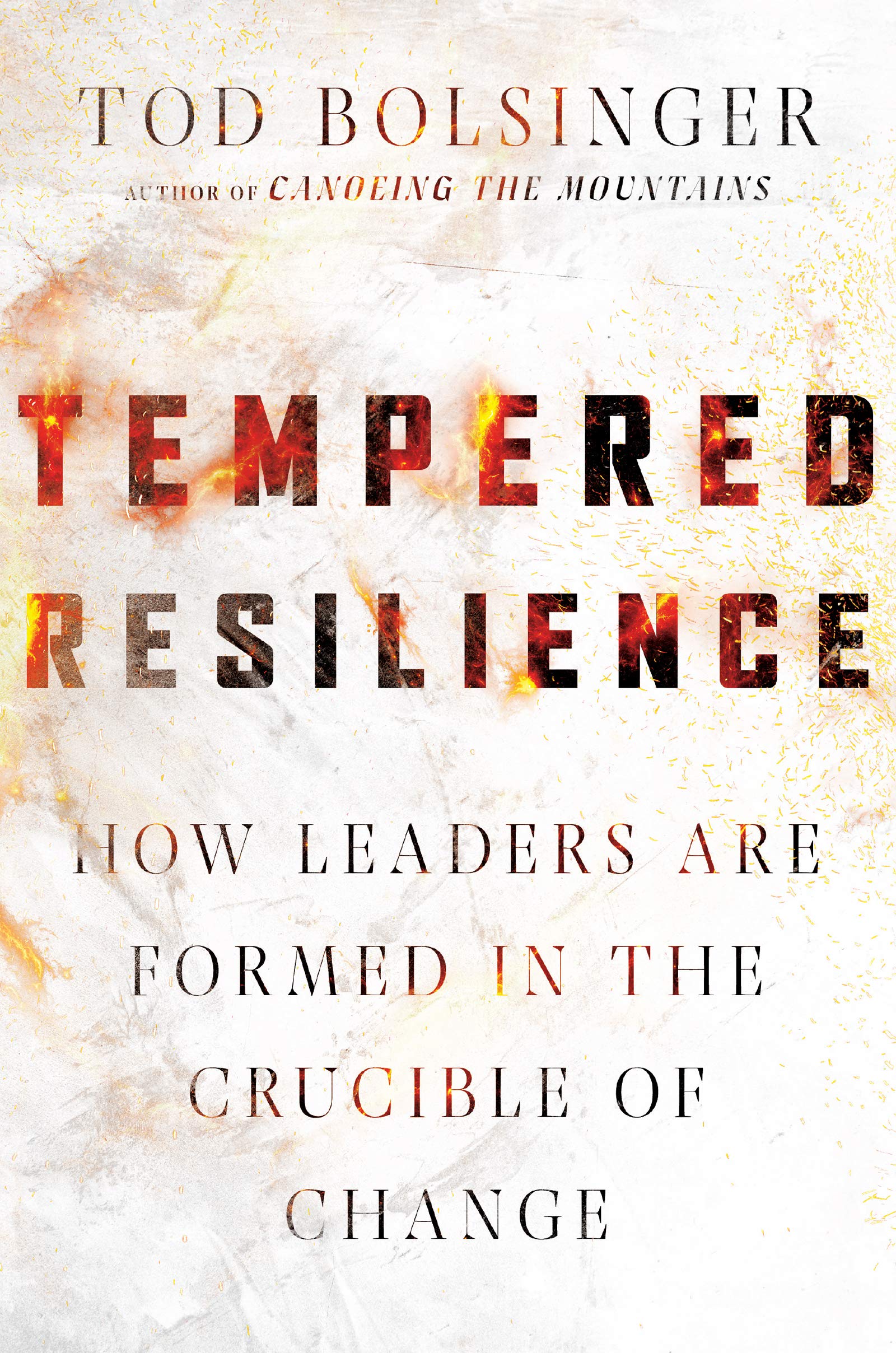
In this (shorter) episode of the podcast the guest is Tod Bolsinger from Fuller Seminary in California. Tod is the author of several books, including his most recent book, Tempered Resilience: How Leaders Are Formed in the Crucible of Change.

It’s a follow on from Tod’s previous book, Canoeing the Mountains in which he discusses what it means for Christian leaders to lead in the uncharted waters of a rapidly-changing culture.

In Tempered Resilience, he walks us through a blacksmith’s forge and compares the steps in preparing a metal tool with the spiritual formation of a leader who is being prepared to ‘hew out of the mountain of despair a stone of hope’ (quoted from Martin Luther King).

The smithing process involves working (‘leaders are formed in leading’), heating (‘strength is formed in self-reflection’), holding (‘vulnerable leadership requires relational security’), hammering (‘stress makes a leader’), hewing (‘resilience takes practice’), and tempering (‘resilience comes through a rhythm of leading and not leading’).

Next week Tod will return to the podcast to talk about his previous book, Canoeing the Mountains: Christian Leadership in Uncharted Territory.

The Leadership Journey Podcast: David Cupples

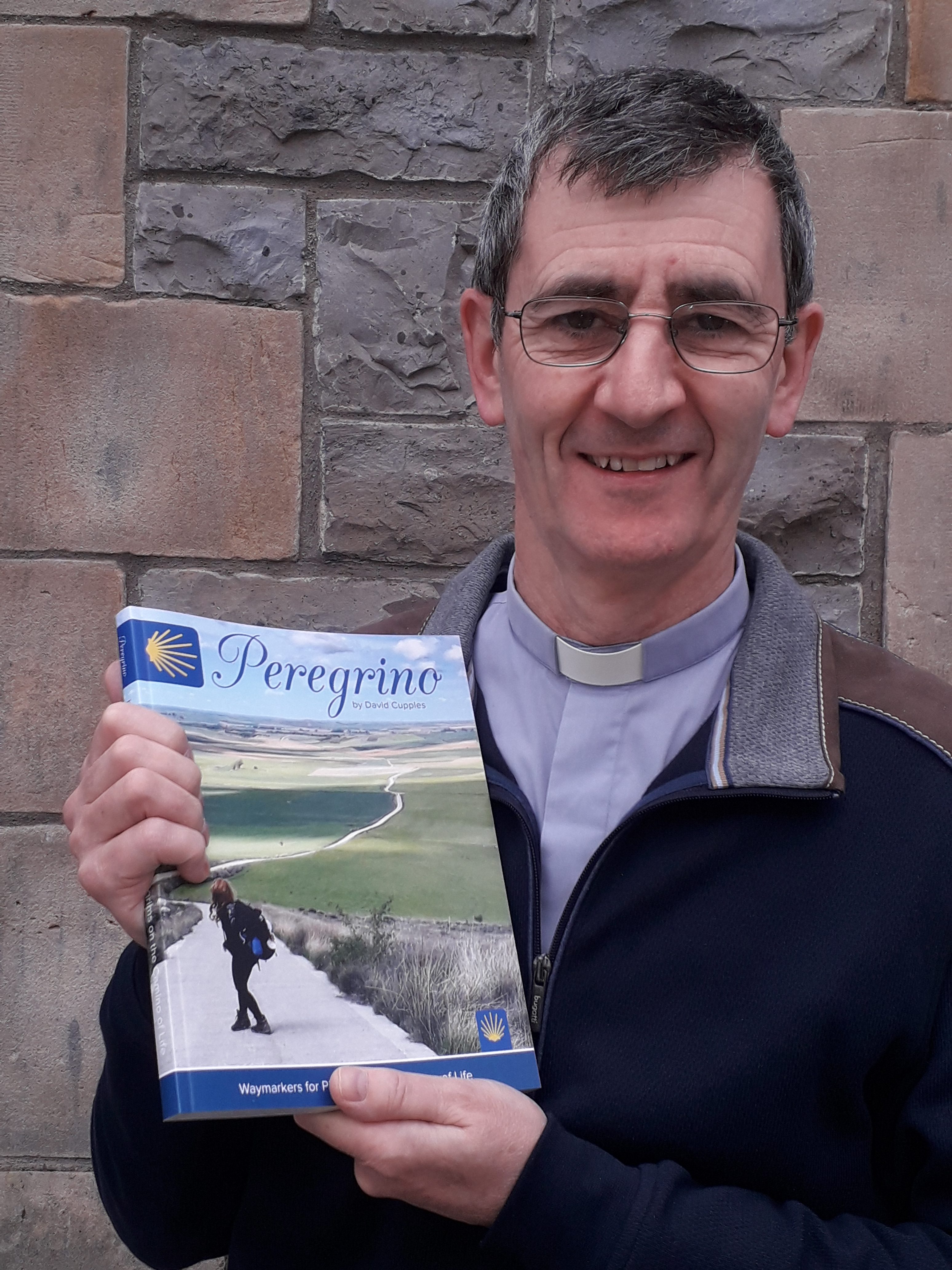
This week’s guest on the podcast is David Cupples, minister of Enniskillen Presbyterian Church in County Fermanagh. David had been minister there for over 30 years, having arrived in the town in September 1987, just weeks before the community was devastated by a Remembrance Day bomb.

In our conversation David talks about some of his experience as a minister at that time. He also talks about some of what he has found to be important in sustaining a long ministry in one place. he shares a bit about his time on the Camino Santiago and, as with other guests on the podcast, has some advice for his 20-year-old self.

David has written a book on his Camino experience and you can order a copy by contacting him via Enniskillen Presbyterian Church.

The guest on the podcast in a couple of weeks will be Tod Bolsinger who will be talking about his most recent book, Tempered Resilience: How Leaders are Formed in the Crucible of Change.

The Leadership Journey Podcast: Chris Green on ‘The Gift’

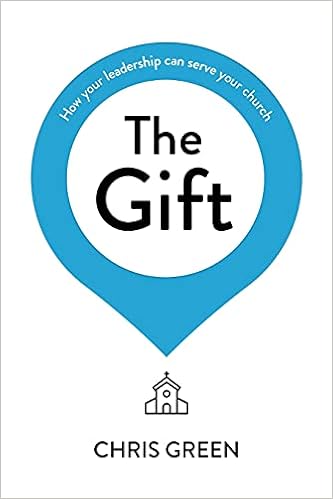
This week’s guest on the podcast is Chris Green. Chris leads a church in North London and this month IVP has published his most recent book: The Gift.

I’ve already written about the book, so you can get a quick idea of what the main ideas of the book are. In our conversation, Chris talks about some of his other work, including other books he has written, including The Message of the Church, a biblical theology of the Church, part of the Bible Speaks Today series, and Cutting to the Heart, on application in preaching.

He talks about the key ideas of The Gift, including some cautions about whether and how we should think of Jesus as the Model Leader, why church leaders could think of their work in terms of the twelve slices of pizza, and what he means when he defines church leadership as ‘Corporate Application’.

Along the way we mention the work of Patrick Lencioni and his book The Five Dysfunctions of a Team, which is well worth your while checking out.

And we have a discount code: you will pick up the code if you listen to the podcast and it will give you IVP’s best price when you order from their website.

The Gift: How your leadership can serve your church

Continuing the theme of posts on my summer reading (especially for leaders), this one is a little different in that the book in question has not yet been released: it’s due on August 19. In preparation for the launch, the author made an electronic copy available ahead of time and I have been having a read.

The book is The Gift and it is aimed at church leaders. The author, Chris Green, is the vicar of a church in North London and previously served as Vice-Principal at Oak Hill Theological College. He has written or edited several other books, including Cutting to the Heart, on application in teaching and preaching.

It hardly needs to be said the there is no shortage of books and resources on leadership, including Christian leadership. Some, like Emma Ineson’s book on ambition, or Tod Bolsinger’s recent offering on resilience (review and podcast to come), have a particular focus on a specific area of the leader’s life; others, like James Lawrence‘s Growing Leaders, or Ian Parkinson’s Understanding Christian Leadership take a wider look at a range of relevant issues. Chris Green’s focus is on the task of church leadership, and the primary audience to benefit from the book will be pastors and ministers, for whom the book will serve as an opportunity to recalibrate their understanding of their role, and rediscover the core of their calling.

For there is a plethora of voices and leadership models, clamouring for the leader’s attention. Is the pastor essentially an ecclesiastical CEO? At the other end of the spectrum, a teacher? A counsellor? What does it mean to lead a church, and to do so in a way that is shaped by biblical priorities and values? This book will go some way to answering those questions.

The book falls broadly into two parts, though there is a third element – one of those leadership fables that draws you in and sets you up for the teaching content of the book. The fable unfolds in three parts: in the book’s prelude, in an interlude between the two main parts of the book, and in a postlude. It imagines a number of people involved in ministry who get together for a seminar with an old college professor.

The first part of the book (‘Who needs leaders?’) starts by seeking to establish some some biblical and theological reasons why we need leaders at all and moves on to discuss how healthy rule breaks down, resulting in what appear to be opposites, but which are theological twins: anarchy and tyranny. Anarchy seeks freedom at the expense of rule while tyranny imposes rule without freedom. From there (and there is a biblical-theological logic in the progression) we move to a chapter on celebrity, comparison and the sin of Babel: the problem of the ‘Peacock Pastor’. Let we conclude too quickly that Jesus might be the model leader, the author warns us about the serious danger of trivialising him. It’s too easy for us to find our own leadership ideas illustrated in Jesus. we need to heed this warning:

If you see [Jesus] as a ‘Great Leader’, but don’t put that in the context of his being the ultimate, eternal King, then all you’ll get is someone general common sense on teams and priorities. YOu’ll quote him, Confucius and Winston Churchill in the same breath.

Nonetheless there is ‘buried treasure’ for us in the study of Jesus. We can note his passion and his focus, but it’s important to see him more as our pattern than as our leadership guru. When Jesus taught his disciples about leadership, he called them to service, in contrast to the self-exalting ambition of the Gentiles. And he still leads the Church: through his word, through the Spirit, and by gifting members of his Body, empowering them to lead through the gifts of the Spirit.

That idea prepares the way for the second part of the book, ‘The Gift’, in which the author carefully and methodically works towards his definition of leadership: we have to wait until chapter 14 before we get there!

The first few chapters of this section focus on the particular gifts of teaching and leading which the author argues should come together in the Church’s pastors/elders/overseers. To be a leader only, at its most dangerous, is to lead in ways that come adrift from Scripture; to be a teacher only, is to run the risk of applying Scripture in purely individual, rather than corporate ways. And since the proposed definition of leadership is ‘Corporate application’, this matters.

It matters too that the leader’s method and message are integrated (the case of Diotrophes is summoned as evidence). As it matters where we source our wisdom, and it matters that we remain attentive to the reasons why we do what we do.

The author loves pizza and as he gets closer to his definition of church leadership and how it works out, he talks about ministry as a 12-slice pizza. It’s worth noting the slices:

  • Study
  • Small groups
  • Preaching
  • Praise
  • Counselling
  • Mutual Care
  • Discipling
  • Evangelism
  • World mission
  • Training
  • Self-discipleship
  • Leadership

Sprinkled all across the whole pizza – every slice – are olives. They may not be to everyone’s taste on a literal pizza, but in this leadership model, the Acts 6 ministries of prayer and ministry of the word are to permeate everything.

Leadership then is ‘corporate application’: it is bringing the word of God to bear in all facets of the life of the church: its formal organisation, its family dynamics, and its future intentions. One chapter is given over to a practical illustration of what this approach would look like in addressing a pastoral issue and the final chapter concludes with the exhortation to ‘preach the word’ but to remember that its application needs to be bigger than the pulpit (think of those pizza slices).

If you are looking for something to guide you step-by-step through how to discern a vision, how to apply Belbin to your ministry leadership team, or how to find tools that will help you to communicate more effectively, or strategies for managing change, The Gift may not quite be the book you are looking for. It doesn’t aim to answer all those questions. In many ways it is more fundamental than that and that is why you will benefit from reading it! As I said at the start of this review, it will provide you with an opportunity to recalibrate your ministry and remind you how the Lord of the Church has equipped you to do what you do.


For more on the book, you can watch out for a podcast conversation with Chris in the second half of the month, after the book has launched.

Meantime, for those of you on Facebook, you can join the book launch team (https://www.facebook.com/groups/thegiftlaunch/) and you can even join in a ZOOM session with the author on Wednesday evening (August 12).

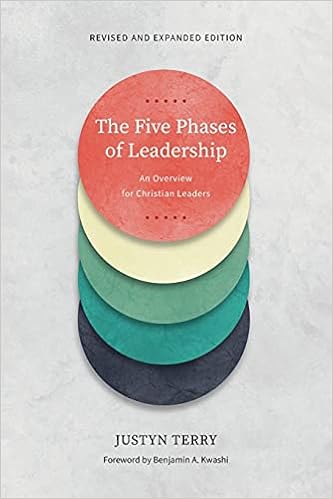
The Five Phases of Leadership

Another of my summer reads has been Justyn Terry’s book (published by Langham earlier this year) on the five phases of leadership. The author is Vice-Principal of Wycliffe Hall in Oxford and has previously served as a parish minister and the head of a theological seminary in the US.

The basic premise of the book is simple but very helpful: a leadership assignment can be considered as consisting of five phases: establishing trust, cultivating leaders, discerning vision, implementing plans, and transitioning out. While there is likely to be a logical and chronological flow between each of the five, it’s best to think of them as phases rather than stages, as there may well be overlap between some of them.

The chapter on the foundational task of establishing trust is a chapter on the character of the leader. Obviously the subject of a leader’s character could be approached from a number of different perspectives: here, the author uses Paul’s list of the fruit of the Spirit – the fruit are by no means limited to leaders, but they are explored here with a leader-perspective.

While ‘developing trust never ends’ and therefore phase one remains relevant throughout a leadership assignment, there are other things a leader must do: cultivating other leaders is one of them. The author dips in to his own experience to illustrate the kinds of leaders that might need to be developed and also includes a helpful short section on ways we might identify potential leaders, summing them up with five ‘i’s: integrity, initiatives, influence, intuition, and intelligence.

Next, leaders need to discern vision: what does it mean to clarify the future of your church or organisation? ‘How would you describe it in five- or ten-years’ time if it fulfilled its God-given potential?’ The chapter discusses vision, purpose, and core values. I wondered in reading this chapter if what is presented is more relevant to existing organisations than to new ventures: part of the counsel is to explore the past with a view to discerning a trajectory for the future.

The fourth chapter is by far the longest and most ambitious in the book (it is twice as long as the next-longest). There are a lot of nuts and bolts to work through – all very useful and helpful to leaders who want to do a better job of implementing the plans that arise from their discernment of vision. For example there is wise advice on communication and on the use of time across a church’s year. I wonder if the chapter might have been written differently, with some of the detail (like finance management) covered in a short series of appendices.

Finally, the book discusses transition: when is it time for the leader to move on? Leaders leave too soon or, conversely, hold on too long – especially if Howard Gardner is right in his claim that ‘sooner or later, nearly all leaders outreach themselves and end up undermining their causes’!

Justyn Terry has served us well with this overview of the phases of a leadership assignment: each of the five chapters has something to say to leaders wishing to lead well, regardless of whether they find themselves in phase one or phase five.

The book is available to purchase from Langham.

**Justyn will be joining me on next week’s Leadership Journey Podcast to discuss the contents of his book.

The Leadership Journey Podcast: Ray and Jani Ortlund

The guests on this episode of the podcast are Ray and Jani Ortlund and the interview was carried out in conjunction with the Keswick at Portstewart Convention where Ray has been delivering some online Bible teaching. If you’d like to watch the interview you can catch it on the Keswick at Portstewart Youtube channel.

Ray and Jani have been married for almost fifty years and for most of that time they have served in ministry together. Ray has pastored several churches, including Immanuel, Nashville, whose leadership he handed over to TJ Tims in 2019. Together they oversee the work of Renewal Ministries.

Both have authored several books: Jani most recent book is Help! I’m Married to My Pastor while Ray’s next book, to be released in September, is The Death of Porn: Men of Integrity Building a World of Nobility.

In the next episode of the podcast, Rick Hill will be making a return visit: this time he will be talking about his new book, Deep Roots of Resilient Disciples.

The Leadership Journey Podcast: Darran McCorriston

Darran McCorriston is the minister of Ballyloughan Presbyterian Church in Ballymena, where he has served for fifteen years. Alongside his ministry in the church he chairs the committee for the Keswick at Portstewart Convention – an annual gathering on Northern Ireland’s north coast that is part of the family of the wider Keswick movement.

In our conversation Darran talks about influences he experienced growing up, about some of his early ventures into Christian ministry, and about people from whom he has learned various aspects of leadership. He also talks about some of the challenges he has faced and about the things he’s say to his twenty-year-old self.

The fruit of your life depends on the root of your life.

The guests on the next episode of the podcast will be Ray and Jani Ortlund. Ray will be providing Bible teaching at this year’s Keswick at Portstewart event (Sunday, July 11 – Thursday, July 15) and you will be able to watch a video of our conversation during the week of the convention (from Tuesday, July 13 at noon), on the Keswick website. The audio will also be available here, and via Apple Podcasts and Spotify, also on Tuesday, July 13.

It is still possible to benefit from the special offer on Terry Virgo’s new book, God’s Treasured Possession: the code mentioned in my recent conversation with Terry is valid for the whole of this month.

Speaking of books, Rick Hill‘s new book, Resilient Discipleship launches next week and you can order a copy here.

On striking rocks and getting in the way of Jesus

(This is drawn from ‘The Crucible of Leadership’ – a book project I am working on, based around the story of Moses.)

Moses Striking the Rock (Chagall)

For leaders to lead in the way of Jesus is one thing (a good thing, if it means they are seeking to be like Him), but for leaders to get in the way of Jesus is something else.

By way of a final word on Moses’ leadership journey (and our own), we return once more to Meribah, and the rock-striking episode.

It was at Meribah (Numbers 20) that Moses’ anger re-emerged. What had been an arguably justifiable attribute when he responded either to injustice or to the people’s unfaithfulness was this time an expression of frustration as the complaints of the people tipped him over the edge. It led him to take a situation into his own hands, to deal with it in his own way, instead of trusting God, leaving room for Him to work, thus acknowledging His holiness.

Centuries later, referring to Israel’s history by way of warning the members of the church in Corinth about the dangers of an array of sins, including putting Christ to the test, Paul writes about the spiritual food and drink that were available to Moses’ followers. They drank spiritual drink from a spiritual rock, ‘and that rock was Christ’ (1 Corinthians 10:4).

I don’t think Paul’s reference requires a non-historical understanding of the incident at Meribah, but it does point us towards a typological understanding of the incident: in the desert, Christ was the true source of the people’s nourishment.

The task of New Covenant ministers is to share Christ with people. He is the source of spiritual life and nourishment that people need. Beyond what Paul says here in this somewhat enigmatic paragraph, Jesus referred to Himself as both the Bread of Life and the Source of living water. Our task is to help people to engage with Him. 

May God forgive us when our words and actions get in the way of this and we drag His name into disrepute. How many people have been turned away from the Source of living water because of the behaviour or attitude of a Christian leader? It’s a tragedy when people cannot see past us to Jesus. Our calling is to point to Him, to guard the sense of Him holiness, and make sure that we do not make ourselves the focus.

May God forgive us when we make ourselves the focus of our leadership. It’s not simply the big platform, high profile leaders who are at risk (wittingly or not) of this. Any of us has the capacity to attempt to put ourselves at the centre. What good is our leadership if we get in the way of Jesus?

Those of us who are preachers need to be aware of the temptation to allow our frustrations to come out in the administration of harsh verbal lashes.  There is something wearisome about the kind of preaching that seems to see listeners as a badly-behaved class of children who need to be brought into line. Some good friends in our church in Switzerland were once kind enough to ask me if I liked Christmas (I do). They had noticed that in my zeal to ‘challenge’ the once-a-year visitors to our Christmas services, I was coming across as angry: Ebenezer Scrooge in the pulpit!

A few months ago I heard the story of advice that the Puritan, Richard Sibbes, gave to Thomas Goodwin. In Goodwin’s own words, his preaching could be described as ‘battering consciences’. After hearing him preach, Richard Sibbes said this: ‘Young man, if you ever would do good, you must preach the gospel and the free grace of God in Christ Jesus.’ 

There are times when, in our zeal, we simply try too hard. It’s for the best of motives but our ministry and leadership are all about ‘challenge’. Our preaching is always about the big stick. Our leadership is always about the next hill to climb, rarely pausing long enough to be thankful for the distance we have already covered. Of course there is such a thing as a sense of urgency, but it’s possible to try so hard that we end up getting in the way of Jesus. People grow weary and it seems as though we are only offering stale bread and lukewarm water while all along Jesus wants to invite people to taste the bread of life and drink of the living water.

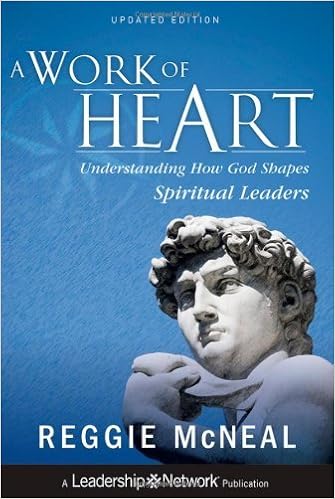
The Leadership Journey Podcast: Reggie McNeal on ‘A Work of Heart’

This week I am joined by Dr Reggie McNeal to talk about his book A Work of Heart. Reggie is a writer, and leadership coach who is passionate about God’s Kingdom. He is the author of some ten books, including Practicing Greatness and, his most recent book, Kingdom Collaborators. He is also the host of The Reggie McNeal Podcast.

The book we feature in this episode of the podcast was actually published just over twenty years ago. I was very struck by it at the time and have recently been suggesting it as reading for some younger leaders.

As the subtitle says, the subject of the book is ‘understanding how God shapes spiritual leaders.’ The book falls into two parts. The first tells the story of four biblical leaders whose stories are recounted in quite some detail in Scripture – Moses and David from the Old Testament, Jesus and Paul from the New. The second part highlights six heart-shaping themes that are discernible in these leaders stories, but which each merit a chapter on their own.

In our conversation, Reggie and I discuss these six themes:

  • Culture – leaders are not born into a vacuum;
  • Call – ‘something you orient your entire life around’;
  • Community – what part do others play in the shaping of a leader?
  • Conflict – hard to avoid, but essential to know how to navigate;
  • Communion – the challenge of maintaining a walk with God;
  • The Commonplace – learning to look for God in the ordinary events of life.

Along the way we talk about self-awareness (‘the single most important body of information you have as a leader’) – without it, Reggie suggests, a leader does not know why they do what they do.

Meantime, if you’ve not read A Work of Heart, do yourself a favour and get a copy. If you have read it, buy a copy to give to another leader!

The Leadership Journey Podcast: Derek McKelvey

This week’s guest on the podcast is Derek McKelvey. Derek is a retired Presbyterian minister who served congregations in Bangor, Ballygilbert, and Fisherwick, in the university area of Belfast. In addition to his congregational ministry, Derek is well-known for his prayer ministry course that operates under the auspices of the Kairos Trust.

In our conversation we talk about Derek’s upbringing and his conviction from early childhood that he would one day be a minister. He would discover later that God was answering a prayer prayed by his mother before his birth. Derek also talks about a challenging season of exhaustion in his ministry that led to a remarkable encounter with God and opened a new vision of ministry.

Among the wisdom he shares are these valuable gems:

  • Seize the God-moments!
  • Believe all of God’s promises!

If you would like to know more about Derek’s ongoing ministry with the Kairos Trust, feel free to contact him via their website.

The podcast will be back in a couple of weeks when I hope to be chatting with author Reggie McNeal about his excellent leadership book, A Work of Heart.

(PS – the episode with Reggie McNeal will be in May.)

The Leadership Journey Podcast: John Dickinson

John Dickinson is the recently-retired minister of Carnmoney Presbyterian Church in Newtownabbey – a congregation he served for nineteen years. Previously John served in churches in various parts of Northern Ireland, including Seaview, in North Belfast.

In our conversation John talks openly about the recent loss of his wife, Christine, just a few weeks after a cancer diagnosis in 2019. He talks about growing up in a ministry family, about some of the people who have influenced him, and about his growing awareness of God’s presence in the ‘now’ of ministry. Looking back over his nineteen years in Carnmoney, he talks about aspect of his ministry that most stands out, and he shares two things he would like to say to his twenty-year old self.

The next guest on the podcast will be Dave Landrum, Director of Advocacy and Public Affairs with Open Doors.

The Leadership Journey Podcast: Rowland and Alli Clear

Rowland and Alli Clear live in Devon, where they lead ‘On Track Ministries’, a ministry that seeks to support people in Christian ministry. They are also associates with Living Leadership. Previously they have been involved in churches in Canterbury and Rayleigh, Essex. They describe themselves as ‘spiritual cartographers’.

In our conversation they talk about their journey in faith and ministry, including (for Rowland), the experience of a dark night of the soul.