The Leadership Journey Podcast: Simon Marriott

The guest on this episode podcast is Simon Marriott. Simon is originally from Lurgan in Northern Ireland, and now lives in Mullingar in the centre of Ireland. He has worked with Youth for Christ in the Czech Republic and the Irish Republic, and has served as pastor of Mullingar Christian Fellowship. More recently he has been appointed director of Foundation for the Nations – a group that has helped to resource Youth For Christ projects in scores of nations around the world by connecting them with generous donors. He is married to Hannah, and they have three children.

In our conversation, Simon talks the work he is currently involved in (which you find out about here) and reviews much of his leadership journey, including the influence of some key people, and how his philosophy of Christian leadership has evolved. He speaks powerfully about a deeply challenging personal moment at the time of the birth of one of his children and how significant he has found the meaning of his name to be in his relationship with the Lord.

There are some great leadership takeaways in the conversation.

You will notice a couple of commercial plugs through the conversation – one for the Irish Bible Institute where Simon is a recent MA graduate, and one for his sister’s stationery business. Feel free to pay them a visit, along with the Foundation for the Nations and Youth for Christ.

The Leadership Journey Podcast: Alain Emerson on ‘The Cruciform Leader’

The guest on this episode of the podcast is Alain Emerson. Alain lives with his wife and three children just outside Lurgan in County Armagh. He pastors Emmanuel Church in Portadown alongside his work with 24-7 Prayer and his oversight of the Tobar network of churches.

Alain has just released his third book – The Cruciform Leader. The book is a rich combination of biblical reflection and personal story that aims to call Christian leaders back to the heart of New Testament leaders, embodied in Jesus and lived out by his first followers.

In our conversation we talk about Alain’s own leadership journey as well as delving into what lies behind the book and outlining some of its themes.

You can get hold of a copy of the book (which includes a helpful study guide at the end of each chapter) from various outlets, including Emmanuel Church in Lurgan (if you are in the area), the various Faith Mission bookshops, and online, including from the publisher, Muddy Pearl.

Click here to access the episode.

The Leadership JOurney Podcast: Arianna Molloy on Healthy Calling

Arianna Molloy is a Communication professor at Biola University in California. She has recently published “Healthy Calling: From Toxic Burnout to Sustainable Work.”

In our conversation, we spend a little bit of time talking about some of the people who have helped Arianna as mentors, but the bulk of the conversation focuses on the book.

We begin by talking about burnout. In the book Arianna suggests that the positive side of calling leads to greater motivation and satisfaction, but that it also has a darker side: the called are more prone to burnout!

We talk about the nature of calling and its four components (which set it apart from a job or even a career). Calling involves a relationship between the person called and the Caller, but also the community. We talk about how calling looks different from drivenness and we spend a bit of time on workaholism and job-idolisation.

In addition we reflect on the importance of humility and sabbath in sustaining calling, and we finish with the advice Arianna has for her 20-year-old self.

If you are in the US, you should have no trouble ordering from wherever you get your books: in the UK you will have to wait about 10 days for the delivery of the paperback (I managed to order one from Abe Books), though the Kindle edition is available right away.

Here is the link to the episode.

https://jsalanwilson.podbean.com/e/the-leadership-journey-podcast-arianna-molloy-on-healthy-calling/

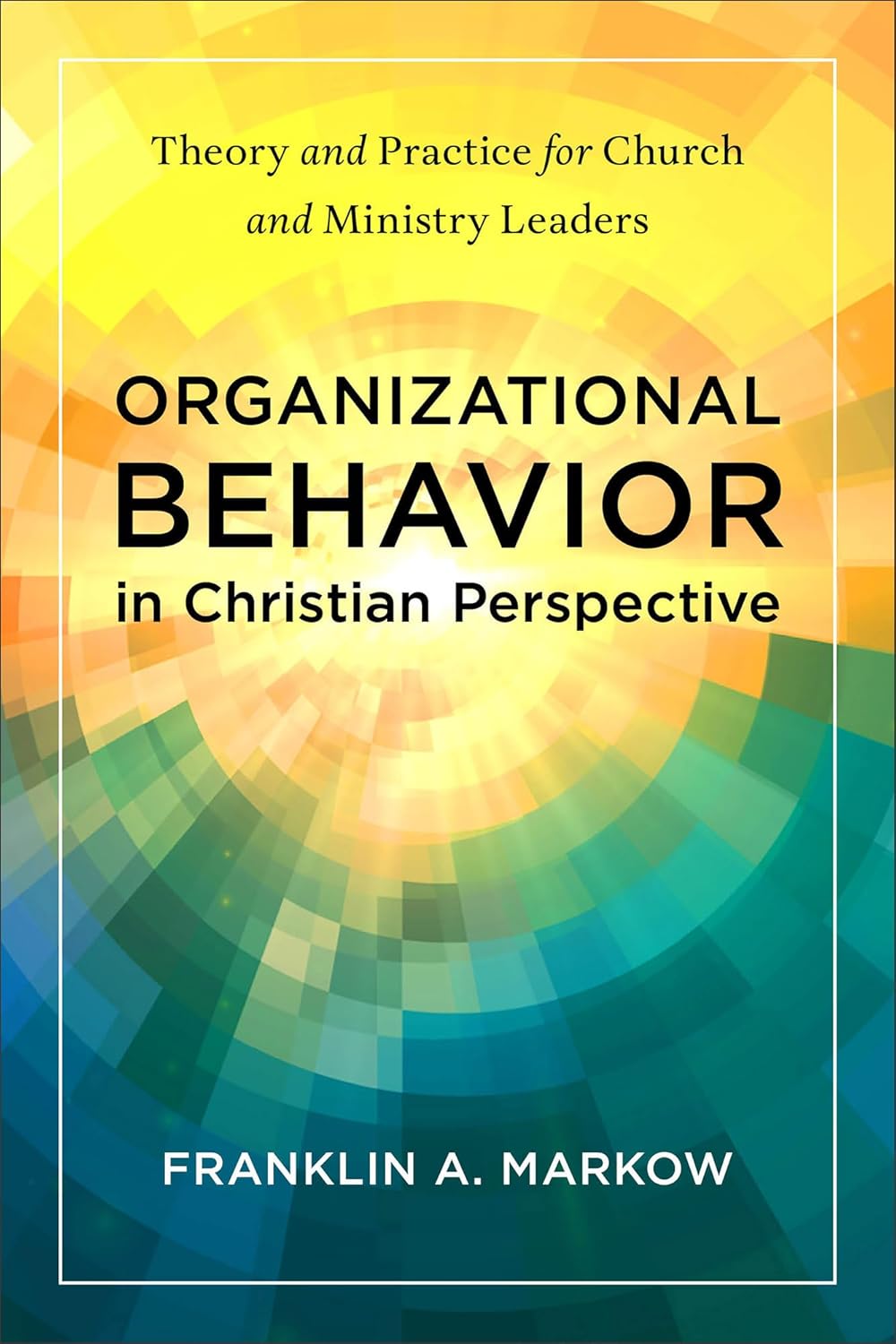
The Leadership Journey Podcast: ‘Organizational Behavior in Christian Perspective’, with Frank Markow

Leaders do not lead in a vacuum. There is always a context, and part of that context is the organisation within which the leader operates, whether it’s a business with many employees or a church with an army of volunteers. So what do Christian leaders need to know about how organisations operate?

Frank Markow has written about this in his book, ‘Organizational Behavior in Christian Perspective’. Frank is Professor of Leadership Studies at the King’s University in Texas.

Here is the link to the episode.

The Leadership Journey Podcast: Ruth Walker

The podcast is back after a lull and my guest is Ruth Walker.

As well as being a wife, mother, and grandmother, Ruth describes herself as ‘a whole-life disciple’ with a portfolio career. She is a non-executive director with a number of charities, including Bethany Christian Trust, a charity dedicated to ending homelessness across Scotland. She is also a coach and a speaker.

In our conversation she talks about her strong Christian family and the formative years spent growing up in a Brethren church in Glasgow where she became involved in the ministry of Crusaders (now Urban Saints). Her career has involved several roles and working with some inspiring leaders. She also talks about her work with LICC and the Evangelical Alliance Public Leadership programme.

As well as discussing some of her key learnings on the subject of leadership, Ruth shares what she would say to her 20-year-old self.

Here is the link to the episode:

https://www.podbean.com/eas/pb-538iv-1748ba5

The Leadership Journey Podcast: Wendy Pawsey

Wendy Pawsey is Head of Giving at the Evangelical Alliance: she also leads an Elim Church in rural Buckinghamshire, along with her husband, Marcus. Wendy has also written a book on generosity: Generosity with a Capital G. The book is published by Instant Apostle: it launches this month and is featured as part of The Big Church Read.

Wendy joined me on this episode of the podcast to talk about the book and its theme of generosity. She also talks about her own fascinating story of coming to faith and her journey in Christian ministry.

You can get a copy of the book via the outlets listed on the Instant Apostle website, or by visiting The Big Church Read.

The podcast can be found on Podbean.

The Crucible of Leadership: Immersive Reality Edition

As we are now well past noon (in the UK), much of what appears in the original post is no longer relevant!!

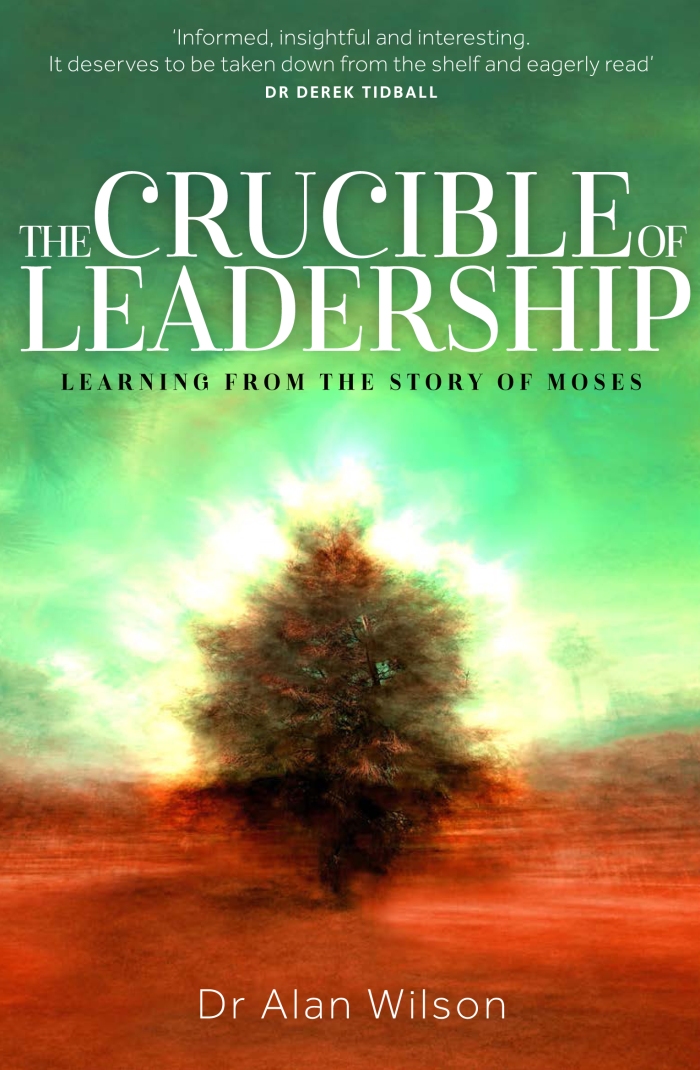
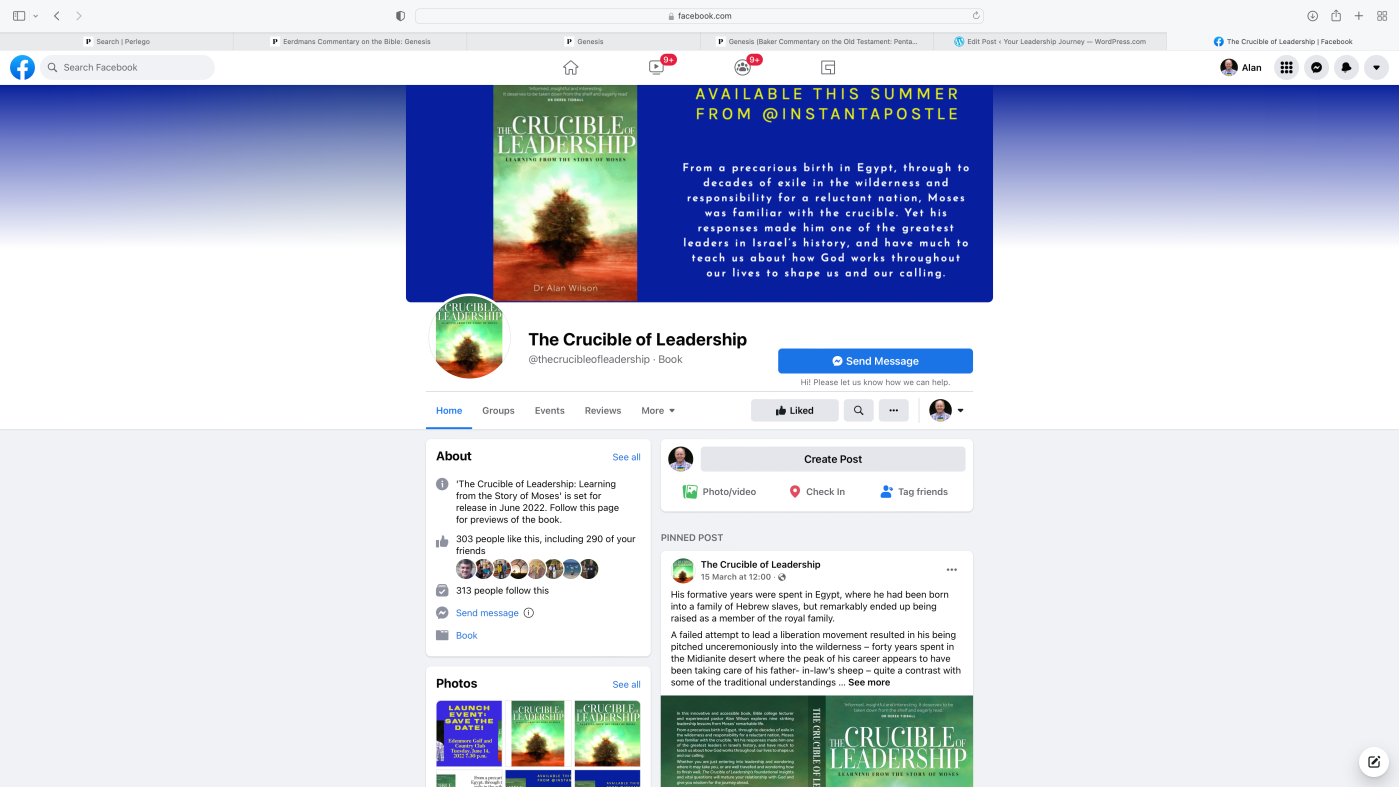
It is, however, true that ‘The Crucible of Leadership’ is set to hit the shelves in June. You can stay up to date with news via the dedicated Facebook page.


There is exciting news about a special edition of ‘The Crucible of Leadership’ which is to be published in June. In an innovative step, there will be an ‘immersive reality’ edition of the book. Readers who purchase this edition (retailing for £22.99) will be able to use a code printed on the back page of the book to access a virtual reality experience that will bring the book to life. The code can then be used with one of the new immersive reality headsets to access a host of extra features related to the book. The headsets are sold separately but can be used to access other immersive reality experiences such as major sporting events and seminars led by world-renowned experts in a range of fields.

While publishers have been excited for some time about the prospect of immersive reality fiction, the idea of an immersive reality version of a non-fiction book is something of an innovation.

The immersive reality edition of ‘The Crucible of Leadership’ will allow you to relive details of Moses’ story as if you were there. Among other things you will be able to walk (virtually) around the Midianite desert and cross through the Red Sea. As well as bringing aspects of Moses’ story to life, this special edition of the book will allow you the opportunity to participate in virtual seminars with Jewish and Christian scholars who will throw further light on the setting of Moses’ remarkable story.

You will have to hurry, though. This edition of the book is only available if you order it before noon today!

God’s Treasured Possession: Walk in the Footsteps of Moses

For some time Moses has been one of my main go-to characters in terms of biblical material on leaders. I’ve been particularly interested in the way his story functions as a paradigm of a leadership journey – in fact I’ve spent quite a bit of time over the past twelve months doing some writing about it all.

So I have had a special interest in Terry Virgo’s most recent book which is fairly hot off the presses. God’s Treasured Possession (IVP) is Terry’s exposition of the story of Moses, from his origin story, with its inherent identity conflict, to the end of his life, falling short of getting into the Promised Land, and further, to his appearance with Jesus on the Mount of Transfiguration.

It’s a wonderful read, combining careful attention to the details of the story as we have it in the text of Exodus and Numbers with insights from Terry’s years as a pastor and leader.

The book opens with the claim that the story is ‘a story written for us’ and actually begins on the Emmaus Road with the two disciples whose hearts burned as the risen Jesus opened up the Scriptures in a way that they had never known. The ancient events of the Old Testament have been handed down to us to teach us: God has revealed himself through stories.

We are taken through Moses’ abortive attempts at leading (‘running ahead of God’), through his reluctance to respond to God’s commission and on to the early challenges of leadership (‘Pharaoh proved to be a formidable opponent, certainly no pushover’): we learn that ‘apparent setbacks and even heartbreaks can work God’s purpose in you as you learn patience and begin to understand that it’s ultimately His story not yours.’

We are reminded of Moses’ role as a frequent mediator and intercessor, we learn about guidance, about faith and fear, about the importance of God’s call and commission, about sharing leadership, and about the need for secure leaders. One of the strengths of the book is the way it takes specific episodes in the story, like the Passover, or the establishment of the Tabernacle and ties them to the wider picture of biblical theology.

I’m delighted that Terry has agreed to chat to me on my Leadership Journey podcast this week (it will actually be his second appearance on the podcast) when we will spend time discussing some of the book’s themes. I will post the link when the podcast is available.

Easter discovery: the Palm Sunday donkey

This week millions of Christians around the world have, in various ways, been celebrating ‘Holy Week’, during which they seek to relive the events of the last week of Jesus’ life before his crucifixion. Among one of the best known stories from the week is the story of Jesus’ arrival, on a donkey, in Jerusalem. Christian preachers and biblical scholars will be familiar with the echoes from the Old Testament prophet, Zechariah, announcing the arrival of Jerusalem’s King on a donkey, but it turns out that there may be more material for these preachers and scholars to mine following a report from a international team of archeologists led by Dr Shlomo Ben Israel from the New University of Tel Aviv.

The team have discovered a likely familial link between the Palm Sunday donkey and the ‘little donkey’ which is alleged to have carried Mary on her journey to Bethlehem ahead of the birth of Jesus. The discovery hinges on the finding of an ancient journal that is thought to have belonged to a Jewish landowner living just a few miles from the Mount of Olives in Jerusalem. In one entry he writes about his acquisition of several donkeys that had previously belonged to his cousin in Bethlehem. The donkeys were apparently of a particular type, dubbed by archaeological specialists as asinus orientalis (eastern donkey). The researchers were unable to find any other examples of this type of donkey anywhere else in the Middle East. A painstaking study of DNA material found in the area suggests that these donkeys trace their origin back to the area around Nazareth, a fact that would support the idea that Mary travelled on a donkey from there to Bethlehem. The discovery of the ancient journal then appears to connect the Palm Sunday donkey to Mary’s donkey.

The findings were welcomed by a spokesman for the European Council for Ecumenical Celebration who said, ‘I have always enjoyed the donkey stories in the Bible, from Balaam’s talking donkey through to Palm Sunday. This discovery underlines the importance for all of us to ask, which donkey am I most like?’

Unfortunately the archeologists have so far been unable to confirm the presence of a little drummer boy in Bethlehem, or the names of the wise men. But there is still plenty of time until Christmas. Meantime, work is underway to discover potential links between Balaam’s donkey and the donkeys lost by the father of King Saul.

The podcast has a new look!

Thanks to Aaron (Rico) Robinson, one of my former students, for kindly offering me this new design for the podcast!

Notice the map theme that conveys the idea of a journey. There is a touch of the old, with the ordnance survey-style contours (leadership has its ups and downs), and a touch of the new with the online-style icon marking a location.

The Church and Covid-19: Andrew Roycroft

The guest on this week’s Thursday podcast is Andrew Roycroft. For the past 10 years Andrew has been pastor of the Baptist church in Millisle on the County Down Coast. If you would like to keep track with their regular ministry, you can follow them on Facebook. You can also follow Andrew on Twitter (@AndrewTRoycroft). You can also visit Andrew’s blog on pastoral issues.

This episode is part of a series of conversations with a selection of church leaders, exploring ways in which they have been adapting ministry in the context of the global pandemic.

A prayer in the current crisis

Heavenly Father,

We come to you in in humble acknowledgment of our weakness and limitations.
Forgive us for those times when we have made ourselves the centre of our universe, when we have behaved selfishly, even when we have assumed that our power and our progress are unstoppable. Forgive us for the ways in which we have – even unwittingly – discounted you or attempted to push you from your rightful place.

We thank you for gifts of knowledge and for medical and scientific skill, and we pray for all those who are working against time and exhaustion to deal with this crisis: would you inspire them and help them. Yet even as we thank you for these gifts, we want to look to you as the source of our deliverance: help us to put our hope in you.

Be with all those who are suffering from the effects of the virus – the sick, the bereaved, the isolated, and the fearful: please bring healing and comfort.

‘May your unfailing love be with us, even as we put our hope in you.’

Lord, in your mercy we ask you to turn the tide and bring an end to this virus.

We pray these things humbly, yet in the knowledge that you invite us to cast our cares on you, in the name of your Son, the Lord Jesus, who loved us and gave himself for us.

Amen

The boy grew up: reflections on turning the page on another year

This is not restricted to leaders, but is relevant: something I wrote on how we can take a balanced audit of our lives as we approach a new year.

The other day we celebrated our grandson’s first birthday. He and I celebrated by jumping up and down quite energetically. That’s a lot of fun when you are one and someone else is doing most of the jumping and throwing you in the air: it’s a lot tougher when you’re almost 60 and you’re most […]

via The boy grew up: reflections on turning the page on another year — JS Alan Wilson

Podcast supplement: reflect on your leadership journey

One of the ways you might like to follow up with this week’s podcast on the leadership journey of Moses is to reflect on some of the things that have contributed to your own leadership journey.

Keep in mind that while Moses’ story fits neatly into three stages, your journey may have more phases. Look out for events and times that have marked turning points between phases. Use the second template (or your own variation on it) to reflect on your own story.

 Key stages

Formative years

Exile years

Leadership years

Turning points Intervening against the Egyptian Meeting God at the edge of the desert Striking the rock
Defining moments Standing up for the Hebrew slave Choosing to intercede
Important people Mother, sister, Pharaoh’s daughter Wife, father-in-law Aaron, Joshua
Crucial decisions Deciding where his allegiance lay Defying Pharaoh and leaving Egypt
Times of testing Tests faced by his people and family The loss of his vision Complaints of the people
Notable successes Courage of others Signs and wonders
Regrettable failures Rejection Striking the rock
Life lessons Sense of injustice and of identity Experiencing the mighty hand of God
Sense of calling Choosing to stand with the Hebrews Call episode in chapter 3,4
Key stages Stage 1 Stage 2
Turning points      
Defining moments      
Important people      
Crucial decisions      
Times of testing      
Notable successes      
Regrettable failures      
Life lessons      
Sense of calling      

Happy New Year!

MicrophoneHappy New Year from Your Leadership Journey! May 2018 be a year of growth and fruitfulness in your leadership.

After a short break, the Leadership Journey Podcast will be back this week (Tuesday) and in this week’s programme I will be talking about the leadership journey of one of the most significant leaders in the Bible: Moses, who has been described as ‘the most important and celebrated character in the Hebrew Bible’.

As the year unfolds, the podcast will include interviews with a range of leaders, including Bishop Harold Miller, Phil Emerson from Emmanuel Church in Lurgan, former head of the NI Civil Service, Sir Nigel Hamilton, and prolific author and former Principal of London Bible College, Dr Derek Tidball.

The weekly episodes will be posted here and you can also subscribe on iTunes.

Leadership 101: Call, character and competence (4)

keys-leadershipThe previous post started looking at leadership competence, the third factor that we can draw from the little vignette on David’s leadership in Psalm 78.

I suggested these eight leader competencies and the post reflected a little on the first four.

  • Determining the mission
  • Establishing vision
  • Maintaining values and culture
  • Strategic and operational planning
  • Managing change
  • Communication
  • Problem solving
  • Team building

What about the others?

Managing change

They say that some of the only people who welcome change are babies with wet nappies (diapers, if you are reading on the far side of the Atlantic). While that’s an exaggeration, but it’s worth looking at this:

who-wants-change-who-wants-to-change

I’d seen the first two parts of this, but just found the third element: leaders beware!

Even if it is not always welcome, change is inevitable. Some organisations are agents of change (fifteen years ago, who thought we’d be using the same device to make phone calls, read emails, listen to music and shoot time-lapse video?). Others need to learn to adapt to change.

To put it somewhat technically, change is needed when there is a discrepancy between the current state of things and how we want them to be. What makes it difficult is that it means something has to be left behind. Business writers Ron Heifetz and Martin Linsky suggest that ‘people do not resist change, per se. People resist loss.

Which, of course, threatens to put he brakes on any proposed change. That’s until the potential gain of the change outweighs the perceived loss; or until anxiety about what will happen if we change is outweighed by anxiety about what will happen if we fail to change. For example, it may only be when the fear of having to close their doors weighs more heavily on the members of a congregation than the fear of what it might mean to make changes to the format of their services, that that congregation will be willing to change – though I suspect it would be possible to find examples of churches whose commitment to perceived ‘faithfulness’ meant closing the doors rather than changing anything.

James Lawrence uses railway analogy in describing four groups of people who respond differently to change. Radicals are the track layers, out in front, impatient for change. Progressives are the engine drivers who take a positive view of change, but realise that it needs to be worked through carefully. Conservatives are the fare-paying passengers who are wary of change but may be persuaded. Traditionalists are the brake van: they fear change.

Leaders will have to work with each of these four groups, not least in churches. For some of the radicals, change may never come quickly enough, or in big enough doses. At the other end of the spectrum, for some traditionalists, any change is a bridge too far. It’s the groups in the middle that can be reasoned with. Sometimes some of the radicals may need to be allowed to leave. The traditionalists, at least the older ones, are unlikely to leave and the leader will have to assure them that they will be cared for and valued even if they don’t like the direction the church is going.


Communication

Good communication is the competency that undergirds all of the other elements of effective leadership. Poor communication makes assumptions, lacks clarity, or fails to make the case for the vision, the mission or the change that the leader wants to implement.

I think one of the most basic failures of leadership (of which I have been guilty, and I have seen it happen) is the failure to communicate with the people who are most likely to be affected by any proposed change. It simply alienates people and diminishes the leader’s credibility with the followers.

Communication can be quite a complex science given the number of ‘moving parts’. It involves a communicator, a message, and an audience. The process of communication can go awry at any of these points. There can be an unclear message – say a muddied sense of mission, a clumsy communicator – say who understands neither the message nor the audience, or a distracted audience whose attention is being pulled in a hundred directions and who are only too ready to put their own interpretations on what is being said and fill in the gaps where things are unsaid.

The leader needs to be aware of these challenges and ensure that the message if both accurately sent and accurately received.


Problem solving

Leadership is unlikely to take place in the absence of problems. Businesses feel the impact of the global economic climate. Sports teams feel the impact of loss of form or of injuries to key players. Churches are not exempt from the winds of cultural change or from the internal factionalism that would be better not there, but too often is. Organisations feel the pressure of a downturn in income or the turnover of key staff.

Problems need to be clearly identified and properly understood. The more complex the problem, the more important that the leader understands its multiple dimensions. Perhaps when Mr Jones walked out in protest to the ditching of the church organ in favour of a guitar, there was more to it than met the eye; a quiet word might have revealed that he doesn’t mind guitars, but it was his great uncle who paid for the pipe organ to be renovated fifty years ago!

A range of solutions need to be drawn up and evaluated for their strengths and weaknesses. Leaders need to be smart enough to anticipate possible pitfalls with their preferred solutions.

The best solution should be identified, agreed on, especially by those who are most likely to feel the impact, clearly communicated, and implemented.


Team building

Not every leader may possess all of these skills in equal measure. A visionary leader may lack the patience to work out the careful steps needed to implement the vision. He or she may be impatient with the speed of change and the resistance of the traditionalists. There is a fairly obvious case to be made for leadership teams where team members complement each other as they bring their participant strengths and leadership styles to the table.

And of course team means another dynamic in the leadership process. A team needs to be led. Its members need to be managed. It needs to have healthy systems of communication.

And what is a team, anyway? Is it different from a task group or from a committee?

(To be continued).


Leadership 101: Call, character and competence (3)

keys-leadership

Over the past few weeks, the blog has been reflecting on a leader’s call and character. A third important factor in good leadership is competence. While calling gives a leader a sense of conviction about his or her leadership, character helps provide integrity and build trust. But leadership also calls for some skills.

What about a leader’s competence? Here’s a list of eight things that need to function well for leadership to be effective.

  1. Determining the mission
  2. Establishing vision
  3. Maintaining values and culture
  4. Strategic and operational planning
  5. Managing change
  6. Communication
  7. Problem solving
  8. Team building

There is a lot that could be said about each of these eight skill areas. I’m going to take four this week and leave the others till next week.

Determining the mission

If you’re a leader, you need to know why your organisation, your church, or your team exists. Church leaders are hopefully going to see the mission of their particular church as one part of the biblical mission of Christ’s Church, even though they need to figure out the specifics of being a particular church, in a particular place, at a particular time. One way to sharpen your thinking is to ask what would happen if your church went out of business!

In their book on ‘mission drift’ Greer and Horst underline the importance of clarity and intentionality in defining mission. Their concern is primarily for Christian organisations that drift from the moorings of their original intention: a clear understanding of mission allows an organisation to stay focussed and helps guard against drift.

As Walter Wright suggests, a mission statement clarifies ‘who we are’ and provides a goal by which the organisation’s effectiveness can be measured.


Establishing vision

Closely connected with mission is vision: in fact, it’s easy to get the two ideas mixed up. Perhaps we can think of mission as what we do while vision is where we hope to arrive: it’s a picture of a desired future.

While we’re talking about it, can I share one of my pet nitpicks about vision?

How many times have you heard someone quote Proverbs 29:18 – ‘where there is no vision the people perish’ – in an attempt to persuade you of the biblical case for having a mission statement? Sorry, but I don’t think the verse is using the word in the way it gets bandied about by leader- types: the point is that when there is no prophetic vision (no one is hearing from God), there will be problems.

None of that should say that a sense of vision is not important. Some leaders are blessed with an ability to picture a better future for a church or an organisation, and that picture helps move the organisation along in its mission.

Bill Hybels is an example of a strong visionary leader. He’s about to hand over the reigns at Willow Creek Church, but not having overseen the church’s birth and its growth – not least in its influence around the world. For Hybels it started when a Bible College professor painted a picture of the early church in Acts.

Hybels describes vision as ‘the leader’s most potent weapon’. The leader’s task is to see the vision, to personify it and to communicate it.

For all that may be said about the value of an inspiring vision, it’s’ worth noting Derek Tidball’s caution in his new book on Joshua the leader: ‘Passion and visions may well be God-given, but they may equally … be misguided.’


Maintaining values and culture

Perhaps you’ve come across the saying that ‘culture eats strategy for breakfast’. I may not have put it like that, but I think it’s a valid claim. We’ll get to strategy in a moment, but we need to recognise that strategy is going to be hamstrung if our organisation or our church lacks the right kind of culture.

Culture is the amalgam of beliefs and assumptions, ‘the way we do things here’ that shape how things are. It’s linked with values, but here’s where it gets tricky. You can have plaques on the wall listing the most wonderful-sounding values, but if those values are not really owned by the members of the organisation, that remain no more than noble aspirations.

Walter Wright suggests that ‘every organization has a hidden culture that has developed over the years that controls what is actually done regardless of the values we espouse’. How many churches say that prayer is one of their key values, but struggle to get people to turn up at a prayer gathering? Might there be a disconnect there?

This all means that the leader’s task is to reinforce the desired values of the organisation, thereby shaping the culture and thereby enabling the strategy to take shape.


Strategic and operational planning

It’s not enough to have a vision or even a clear sense of mission if you don’t have a clue about how to get from A to B. Mission without implementation is fairly futile.

Walter Wright (yes, him again – check out his book Relational Leadership) outlines a 10 step process towards implementing a vision. Each step consists in exploring a question. The first four relate to strategic planning, the next four to operational planning, and the other two are the review process.

  1. Who are we?
  2. What is important to us?
  3. Where in the world are we?
  4. Where do we want to be?
  5. How should we do it?
  6. How should we do it?
  7. When will we do it?
  8. Who will do it?
  9. How are we doing?
  10. Was God pleased?

(By the way, how many committee/team meetings would be a lot more efficient if each agenda item included questions 4-8?)


That’s enough for now – we’ll leave the other four competencies for next week. Though meantime it’s worth pondering whether every leader will necessarily have each of these abilities, whether they have them in equal measure, or whether one implication of this is a recognition of the importance of team.

Leadership 101: Call, Character, and Competence (2)

building-character

This is a follow on from the post that began discussing the call, character and competence of a leader. There is one more part to come in this triad.


That there should be a discussion of the character of a Christian leader should hardly be surprising, given the significance of the theme of character in Scripture and the Christian tradition.

James Lawrence offers a simple definition of character (‘who you are when no one’s looking’) and suggests that it is most clearly seen in small, day-to-day things, when the leader is under pressure, and when the leader is in private. Among the reasons why character matters is that ‘without credibility … a leader will have no one to lead’ and that it is character issues that most often lead to derailment.

Then there is this – from Os Guinness:

As traditionally understood, from the Hebrews and Greeks onward, character is the inner form that makes anyone or anything what it is – whether a person, a wine, or a historical period. Thus character is clearly distinct from such concepts as personality, image, reputation or celebrity. It is the essential “stuff” a person is made of, the inner reality and quality in which thoughts, speech, decision, behavior, and relations are rooted. As such, character determines behavior just as behavior demonstrates character.


It has been suggested that much of the Old Testament account of the ancient Hebrews could be viewed as ‘a story of character and character formation’. Both Old and New Testaments exhort the people of God to be obedient and holy. Special application was made to the OT kings who were to be on their guard against the temptations of wealth, horses and the accumulation of wives. In the New Testament, alongside Jesus’ general teaching in places such as the Sermon on the Mount, specific qualities are highlighted in relation to spiritual leaders.


Yet both biblical and empirical evidence remind us that while we might be disappointed at contradictions in leaders’ character, we should not be surprised. While many of the OT kings are condemned for their character failure, there is also a recognition that essentially good leaders can also be flawed.


The biblical record has a lot to tell us about the tests of character: whether it’s Joseph and David, two leaders who meet sexual temptation with contrasting responses, or Jesus himself, whose faithfulness in the face of desert temptation contrasts with the failure of his ancestors at the time of Moses.

Both adversity and prosperity reveal a leader’s character and draw attention either to strengths or to weaknesses that will have to be addressed.

Bill George noted that some of the leaders who get derailed during the course of their leadership journey are not necessarily bad leaders: they get caught up in their own success. I spoke to a leader who shared (with searing honesty) about a phase in the early days of his ministry when his public stock was soaring, but his home life was threatening to derail him.

It seems that success can be more dangerous than failure!


There are several ways in which character has a shadow side. For one thing, as Parker Palmer puts it, a leader can project either light or shadow and leaders need to pay attention to their shadow side, something that calls for a degree introspection that is not always present in leaders. Failing to understand our own failings, according to Palmer, leads us to find ways in which we can make someone ‘out there’ the enemy and so we become leaders who oppress rather than liberate.

Another, perhaps more subtle problem is that our strengths sometimes have shadow sides. For example, resilience can easily become stubbornness; discernment can become judgmentalism. Yesterday’s reflection on calling noted that a strong sense of call can have a shadow side when it means that a leader is so committed to the task of leadership that spouse and family are neglected.

Samuel Rima observed that,

The personal characteristics that drive individuals to succeed and lead often have a shadow side that can cripple them once they become leaders and very often causes significant failure.

In talking with several leaders in the course of my research I noticed some specific examples.

  1. The self-reliance that can lead to the vital quality of resilience can also make it challenging for a leader to relinquish control. The leader may become stubborn or controlling.
  2. The ability to confront (not always a comfortable task) allows a leader to deal decisively with issues, but its shadow side can become harshness.
  3. Similarly, passion gets things done. It is those leaders with passion and drive who are likely to break new ground or thrive in challenging situations, but the shadow side is the risk of burnout or the risk of collateral damage caused to others on the team.

There is this, from Leighton Ford:

Every leader has a ‘shadow’ side, like the dark side of the moon – areas that are disguised, or perhaps explored but unrecognized. I am convinced that our leadership will be stronger and the dangers of collapse lesser if we become aware of these dark areas and bring them into the light early.’


I think the best leadership is that which flows from who the leader is: in that sense it is authentic leadership. I use the term with a degree of caution. There is no doubt that people (perhaps especially younger people) are drawn to authenticity. But its shortcoming is that its reference point appears to be internal while the reference point to character is external.

So perhaps I should say that the best Christian leadership is that which flows from the authentically God-shaped character of a leader.

Which means that all of us ought to be on a constant growth trajectory.

A young church leader asked me once if I thought a lot of Christian leaders have a gap between their public persona and their private life. It was a great question and while I can’t quantify the answer, it has to be some kind of a yes!

Those of us who have some kind of public persona, whether as leaders or preachers, often come across as those who have it all together. According to our persona, we never worry (because we roll our burdens onto Jesus), we are patient and kind, our wives worship the ground we walk on and are so grateful to be married to such wonderful people, we never get angry, all the prayers we pray in our rich prayer lives are answered, we never have any doubts, questions or fears. The calm conviction that we express so eloquently from the pulpits we grace characterises every waking moment.

Whereas if only people knew that our wives sometimes despair of us (I’m reminded of the incident which Paul Tripp recounts – against himself – where he told his wife that 95% of the women in his church would love to be married to a man like him: she declared herself in the 5%!); or that some of us struggle to pray, that we don’t always find our souls nourished by our Bible readings, that our private spiritual lives may not have the vitality everyone assumes, that we get anxious, that we feel guilty, that we may lie awake at night fretting over one thing or another, that we get more angry over some things than we should, that the fruit of the Spirit is not always evident in our lives, that we have questions about unanswered prayer, that we have regrets, that we sometimes get more wrong in our leadership than we get right, we experience moments of self-doubt and self-loathing, that when we cut we bleed, that we sometimes struggle to forgive, or that we have times when we even wonder if we should really be doing this stuff.

In short – we are not perfect, nor will we be until we see Jesus and we are made like him.

None of this should be an excuse for hypocrisy, or for inattention to the cultivation of spiritual character. It should be an incentive for growth.

Ministry and leadership are a gift and a privilege but should not be understood as a ‘get off the hook’ pass in terms of the need to grow in character.


We’ll get to the third ‘c’ (competence) in next week’s post.

But don’t rush to get there just yet – not least if you are a younger leader. Character matters. Failure to pay attention can result in leader derailment with all that entails.