This week, Dave Linton talks about the story of Madlug, the successful social enterprise that he launched, aimed at helping give dignity to young people in the care system.
If you missed the first part of our conversation, you can catch it here.
Don’t forget to check the Madlug website, where you get information about the bags they sell and you can become part of Madlug’s story by purchasing your own bag.
Over the next two weeks the guest on the podcast is Dave Linton. Dave is the founder of the social enterprise, Madlug (Make A Difference Luggage). Madlug aims to help give dignity to children who find themselves in the care system. The idea is simple: for every bag purchased, a bag is given to a child in care. Dave’s vision and passion for Madlug came with the realisation that when children moved within the care system, their belongings were transported in an undignified way as they were put into black bin bags.
This week we hear a bit about Madlug but we also hear about Dave’s own leadership journey. Next week the focus will be in more detail on the story of Madlug.
In the interview Dave talks about his own childhood and how the early loss of his father planted some of the seeds for Madlug. He talks about the influence of his grandparents and life as a young person attending church. Dave’s journey has seen him work in several settings both in Northern Ireland and elsewhere and a good deal of his time has been spent in youth ministry. Along the way he talks about the key influence of Capernwray and Arrow Leadership.
Check back for more detail on the Madlug story next week, and in the meantime if you’d like purchase your own Madlug bag, and in so doing help give dignity to a child in the care system, you can visit the Madlug site, where you can choose from a range of bags.
This week’s episode is a bit different from the usual format.
A few days ago I spoke at a men’s breakfast that was run by Westlake Church in Lausanne, Switzerland: it’s a church that I was involved with in its early development almost 15 years ago. I spoke from the story of Moses, with an overview of some of the elements of his leadership journey. In the famous words of DL Moody, Moses spent forty years thinking he was somebody, 40 years learning he was nobody, and 40 years discovering what God can do with a nobody.
Instead of an interview with a leader, this week’s podcast is an edited version of my talk, which was called ‘Finding yourself in your story’. As you listen, take time to reflect on some of the things that have become part of your own leadership journey.
Here are a few things to think about:
What have been some of the key stages of your journey?
Who have been the major influencers?
What defining moments have shaped you?
How would you describe your sense of calling, or vocation?
We start our conversation this week with a discussion of ‘how to plant a church’, and what that looked like in the story of Village Church (we talk about the question of why plant a church in Belfast), including the recent development of a new church plant in South Belfast.
Among other things, Lucas talks about the Acts 29 church planting network, and about what it takes to maintain a team, and some of the defining moments in his leadership journey.
He shares very personally, and powerfully about his recent illness and the challenge of going through a tough season of treatment. He talks about how God came close to him, and about some of the lessons he learned through the experience.
For your reflection:
Part of our conversation is on the subject of church planting and the question of whether certain places (like Belfast, which has a lot of churches) really need new churches: what are your thoughts on this? Are new churches a means of revitalising the Church generally?
Lucas talks about his view that it’s better to plant churches than to grow churches to be as large as possible: do you agree? What or why not?
If you are leading a team, how much are you investing in ‘relational capital’?
Reflect on a time when you went through a particular crisis: what were some of the things you learned through it?
Lucas Parks is the guest on this week’s episode of the podcast. Lucas is pastor of Village Church in East Belfast, and is country director for the Acts 29 Church planting network in Ireland.
In this first part of our conversation (part two is next week), Lucas gives an update on his health (he’s recently come through a gruelling season of treatment for throat cancer) and talks about how someone who grew up between County Armagh and the US, came to be planting a church in Belfast.
He talks about some of the people who influenced him in his Christian life, including a youth pastor who noticed leadership potential and encouraged him to develop in ministry.
*That saying we couldn’t quite remember:
If you want to go fast, go alone; if you want to go far, go together.
For your reflection:
What do you think of the discussion of relational leadership? Are you a naturally relational leader?
This week Rick Hill continues his story, chronicling his move to church-based youth ministry, in Carnmoney Church. He talks about the part played by a couple of his bosses – Helen Warnock in his time with Scripture Union, and John Dickinson, at Carnmoney.
After five years in Carnmoney Rick was appointed to his current role. This was a move away from a focus on one local congregation to working across the wider denomination in a specific area. At the same time he has continued to contribute to the life of his local church (he is part of the eldership team in a new church plant).
He talks about some of the challenges of leading as a young person in an environment where leaders tend to be older, including learning how to begin about appropriate change.
During the conversation we talk about some of the ways generations may lead differently. Rick describes how he values consistency and commitment: leadership is who he is rather than what he does.
Among some of the leadership ideas Rick discusses are the idea that influence is greater than authority and proximity trumps distance. Both of these elements point to the importance of relationship to leadership. He also talks about the value of leading out of vulnerability.
Younger leaders face the challenge of balance as they seek to hold together a range of commitments and the challenge of knowing how to deconstruct what needs to be deconstructed (in terms of traditionalism), without neglecting to build.
In the final part of the conversation he talks about some of his ambitions as he looks ahead.
For your own reflection:
From what Rick shares about a more relational approach to leadership, what are some of the implications for your leadership?
If you are a younger leader, how do you think that older leaders could help you in your journey?
Rick Hill is the guest on the podcast over the next two weeks. Rick is the Discipleship Officer for the Presbyterian Church in Ireland. Rick is probably the youngest person I’ve interviewed on the podcast (and probably also the tallest!).
In this first part of our conversation Rick describes some of what is involved in his role as Discipleship Officer for PCI, and we go back to the beginning of his story when he talks about the influence of his parents, and about the weekend when both he and a classmate committed their lives to Christ.
He talks also about his early sense that he would somehow be involved in some kind of vocational ministry – an early desire to serve God. This desire influenced his study path (he studied at Belfast Bible College, where we recorded the interview), and he eventually found himself working with Scripture Union where he had responsibility to engage with Bible groups in secondary schools across the country. It was a formative time, helping him to learn how to handle the Bible in ways that were relevant to young people.
For your own reflection:
What do you think of Rick’s description of shifting the emphasis from trying to get people into church to equipping disciples who will be sent out from church?
If you are a leader, what do you think about what Rick says about giving permission to younger people to run with their vision?
This week Charles McMullan, current Moderator of the Presbyterian Church is back on the podcast. We pick up the story with his arrival as minister of Legacurry Presbyterian Church near Lisburn, where his eight years represented a season of growth in the church.
He talks about his growing openness to the person and work of the Holy Spirit and the ensuing change in his ministry and then his eventual (dramatic) call to West Church in Bangor, where he followed the ministry of David Bailie who had pioneered a new church plant and had spent some 40 years pastoring the church. Charles describes ministry in a place where there is a deep spirituality and a joy of life.
He talks about the importance of relationships in helping to maintain the momentum in West, staying fresh, without falling into a rut. A large church, like an ocean liner, can continue on course for some time after losing its power!
In talking about what he would say to his 28 year old self he talks about the twin convictions of the unconditional love of God and the sense that, even though he wants to give his best, God’s work cannot depend on him: know that you’re loved, but don’t take yourself too seriously!
In the final part of the interview Charles talks about his experience as Moderator and how it has encouraged him in his thinking about Church, and his passion to see renewal for the traditional Church.
Here are a couple of questions for reflection:
‘God has always worked in me according to my personality.’ How do you respond to this statement that Charles makes about his experience of God?
As a church leader, how can you maintain continuity with the past while keeping the church fresh?
Over the next two weeks the guest on the podcast is Charles McMullen, the current Moderator of the Presbyterian Church in Ireland. His year as Moderator comes as he completes 20 years as minister of a local congregation in Bangor.
In this first part of the interview, Charles talks about his early years in County Tyrone and learning as a child to love Jesus. One of the key influencers in his life was one of his church ministers who effectively functioned as a kind of mentor to him.
After school Charles left Northern Ireland, first to study in Dublin (where the head of the German department became a mentor) and then in Oxford (where he read Modern European History). At Oxford he had the opportunity to meet a number of people from a range of church backgrounds. He mentions some of the work of an Oxford minister called Caryl Micklem: you can check out one of his books on prayer here.
After a season of feeling like a boat being tossed at sea, Charles surrendered to the sense of God calling him and after Oxford he began theological studies in Belfast. He then served as assistant minister in Lisburn before moving to lead the congregation in Legacurry, a rural congregation not far from there.
As you listen to Charles, here are a couple of things to reflect on:
Charles makes a point about reaching a place where he is sufficiently secure in his identity in Christ to be able to reach out to others and be enriched by them? Do you think we put up barriers out of insecurity?
Have you found it easier to discern God’s leading in retrospect?
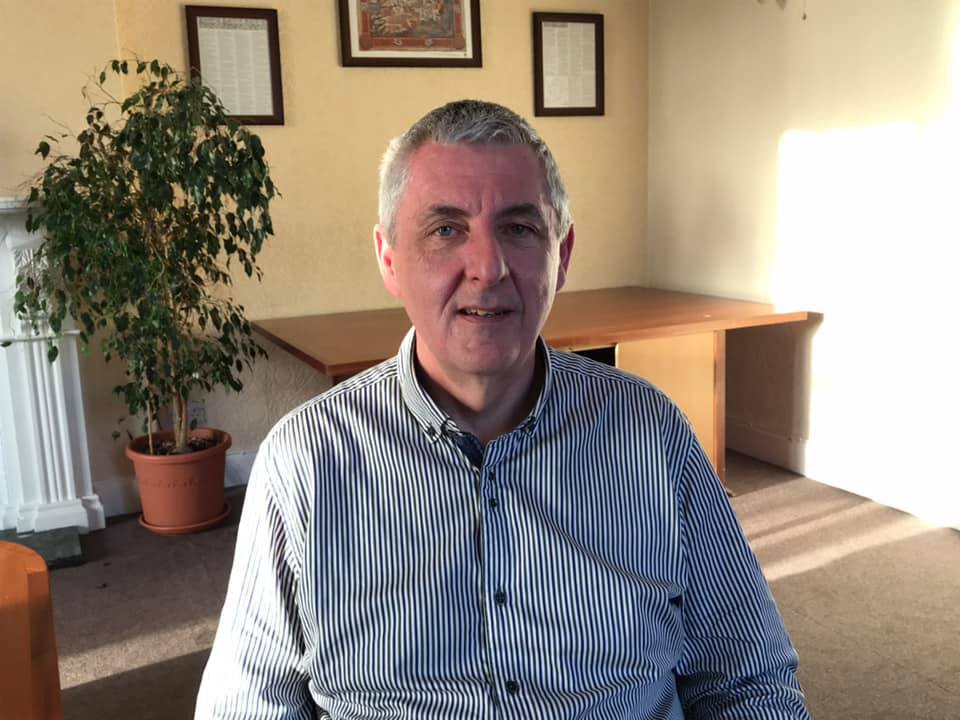
Brendan Healy from Mullingar is back this week. In the first part of our conversation Brendan talked about the beginnings of his military career, and about the remarkable story of coming to faith in Christ.
In this part of our conversation Brendan talks about ways in which leaders in various settings (like Church or military) can learn from each other. One example, drawn from the military, is the emphasis put on training for transformation: Brendan suggests that churches need to make discipleship a more serious enterprise.
We also discuss the difference between leading from position and leading from who we are: church leaders are less likely to wear their authority on their epaulettes! Brendan suggests that the great challenge for Christian leaders will be to influence people through character and authenticity.
Brendan also talks about the church of which he is a part in Mullingar, and the roles he has played in its work: along the way, there are some interesting observations in relation to religious and cultural identity!
He also talks about people who have influenced him along the way, and shares some of the main lessons he has learned.
For your reflection:
What are some of the spheres of leadership you think Christians would do well to learn from? Are there any cautions?
As a leader, do you have a plan for helping to develop other people? Does your church or organisation take training and discipleship seriously?
PS – in the background you will hear some of the staff of Irish Bible Institute (where we recorded the podcast) having a bit of a laugh!
Next week the guest on the podcast will be Charles McMullan, current Moderator of the Presbyterian Church in Ireland.
This week’s guest is Brendan Healy. Brendan is a retired Lt Colonel with the Irish Defence Forces. He lives in Mullingar, in the centre of Ireland, where he has played an influential role in Mullingar Christian Fellowship.
In this first part of our conversation talks about growing up in a traditional Catholic family in the West of Ireland, and his early desire to serve God as he felt his heart stirring towards Christianity. His parents were a big influence on him in terms of leadership as a way of making a contribution, and kindness.
Brendan had originally wanted to be in the police (after abandoning the idea of the priesthood), but accidentally (!) found himself joining the officer training programme for the Irish Defence Forces – he describes some of the demands of military discipline.
His sense of wanting to serve God had faded until someone he knew had had an experience of God and invited Brendan to a Christian event (the ‘craziest’ event he had ever attended). However as he explored more listened to a challenge from a priest who had been invited to speak at a mission, he came to the point of accepting Christ: his life was immediately transformed.
Remarkably, several of Brendan’s military colleagues also came to a transformational Christian experience: eventually they discovered that a group of women had been praying regularly for Irish Army officers, and this was the answer to their prayers.
He talks about the change from being a military leader to being a Christian military leader and describes some of the places where he was tasked with leading, including Lebanon and Jerusalem, as well as some of the leadership lessons he learned along the way.
He makes the point that military leadership goes beyond simply giving orders, but involves taking responsibility for the people in the leader’s charge.
(Irish Bible Institute, where we recorded the podcast, has a buzz about it on a Wednesday morning: you will hear some of the atmosphere in the background!)
Roz Stirling of Cleopas Ministries is back this week. She picks up her story from part one, talking about her work with the youth and children’s department in the Presbyterian Church, and how she went about helping the Church to engage with the changes in youth culture.
She also talks about her sense of call and about a life-changing retreat she she experienced in the US where she realised she was ministering out of her own sense of what was right and wrong rather than from a deep walk with God: this experience was the genesis of Cleopas, even though Cleopas was not developed for some years.
The beginnings of Cleopas brought new challenges as Roz became ill: she talks about how her illness removed her sense of self-sufficiency – developing a high sense of value, but a low sense of importance.
She also talks about the challenge of singleness, and the loss of her dream of motherhood, and challenges the Church about the need for a theology of singleness (and careful practice).
She highlights the following challenges for leaders:
Character: we need to know our weaknesses and seek God’s power for character transformation.
Be honest with yourself!
Enjoy God through and through! Our relationship with God must be central: are the rivers of living water flowing through you?
Questions for your reflection:
What are some of today’s challenges in connecting the unchanging gospel with a changing culture?
Would you say that you are driven or that you lead from the fulness of a rich relationship with God?
Roz Stirling is the director of Cleopas, a Christian ministry that functions to help provide space for leaders (and others) to draw aside to pay attention to their relationship with God. She is also involved in providing spiritual accompaniment and is keen to develop resources to help people with personal spiritual formation.
In this first part of our conversation Roz talks about her family background where both of her parents were important influencers in her development. Church provided her with some of the earliest opportunities to be involved in leadership with young people. She talks about her career as a teacher during which time an incident took place that gave her a deep call and passion for the Church to be relevant to young people.
After teaching, she spent some time working in the North of England with UCCF, an experience that carried quite an element of culture shock and proved challenging until she realised that she needed to pursue a more relationally-based form of leadership.
After some work with the YMCA she moved to work with the Presbyterian Church as ‘youth officer’, a role she carried out for 21 years.
Next time Roz will be talking about her work with the Presbyterian Church, her experience of burnout and illness and how she came to develop the work of Cleopas.
Two questions for reflection:
Roz talked about the influence of her father in helping her to persevere in challenging work circumstances: do you have people who have spoken to you like this?
How important to you is the relational aspect of leadership?
This week we wrap up the conversation with Russell Birney. If you have missed the first two parts, you can catch up with them here and here.
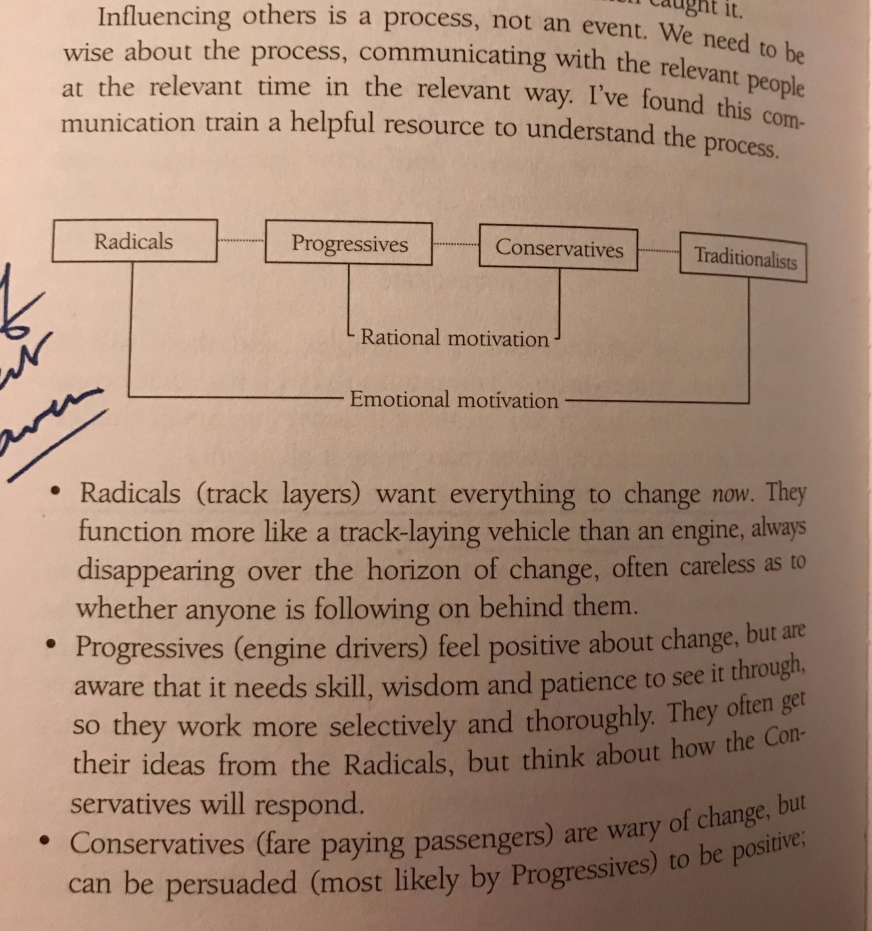
In this week’s episode Russell talks about the process of leading change (be aware that people have different attitudes to change), and about some of the biggest challenges he faced in leadership.
He also has advice about retirement, and shares his main lessons on spiritual leadership:
The importance of a consistent walk with God;
Making sure your personal priorities are in order: beware of the cost of ‘success’!
Be accountable to someone who will pray for you and strengthen you;
Dispense with the idea of status!
And here is James Lawrence’s visual representation of how people respond to change (from his book, Growing Leaders):
A question for leaders:
Are there issues which you believe to be ‘red lines’, where people need to be challenged?
Next week’s guest is Roz Stirling, director of Cleopas Ministries.
Russell Birney is back this week, continuing his story (you can listen to the first part here).
In this part of the interview Russell talks about his ministry in three of the four churches where he has served, starting with two years in Carrickfergus where he was somewhat pitched in at the deep end before moving on to the challenging environment of Newry where people were feeling the weight of the Troubles: he stayed in Newry for 9 years.
He then spent over 20 years in High Kirk, Ballymena, where he faced the challenge of bringing change to a church whose previous minister had been there for 36 years.
In this context he talks about key influencers that helped shape his thinking about and his excitement for the Church: David Watson in York, and Ray Stedman in California. (You can still pick up copies of David Watson’s book, I believe in the Church).
Questions for your own reflection:
Have you any examples of being pitched in at the deep end in leadership? What happened and what did you learn?
Russell talks about his view of the importance of pastoral visitation: if you are in church leadership, how do you react to Russell’s view? What is your own practice?
The guest in the first episode of the podcast in 2019 is Russell Birney. Russell is a retired Presbyterian minister whose ministry spanned several decades and included over 20 years as minister of High Kirk in Ballymena. He is a former moderator of the Presbyterian Church in Ireland.
In this first part our our conversation we talk about Russell growing up in Fermanagh, about his experience of coming to faith (it was not a straightforward journey), and about the decision to pursue training for Presbyterian ministry.
Along the way we discuss mentoring and the value of having friends and people who speak into our lives.
Next week I’ll be talking to Russell about his ministry in several congregations, some of the challenges he faced, and some of the important things he was learning about ministry as well as conviction about the importance of the Church.
In this week’s episode we resume David Dunlop’s story.
David describes some significant conversations that took place while on sabbatical including how he was introduced to the programme of Arrow Leadership and their work on issues of character, calling and competence in leaders. Arrow proved to be a huge formative experience for David.
Another key encounter during his sabbatical was with someone who asked him what he was doing to guard his heart (see Proverbs 4:23). Such was the impact that this verse has become David’s life verse.
From there David goes on to talk about spiritual disciplines/holy habits and describes a number of practices including a rule of life that includes spiritual disciplines, self care, use of time, and silent retreats.
As a leader he recognises the importance of being aware of perceived expectations and avoiding becoming proud when he’s praised and crushed when he is criticised. He also talks about the role of other people in his life, including the importance of his wife in helping him to guard his heart.
David also talks about his journey as a (reluctant, not unwilling) leader in Windsor – not least in his preaching ministry. We also talk about team and how David has experienced that in Windsor Baptist.
He also gets the opportunity to speak to a young version of himself and shares advice he would give which includes this: ‘If you want to be in leadership for a short time, knock yourself out’, and the advice to hold some things lightly.
This week’s guest is David Dunlop, pastor of Windsor Baptist Church in South Belfast (yes, another South Belfast Baptist Church) – a diverse church which can count 15-18 nationalities on a Sunday. He has just celebrated his tenth anniversary as pastor of the church (and not so long ago, his 50th birthday).
David describes how he came to faith in Christ as a child, so beginning a journey that has continued (with some bumps in the road) for over 40 years. He describes a stage of ‘going through the motions’ in terms of church, and reaching a point of recommitment at 18 – not least through involvement in an event that many Northern Irish Christians (of a certain age) will remember: Mannafest.
In terms of early influence he describes the example of the pastor of the church where he grew up (though David had no pastoral aspirations at that time) and some teachers he knew at school.
In his early 20s he was given the opportunity (along with his wife) to lead the church youth group. He talks about one of the key lessons from his work with young people – the importance of building trust and earning the right to speak: something he believes was ‘caught, not taught’. They underwent training on a youth ministry course with Oasis Trust in London.
At the end of the training, there was an opportunity for both David and his wife to work as the youth pastoral team in their home church in Ballynahinch – where they served for 13 years (though their roles changed after 8 years). David describes the enjoyment of working in a team, but the highlight was working with the young people and the privilege of journeying with them through various stages of growth and development.
He also talks about the journey of moving from Ballynahinch to Windsor Baptist (despite having resolved that he would never be a pastor). His experience of ‘calling’ is a little different from how others have experienced it!
For your own reflection:
How do you respond to David’s thoughts and experience in the lead up to moving to Windsor Baptist? Does this challenge what you have tended to think in terms of ‘the call’? What about the role of other people in helping us to discern in our decision-making?
This week, Edwin Ewart, principal of Irish Baptist College, continues his story (you can catch up with part one of the interview here).
We talk about Edwin’s ministry path, with pastorates in several Baptist churches, starting with Letterkenny, in Donegal, then Belfast (Mountpottinger) and Coleraine, before his move to the Baptist College.
As principal, doesn’t see himself as pen-pushing principal (though there is admin to be done), but his greatest joy in the work is its teaching. We discuss some of the challenges faced by Bible Colleges (Edwin is part of the Association of Bible College principals), including the tension between the residential model and the in-service model of training (IBC has a couple of ministry placements – one local and one cross-cultural) as part of the course).
Along the way we discuss preaching (how long should a sermon series run?), the old pastoral chestnut of the extent to which the pastor/minister should have friends in the congregation, and how easy it is to be sure of the will of God in terms of a ministry calling – not least in the context of trying to determine when it’s time to move to a new situation.
We also talk about books: Edwin shares some of the influential books he has read and some of the things he has learned along the way.
Among the early influences, Edwin talks about his involvement in a Baptist youth fellowship and the influence of the church pastor, an early mentor. He also talks about some of his first steps into preaching – delivering epilogues alongside a music group.
He describes the formative influence of his involvement with the Christian Union during his time at university. University years were formative – not least in that it was here that he met his wife, but also because of a significant group of friends.
The opportunity to be involved in speaking that had begun to shape his thinking in terms of a sense of call to vocational ministry, and his pastor gave him strong encouragement to pursue theological training. We discuss the opportunity for leaders to encourage people in this way.
After studying at IBC and entering pastoral ministry, Edwin maintained his contact with the college as a visiting teacher before eventually joining the staff full time.
We talk about the challenge for Bible College students to maintain both an academic approach and a devotional approach.
For your own reflection:
As you listen to Edwin talk about the influence of his pastor, what are some of the things you have noticed about mentors?
Would you describe yourself as a reader? What are some of the books that have most helped you?
Would you agree with what Edwin quotes from Charles Spurgeon in relation to the importance of earnestness in preaching?
What do you make of Edwin’s advice to approach the devotional life with both discipline and variety?
You can find out more about the Irish Baptist College – including the opportunities for study they offer – on their website.
This week there’s more from Clive Atkinson from All Saints Church in Vevey (if you missed part one, you can catch it here).
Following his training in Dublin, Clive served his time as a curate in North Belfast followed by his first incumbency in West Belfast, in an ‘interface’ part of the city (listen for the account of the exploding bread van!).
From Belfast, he moved to his current church in Switzerland, and describes some of the challenges around the move.
He describes some of the ways he sensed God calling him to move (including the Sunday when he made his first visit to All Saints – a Sunday when there just happened to be a Northern Irish preacher in the pulpit!).
He discusses the ‘vertical’ learning curve that awaited him in arriving in Vevey – a learning curve that has continued throughout his time there. As well as the challenge of living in a new culture and parenting their children through a French-speaking school system, there was the challenge of leading a church full of strong leaders. He shares some of the ways he felt he was able to build a team, including the importance of emphasising relationships.
We also discuss some of the factors that contribute to a leader staying fresh – with particular reference to life in a ‘revolving door’ type church: Clive mentions some of the factors that have been helpful to him.
I asked him what advice he would give to a young 22 year old version of himself, heading out in training and his leadership journey. Here is the summary:
Leadership is a long term journey, so be patient, expect to change and to grow.
Your highest calling is to Jesus (not necessarily to his church), so never short-change your devotional life.
The Lord is faithful: trust him!
The Lord loves the Church more than you do!
For your reflection:
Clive talked about the sense that God was speaking to both him and his wife in relation to their move overseas: how important do you think it is for a leader and their spouse to be on the same page in discerning God’s call?
The move to Switzerland had implications for Clive and Yvonne’s young family: how can churches and agencies support families who move overseas, with the particular challenges that brings?
What are some of the ways you have found to be effective in building a team?
As you listen to Clive talk about some of the factors that have helped keep him fresh along the way, what are some of the things you have in place to help you? Should you be putting some things in place?
Next week the guest on the podcast is Edwin Ewart, principal of the Irish Baptist College.
This week the podcast takes something of an international turn as the guest is Clive Atkinson, chaplain of All Saints Anglican Church in Switzerland. Clive is originally from Northern Ireland (he and I attended the same secondary school, though a few years apart), and has been living in Switzerland for over 15 years.
All Saints Church is a vibrant expat church, part of the Intercontinental Church Society, serving the English-speaking community around Vevey in the French-speaking part of Switzerland. While the church is anglican, various denominations and nationalities are part of the community.
In this first part of our conversation Clive talks about the early influences on his life, growing up in Northern Ireland and his coming to faith as a teenager and the formative years at university where he had some ‘deep end’ leadership opportunities with the Christian Union. He also talks about some of the people who had a big influence on his life, including Harold Miller – a previous guest on the podcast.
In talking about the life of the church, Clive describes the way they have a vision that involves being intentional about sending people out into their regular jobs – referencing the work of LICC.
Next week, Clive will go on to talk more about the journey of ministry and how he came to be in Vevey.
For your own reflection:
Can you name people who have had an influence in your life in the way Clive discusses the role of Harold Miller? Are you in a position to speak into the lives of people you mentor?
Clive talks about the work of LICC and their emphasis on whole life discipleship: for those of you in church leadership, is there something you can learn from the way Clive’s church has adopted the idea of ‘this time tomorrow’ and their vision of sending people out into their Monday to Friday work?
By the way – here is that photo we talked about!
Also – you can also subscribe to the podcast via iTunes or Castbox.
Sir Nigel Hamilton, former head of the Northern Ireland Civil Service is back this week (if you missed the first part of Sir Nigel’s story, you can catch up here).
In this week’s episode Nigel talks about how Christian leaders can live out their values in their workplace, and talks some more about his career path, a path which ran in parallel with some significant events in the history of Northern Ireland. He talks about the power of leadership moments, including what might be considered relatively simple gestures as a way of establishing an organisational culture. He also discusses the inspiration of biblical characters such as Joseph and Daniel (and the relevance of Psalm 71:18 in his current season of life).
A few years after retirement from the Civil Service, Nigel underwent significant surgery, and he talks about the significance of Stuart Townend’s song, There is a Hope, and how it helped him to share his faith with fellow patients.
Among other things, he talks about his involvement with New Irish Arts and their recent Greater Love presentation.
His top leadership lessons (and he feels that the Church could do better in terms of leadership):
Have a clear understanding of what you are aiming for
How will you go from where you are to where you are going to go?
Be aware of the role of each individual
The importance of a value base
Listen to the podcast:
For your own leadership reflection:
What steps can you take to develop the culture of your organisation?
Which biblical characters have you found to be particularly relevant in your leadership journey?
Next week the podcast takes something of an international turn as the guest is Clive Atkinson, chaplain of All Saints Church in Vevey, Switzerland.
This week my guest on the podcast is Sir Nigel Hamilton. Up until now, my guests have tended to be leaders whose careers have been set in the context of the Church or some specifically Christian organisation.
Sir Nigel’s story is different in that his career was worked out over more than 30 years in the Civil Service, including eventually serving as head of that organisation. So, instead of needing to work out how to relate to elders and deacons, he was working out how to relate to more than 30 various government ministers.
Much of his career spanned what’s become known in Northern Ireland as ’The Troubles’ and in the interview he reflects on some what happened during the time. He also discusses some of the ways he found support as a Christian during his career, including his involvement in the Methodist Church (in which he had become a lay preacher).
In this context we discuss the importance of church leaders supporting members of their congregation who are involved in senior roles outside the walls of the church. He also talks about what it means to exercise Christian faith in senior leadership situations.
For your reflection:
If you are a senior leader outside of the walls of your church, what could church leaders do to support and encourage you?
If you are a church leader, how might you support members of your church who are leading outside the church?
Trevor Ramsey is back this week continuing his story.
In this podcast episode he talks about his involvement in the foundational years of Greenisland Baptist – a season that brought with it some life-shaping personal moments, including his journey through grief after the painful loss of his first wife, Sheila. He goes on to talk about a new phase in his life, both personally (in marrying Maggie) and in terms of his leadership, as he responds to the invitation of the elders of Newtownbreda Baptist Church to become their Senior Pastor.
In the final part of the podcast Trevor describes some of the most important lessons leaders need to be aware of, including the need to lead from a full heart and the significance of humility.
If you would like to find out more about the church where Trevor pastors, you could visit their website – and you can even catch some of the preaching that’s been part of the current themed series Trevor talks about in the podcast.
For your reflection:
Which of the lessons Trevor highlights strikes you most? Is there something you think you could do in response?





 Brendan Healy from Mullingar is back this week. In



 The Crucible of Leadership