Jo has been with EA since 2017 and is director of communications and engagement. Peter is UK director and oversees EA’s advocacy work.
In our conversation Jo and Peter talk about their own journeys in Christian leadership and their work with EA (Peter has previously been a guest on the podcast and you can listen to his story here). They also talk about the book – how they came to write it, what the process of team writing was like and some of the basic ideas behind the book.
Peter Lynas and Jo Frost along with Manoj Raithatha, Chairman of the Evangelical Alliance, pictured at a book launch event in September
There is a special bonus for listeners to this episode of the podcast (and to anyone living in Northern Ireland). If you would like to support the work of the Evangelical Alliance, you can take out a personal or family membership: as part of your welcome pack you will receive a copy of the book. To find out more, or to sign up, go to the Evangelical Alliance website.
The guest on the next episode of the podcast will be Jonathan Thomas, pastor of Cornerstone Church in Abergavenny.
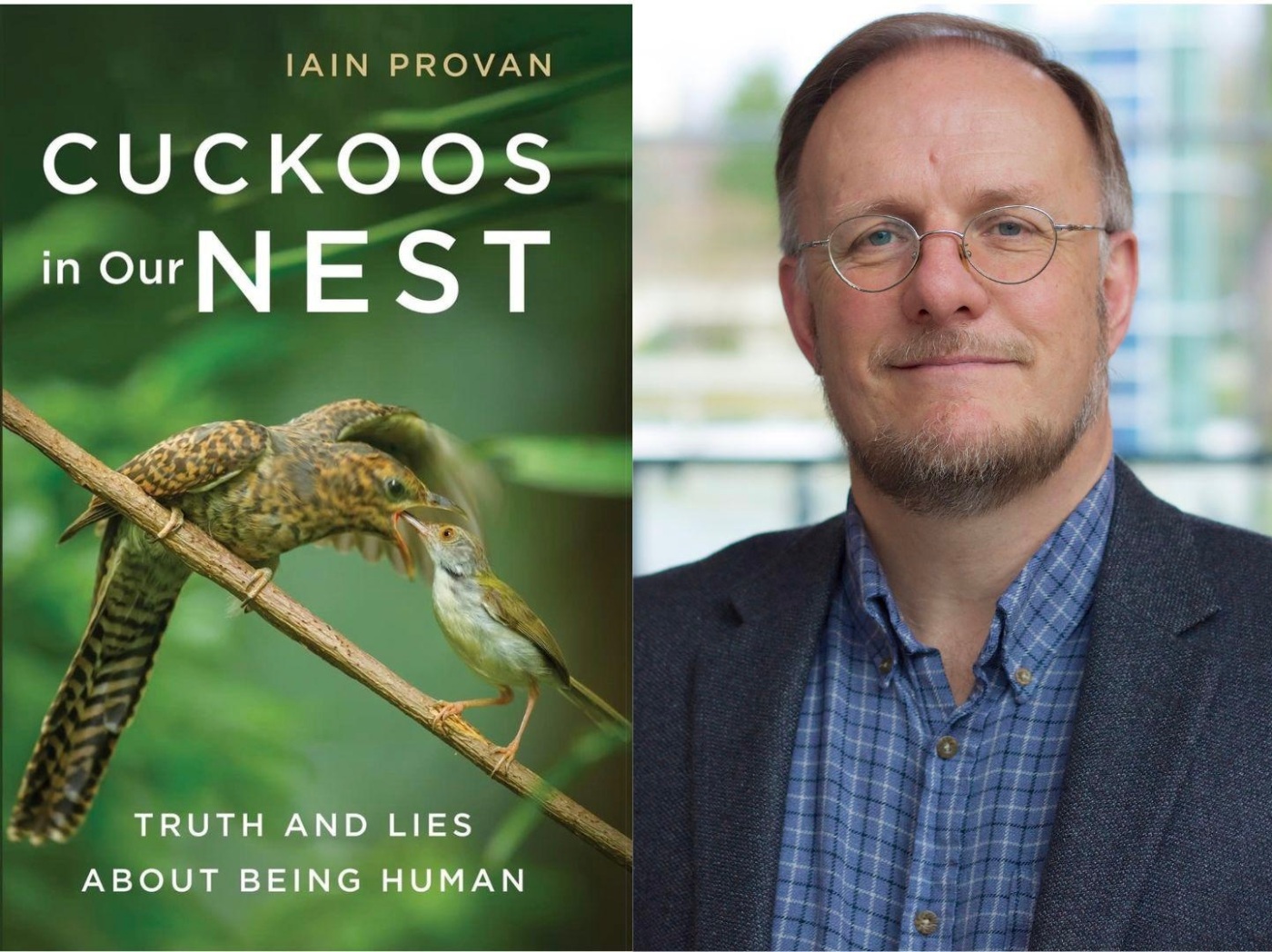
Iain Provan is a retired professor of Biblical Studies at Regent College in Vancouver where he worked for twenty-five years. He is the author of several books and his most recent offering is Cuckoos in our Nest: Truth and Lies about Being Human which was published earlier this year.
In our conversation we talk about Iain’s own story, from growing up in Scotland, and spend time talking about some of the ideas in the book.
The book essentially presents a biblical theology of what it means to be human, teasing out some of the implications of this, for example as they relate to wealth or creation care, and identifying some of the cuckoos, or false ways of thinking that have found their way into the Christian nest.
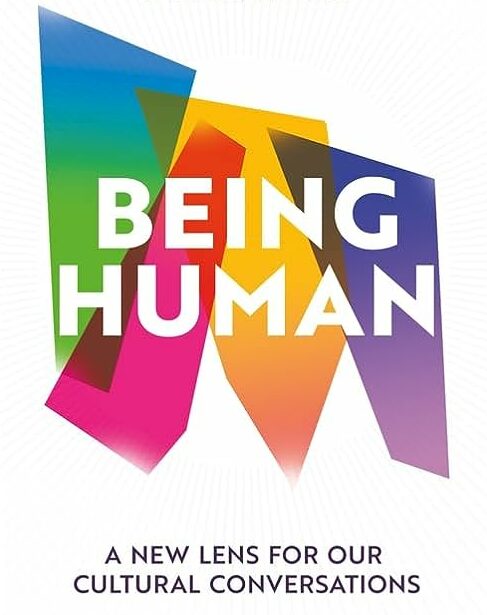
This is the first of a couple of podcasts on a similar theme as the next episode will consist of an interview with Jo Frost and Peter Lynas from the Evangelical Alliance, talking about their new book (set for release next week), Being Human.
For more from Iain, visit his website, where you will find information about his writing and other teaching.
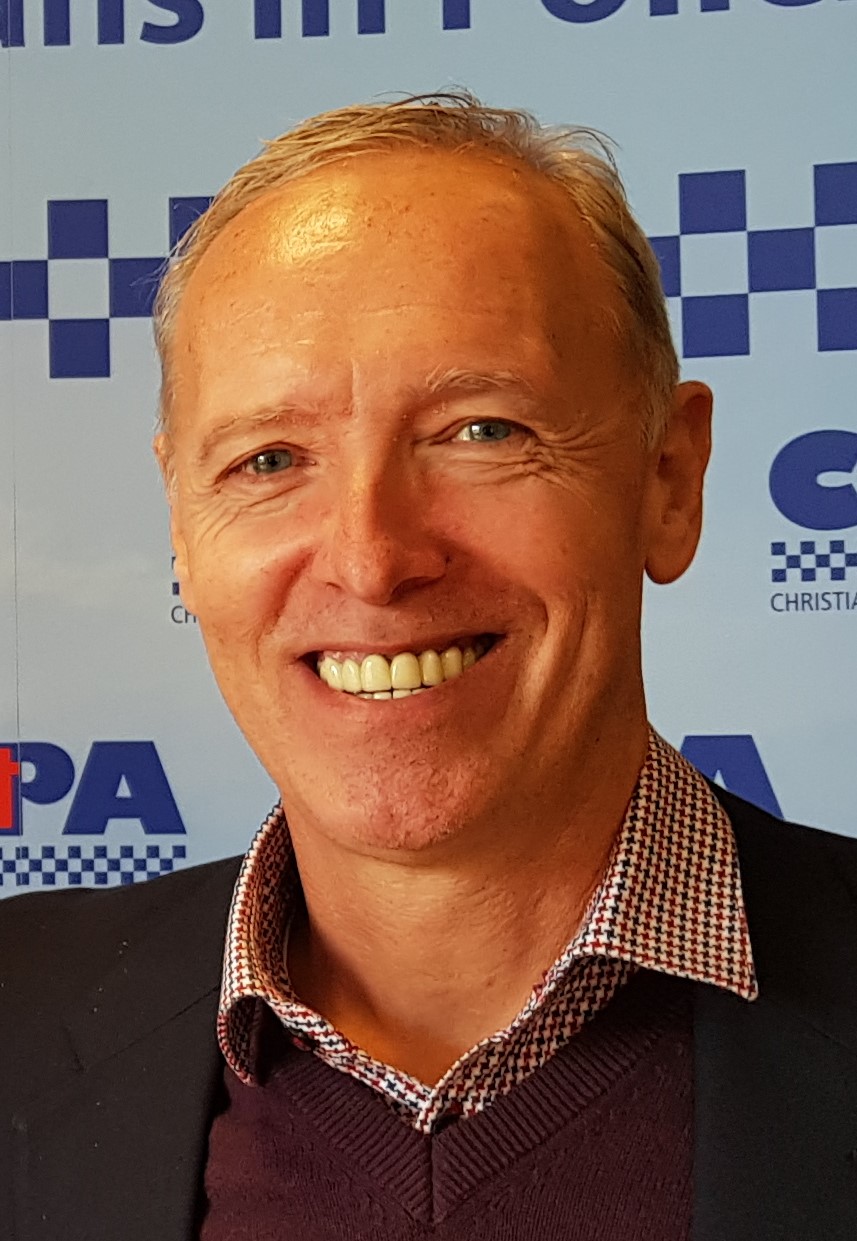
Open Doors traces its origins back to 1955 and the visit by a young Dutch Christian to a Communist youth congress in Poland. So began the work of Brother Andrew and today Open Doors is a ministry that seeks to support and strengthen persecuted Christians in some 60 nations.
Dave has been working with Open Doors since the start of this year. Previously he worked with The Evangelical Alliance and with the Bible Society. Before his work with these Christian organisations that has spanned the past two decades, Dave lectured in politics and social sciences at Edge Hill University College.
In our conversation we talk about the work of Open Doors and what is involved in Dave’s role. We also talk about Christian attitudes to politics as well as some of the key things Dave has learned about leadership. There may even be a reference to Everton!
This morning I facilitated a Zoom conversation that drew around 20 church leaders of various stripes to talk about some of the questions around moving out of lockdown and into the ‘new normal’. Here are some of the highlights:
Some felt that it is too soon to attempt to answer some of the big questions – folk have simply been too busy. My fear is that a precipitous return to ’normal’ will simply compound this and the questions will never be answered (or even asked!).
Church leaders have been ‘catapulted’ into the situation that has pertained over the past few months and are now in danger of being catapulted into the next set of circumstances: there is a need to prepare.
Following on from that, the next transition (out of lockdown) may be harder to negotiate that what happened in March.
Zoom is a mixed blessing – there is a degree of Zoom fatigue, but at the same time there is a recognition that it has actually helped increase involvement in things like prayer meetings and small groups.
People have missed face to face contact and the physicality of things like communion and singing.
There is a need to manage folks’ expectations with regard to returning. Here in NI I think there has been surprise at how quickly churches are allowed to reopen their buildings for worship services and there is likely to be pressure on leaders to get things up and running because the government has given the green light. However, just because it is possible to restart, does not mean that it is right to restart right away.
Part of the dilemma of restarting is that it is sometimes the most vulnerable church members who are most anxious to get back. Older people who live alone, for example, may have missed gathering more intensely than others.
Pastorally, there would be value in giving church members space and time to tell their stories from the past few months.
My guest in the final part of this mini-series on the Church and Covid-19 is Gemma Brown. Gemma is Communications Officer for Tearfund Northern Ireland.
In this episode of the podcast, she talks to me about Tearfund’s global response to Covid-19.
Here are some useful links it you’d like to follow up what you hear on the podcast:
Eddie Arthur has been involved in mission for some thirty-five years. This has included time spent as a Bible translator in Ivory Coast, and several years as the UK director for Wycliffe Bible Translators. Recently he has completed his PhD, in which he explored the extent to which the practice of mission agencies corresponds to their theology, and he currently works as a researcher.
Eddie blogs at Kouyanet, and recently he made several observations about how he sees the Church, post-lockdown. You can read his article here.
In this episode of the podcast we chat about his thoughts.
Here is a link to the eBook, Global Transmission, Global Mission that is referred to in the conversation.
In today’s episode of the podcast I’m speaking with Bill Foye. Bill is pastor of Hope Church in Hillsborough. As we talk about ministry during the pandemic, Bill shares a couple of essential (in the truest sense of that word) questions for churches and leaders to ask themselves at a time when normal activities have been so disrupted.
The guest on today’s episode of this series of podcasts, discussing ministry during the pandemic, is John Ervine. John is pastor of Cornerstone Church in Rathfriland. John led a church plant there 6 years ago (this month is their 6th anniversary) and the church has grown from small beginnings to be a gathering of some 200 adults and children.
Ben Walker is minister of Saintfield Road Presbyterian Church in South Belfast. He joins me in this episode to talk about some of the ways he and the church have been adapting their ministry during the pandemic.
There are some interesting ideas on preaching, plus, this challenging statement:
My guest on today’s episode of the podcast is Simon Genoe: Simon is rector of Magheralin and Dollingstown Parish Church, between Moira and Lurgan. Like my ancestors, he’s from County Monaghan and worked in Lisburn Cathedral before taking up his current post. As well as serving in parish ministry, Simon is one of the leaders of New Wine Ireland.
Remember that you can can catch up with previous episodes on this blog or by visiting the podcast on Apple Podcasts or on Spotify, where you can subscribe for future episodes.
This week continues the series of podcasts talking about ministry in the context of the pandemic. Today’s is Stevie Walls. Stevie is deputy head in a Belfast primary school and is an elder in Castlereagh Gospel Hall, on the edge of East Belfast.
Remember that you can can catch up with previous episodes on this blog or by visiting the podcast on Apple Podcasts or on Spotify, where you can subscribe for future episodes.
My guest on this episode of the podcast is Ken Clarke. Ken is a well known and highly respected leader who has served the Church in various roles for several decades.
The focus of our conversation is a little different from other podcasts in this series that have focussed on what’s happening across a number of specific churches. Here, Ken talks about some of his reflections during this current season.
He reflects on the significance of the Easter story (‘finished work’), the opportunities for wider outreach (‘unfinished task’), and the challenge of ‘finishing well’ (a favourite theme for a man who prefers to talk about retirement than retirement.
God willing the podcast returns next week when my guests are Stevie Walls (Tuesday’s episode), and Simon Genoe (Thursday’s episode).
I’ve been posting a series of conversations with church leaders, talking about ministry during the pandemic. So far they have been people involved in the care and leadership of local congregations. This weekend I am planning to post a bonus episode with a somewhat different focus in which I will be chatting with one of the most respected Christian leaders in Ireland, Ken Clarke. Ken will be sharing some of his reflections on the current situation.
You can can catch up with previous episodes on this blog or by visiting the podcast on Apple Podcasts or on Spotify, where you can subscribe for future episodes.
As well as having the same surname, we also trace our roots back to the same great-grandfather from Glaslough, County Monaghan.
In this conversation Lesley-Ann talks about the challenges of ‘technology fatigue’ and challenges leaders to leave space to discern where God is working and where they need to join his work.
It’s humbling that we have to put away our strategies and our agendas and take a clean sheet of paper and say, ‘OK, God, it’s over to you: what is it that we need to be doing in order to reach people with the good news of Jesus?’
God willing, you can look forward to two more episodes of the podcast next week. On Tuesday my guest will be Stevie Walls, an elder in Castlereagh Gospel Hall, and on Thursday it will be Simon Genoe, rector of the Church of Ireland parish of Magheralin and Dollingstown.
Remember that you can can catch up with previous episodes on this blog or by visiting the podcast on Apple Podcasts or on Spotify, where you can subscribe for future episodes.
The plan is to post a couple of these conversations each week (Tuesdays and Thursdays). You can catch up with previous episodes on this blog or by subscribing to the podcast via Apple Podcasts or on Spotify.
The guest on this week’s Thursday podcast is Andrew Roycroft. For the past 10 years Andrew has been pastor of the Baptist church in Millisle on the County Down Coast. If you would like to keep track with their regular ministry, you can follow them on Facebook. You can also follow Andrew on Twitter (@AndrewTRoycroft). You can also visit Andrew’s blog on pastoral issues.
This episode is part of a series of conversations with a selection of church leaders, exploring ways in which they have been adapting ministry in the context of the global pandemic.
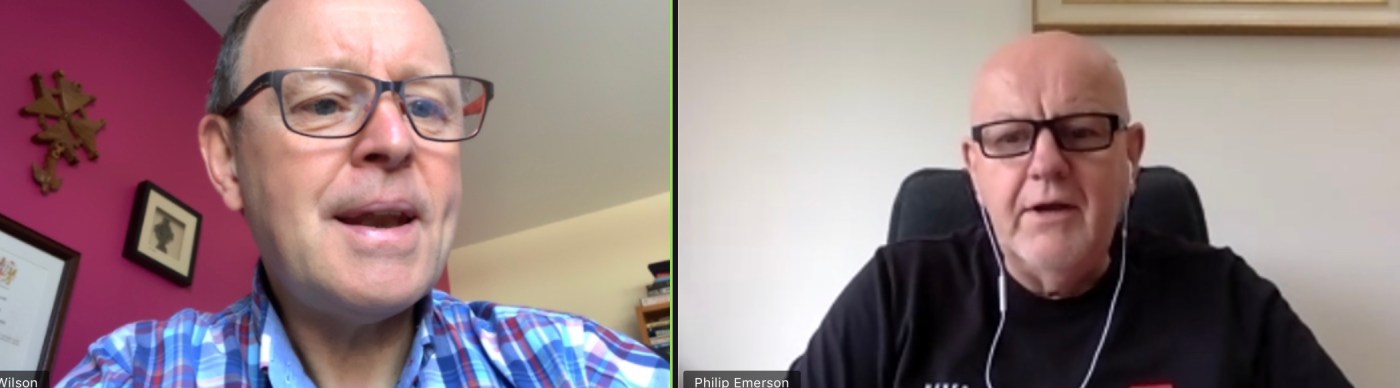
In the second part of the series of conversations on church ministry in the context of the global pandemic, my guest is Phil Emerson: Phil is lead pastor of Emmanuel Church in Lurgan.
The plan is to post a couple of these conversations each week (on Tuesdays and Thursdays): the guest on Thursday will be Andrew Roycroft, pastor of Millisle Baptist.
Over the next few weeks the podcast will host several conversations with local church leaders that will explore some of the ways their ministry has had to adapt owing to the current pandemic. There will be contributions from a range of leaders from a number of different church backgrounds. As well as reflecting on some of what they are having to do differently, the leaders will also have the opportunity to talk a little about what might change in the new normal.
Getting the series underway is Jonny Pollock. Jonny – from Belfast – is a church planter working with Calvary Church in Loughrea, County Galway. Feel free to contact Jonny via Twitter (@jonnypollock) if you would be interested in exploring some resources that help in taking church online, or find out more about Calvary Church from their website (https://www.calvarychurchloughrea.com).
The plan is that the podcast episodes will go online on Tuesdays and Thursdays: future guests include Phil Emerson and Andrew Roycroft. It’s possible to subscribe to the podcasts, including via Spotify or Apple Podcasts.
I’ve tended to be very cautious when I see Christians who are quick to appropriate 2 Chronicles 7:14:
If my people who are called by my name humble themselves, and pray and seek my face and turn from their wicked ways, then I will hear from heaven and will forgive their sin and heal their land.
As ever, we need to pay attention to context. Who are ‘my people’ and what is ‘their land’? Clearly the promise was given to a specific people (Israel at the time of Solomon) and in a specific place. As far as I know, Ireland (north or south) is not the Promised Land, nor are its people ‘the Lord’s people’. The same is true for the England, or America, or any nation that might like to think of itself as Christian – or at least that acknowledges its Christian influences. The Lord’s people are scattered across the face of the earth awaiting the time of a new heaven and new earth.
And yet.
This current crisis makes me wonder if I might be too quick to dismiss what lies within this promise.
As Solomon competed the dedication of his temple the Lord appeared to him to confirm his acceptance of the temple as a chosen place. He would listen to the prayers that were prayed from the temple: his eyes and heart would be upon it: wonderful promises!
Yet there was also a note of caution. What about those times (presumably times of judgment for unfaithfulness on the part of his people) when God would shut the heavens so there would be no rain, when locusts would devour the land, or when he sent pestilence among his people?
This was climate disaster, nature out of control, dreadful disease on the rampage. There were no climate scientists and no labs to come up with a vaccine to stop the plague. What do people do when there is nothing they can do?
That’s a tough question for us to answer in some ways because such is our ingenuity, and such has been our technological progress, that we can often think of something. With Covid-19 it has not been that obvious. There are rumours of possible treatments, stories of developing vaccines (even if they are long months away from the market) and we should be incredibly grateful for scientists who are probably working day and night to get us through this. Meantime we self-isolate and try to wash our hands and some of us maybe wonder if life will ever be the same again.
What do people do when there is nothing they can do?
God’s answer to Solomon was that if only his people would humble themselves, pray, seek his face, and repent, he would hear and would heal their land. Rain would fall to water the barren earth. Locusts would be banished and the plague would be gone.
Should we expect all our political leaders to don sackcloth and lead our nations in seasons of prayer? Is this not rather a time for the Church – God’s scattered people in nations across the face of the planet – to take the lead and to stand in the gap?
Like you, I’ve read about calls for prayer and I’ve seen some suggested prayers ( I even suggested one myself the other day), from prayers for healing to prayers that want to dismiss the virus in the name of Jesus. I’ve even seen a church that’s been running corporate prayer via Zoom!
I would love God to answer and for there to be a sudden change in the direction of the storm. I dare say most of us would begin to breathe a sigh of relief if the numbers suddenly started to go the other way and the dreaded peak appeared less severe: maybe things would be back to normal sooner than we feared!
But, leaving aside what ‘normal’ might look like, what would we have learned from it all? Would we retain the lessons of kindness that we’re hearing about along the way? Would we decide that a bit less travel might reduce pollution? Would we reevaluate the importance of family and friends? Would we decide that medical professionals should be better paid than football players?
I wonder how much of our learning would be horizontal (love your neighbour) and how much would have to do with our love for and dependence on God.
Among all that’s being said I can’t help thinking that in the midst of everything that we need right now, the most profound and lasting change would come in our learning to humble ourselves in 2 Chronicles style and acknowledge our dependence on God. What if God has allowed our world and entire civilisation to be shaken in ways that are unprecedented in any of our memories, so that at least some of us would remember that he is God and we are not?
If my people who are called by my name humble themselves, and pray and seek my face and turn from their wicked ways, then I will hear from heaven and will forgive their sin and heal their land.
In the church I grew up in the man who made the announcements always concluded them by reminding us that they had been made ‘subject to the will of the Lord’. I think people were a lot more aware of what ‘DV’ meant (Latin for ‘God willing’). While I realise it can become a bit formulaic, there is biblical wisdom behind it.
In his short NT letter James has strong words for uber-confident business people who had lots of plans for how their business would expand and prosper. James reminds them that they don’t even know what would happen the next day: their lives were as transitory as vapour.
We’re currently facing a global crisis on a scale that none of us has ever experienced. The arrival and dramatic surge of Covid-19 has thrown all kinds of plans into turmoil and experts are doing all they can to try and predict what might happen tomorrow. For all our technological progress we’ve suddenly run into the buffers.
Over the past couple of days I have been struck by the pertinence of several parts of Psalm 33 and I think it speaks in a number of ways to the attitude we need to cultivate in this time of crisis.
1 – The Lord foils the plans of the nations (verse 10)
Scripture’s picture of God is that he is sovereign over the course of human history. For all their power, the Pharaohs and Nebuchadnezzars of powerful nations had to bow before him.
I will leave it to others to debate questions of agency at a time like this, but suffice to say that God has allowed our world (including the Church) to find itself at a time when the limitations and vulnerability of humanity is there for all to see.
He foils the plans of the nations.
Governments find themselves in crisis mode.
Businesses, large and small, wonder if they will still be in business in a few weeks time.
Things which we take for granted (at least in some parts of the world) – uninterrupted technological progress, increasing wealth, the facility to travel, access to consumer goods as and when we want them – are not so easily granted after all.
Sport – the great pursuit and enjoyment of so many of us – is reduced to chaos.
I think there are various ways believers need to pray in this crisis (and you won’t be short of samples via their proliferation on social media), but one that I sense may be neglected is a prayer of humbling where we repent of what someone has called ‘the degodding of God’ – and any thought that we are fit to take his place!
2 – Our resourcefulness is not the point (verse 17)
If you were an ancient king heading to war, you’d want to make sure your army was strong and well equipped. Lots of horses, and strong ones at that! But the psalm says that that is not where the secret lies. There is something more than our material resources that counts.
At a time like this we want strong and confident leaders who will assure us that they are committing the full resources of the nation to defeating the virus. And I think we need to be tremendously grateful for researchers and for medical professionals who are devoting their energy and their considerable expertise to tackling this situation. Many of us (myself included) probably owe our lives to the skill and resources of medical science.
We need to pray for everyone who is involved in this. Pray that scientists will discover a treatment, that they will be able to develop a vaccine. Pray for policy-makers to make wise decisions and for strength for the medical staff of all levels who are caring for the sick.
But at the same time, is there something we need to learn, or relearn, about depending on the Lord? Let’s by all means celebrate and be glad for the resources and gifts we enjoy, but let’s avoid the subtle temptation to allow our resourcefulness to blind us to our need of God.
3 – Our hope needs to be in the Lord (verse 22)
The psalm is a psalm of hope and confidence. It encourages his to hope in God’s love, to trust in his name, to put our hope in him.
Frankly, that’s what we need.
Yes, many of us may need to humble ourselves and repent of our self-sufficiency, but there comes a time to allow God to lift us out of the dust and – incredible as it may seem – rejoice in him.
None of us knows how the story of Covid-19 will end, or when it will end. We don’t know when we will be able to make plans again. There may be lots of ways that we will need to change our lifestyles, our assumptions, how we relate to others, and even how we live as church (the absence of Sunday gatherings may force us to rethink their whole purpose). Maybe we will emerge somewhat humbled, realizing, as never before that our lives are in God’s hands.
‘May your unfailing love be with us, Lord, even as we put our hope in you.’







 The Crucible of Leadership